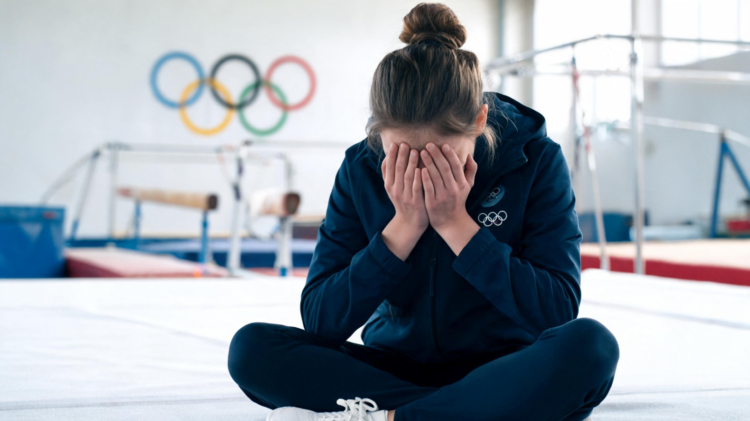
The road to elite sport is often portrayed as a triumph of talent and willpower, but new research suggests that for young athletes it can also be a road paved with disruption, isolation and psychological strain. A study published in the Scandinavian Journal of Occupational Therapy has taken an unusual angle on the problem: instead of examining young athletes purely through the lens of sports psychology, researchers from Flinders University and Adelaide University in Australia asked what happens to the whole of a young person’s life when pursuing elite sport becomes their dominant occupation. The findings, drawn from a mixed-methods investigation of youth and experienced athletes, reveal a delicate balancing act in which the drive to reach the top can crowd out the everyday activities, relationships and routines that protect mental health.
The study arrives at a moment of mounting concern in international sport. In 2023, the International Olympic Committee formally identified youth elite athletes as a ‘neglected population’ and issued a call for further research into their wellbeing. Despite the enormous investment that sporting systems pour into identifying and developing young talent, relatively little is known about how the process of becoming an elite athlete shapes the day-to-day occupational lives of adolescents and young adults. Previous work has leaned heavily on psychological frameworks, focusing on traits such as motivation, resilience and burnout, while paying less attention to how training regimes, relocation, institutional demands and social pressures restructure a young athlete’s entire pattern of living.
Methodologically, the research combined quantitative and qualitative evidence in a convergent mixed-methods design. A cross-sectional questionnaire captured data from 39 athletes, measuring dimensions of mental health alongside constructs such as enthusiastic commitment and grit. In parallel, the team conducted semi-structured individual interviews with eight athletes, gathering both the current experiences of young athletes on the talent pathway and retrospective accounts from more experienced athletes who had already lived through the transition. By analysing the two data streams side by side, the researchers could test statistical patterns in the sample while also building a richer narrative picture of what occupational balance, or the lack of it, actually looks like in the lives of developing athletes.
The quantitative results pointed to stark differences in mental health outcomes across the sample. Gender and sport type were both associated with psychological wellbeing: female athletes and athletes competing in individual sports reported poorer mental health than their male peers and those in team environments. This pattern is significant because it suggests that the structural and social conditions of different sporting contexts, rather than elite status alone, may shape psychological risk. Team sports may offer built-in social connection and shared identity, whereas individual sports can place the full weight of performance, travel and self-directed training on a single young person, with fewer companions to share the load.
One of the most technically interesting quantitative findings concerned the relationship between commitment quality and mental health. The researchers distinguished enthusiastic commitment, a form of engagement characterised by genuine enjoyment and willing dedication, from more constrained forms of commitment driven by obligation or entrapment. Enthusiastic commitment was positively correlated with grit, the persevering passion for long-term goals that psychologists have linked to achievement, and negatively correlated with depression. In other words, young athletes who pursued their sport out of love rather than pressure tended to be both more persistent and psychologically healthier. This distinction carries practical weight, because talent systems that rely on coercive or highly controlling selection pressures may inadvertently convert healthy dedication into a risk factor for depression.
The qualitative analysis, meanwhile, identified six key factors that influence occupational balance during the process of becoming an elite athlete. The first was the sheer scale of elite sport as a time commitment: training, competition, travel and recovery consumed the hours that peers spent on study, part-time work, hobbies and socialising. The second was relocation for recognition, as promising athletes moved away from home, often in adolescence, to access better coaching, facilities or selection opportunities, severing the familiar occupational routines and support networks of their home environments. These are not merely logistical inconveniences; from an occupational science perspective, they are disruptions to the pattern of meaningful activity that scaffolds identity and wellbeing during development.
The remaining factors exposed the uncomfortable commercial and institutional realities of youth sport. Athletes described being treated as a commodity, valued for their results and potential rather than as whole people, which shaped how they understood their own worth and their willingness to admit difficulty. Meaningful relationships emerged as a powerful protective force supporting life balance, with family, friends, coaches and partners helping athletes preserve a sense of self beyond performance. Access to formal support varied widely and mattered enormously, as did what the researchers termed superhuman barriers to help-seeking: an ingrained cultural expectation that elite athletes should be physically and mentally invincible, making it difficult to acknowledge fatigue, anxiety or distress without fearing that a place on the team, a scholarship or a contract might be jeopardised.
Taken together, the findings reframe athlete wellbeing as an occupational balance problem rather than purely an individual psychological one. Occupational balance, a core concept in occupational science and occupational therapy, refers to a healthful distribution of meaningful activities across a person’s life, including work, rest, play and social participation. When elite sport monopolises a young person’s occupational repertoire, displacing sleep, education, friendships and leisure, the conditions for depression and other mental health difficulties are quietly established. The study’s authors argue that this perspective exposes opportunities for imbalance that a purely psychological or performance-based framing can miss, and it opens a door for occupational therapy to contribute to sport as an emerging practice area, supporting athletes not just in their sporting roles but in their lives as students, family members and friends.
The implications reach well beyond the clinic. Sporting bodies, academies and national institutes invest heavily in the physical development of young athletes, yet this study suggests that investment must be matched by systems that protect whole-life balance, monitor the mental health of female athletes and competitors in individual sports, cultivate enthusiastic rather than coerced commitment, and dismantle the superhuman norms that silence help-seeking. For a population the International Olympic Committee has labelled neglected, the message of this research is clear: the making of an elite athlete is an occupation in the fullest sense, and if we want young people to reach the podium and flourish afterwards, we must support the entire balancing act, not just the performance that happens on the field of play.
Occupational science, the discipline underpinning this study, emerged in the late twentieth century when researchers began arguing that human health cannot be fully understood by examining symptoms in isolation from the everyday activities that structure people’s lives. Within this tradition, occupation refers not only to paid employment but to the full range of purposeful activities that fill a person’s days, from sleeping and eating to studying, socialising and training. Applying this framework to sport represents a relatively recent extension of the field, and the current study is notable for treating athletic development itself as an occupational transition, comparable in scope to the transitions into parenthood, retirement or chronic illness that occupational scientists have long studied.
The emphasis on transition is particularly relevant given what is known about adolescence and early adulthood as developmental windows. During these years, young people typically consolidate their identities through experimentation with multiple roles, build peer networks outside the family, and establish habits of self-care and study that persist into adult life. When a demanding elite pathway absorbs a disproportionate share of a young person’s time and identity resources during precisely this window, the developmental work of building a diversified occupational repertoire may be deferred or derailed. The retrospective accounts gathered from experienced athletes in the study are valuable in this respect, because they offer a view of how early occupational imbalance echoes across a sporting career rather than only how it feels in the moment.
The statistical associations reported in the questionnaire data also invite careful interpretation. Because the design was cross-sectional, the findings describe patterns present at a single point in time rather than causal pathways. It is possible, for example, that the poorer mental health reported by female athletes and those in individual sports reflects unmeasured differences in coaching environments, media exposure, injury burden or resource allocation, and longitudinal follow-up would be needed to disentangle these possibilities. The sample of 39 questionnaire respondents and eight interviewees, while rich in depth, is modest in size, which means the quantitative estimates should be read as indicative rather than definitive.
Even with these caveats, the convergence between the two data streams strengthens the overall picture. The statistical correlation between enthusiastic commitment and lower depression mirrors the qualitative accounts of athletes who described thriving when their sporting lives remained connected to genuine enjoyment and supportive relationships, and struggling when obligation and external evaluation dominated. This kind of mixed-methods agreement is often taken as evidence that a phenomenon is robust across different ways of knowing.
The authors also frame their work as a contribution to the growing conversation about mental health in elite sport, an area that has gained visibility as prominent athletes have spoken publicly about psychological distress. By grounding that conversation in occupational balance, the study offers sporting organisations a practical vocabulary for auditing their programmes, asking not only whether young athletes are performing, but whether their daily lives retain the breadth of activity, connection and rest that sustained wellbeing requires, both during their careers and after they eventually leave the podium behind.
Subject of Research: Occupational balance and mental health among youth athletes transitioning to elite sport
Article Title: Balancing Act: An Occupational Lens on the Process of Becoming an Elite Athlete
Article References: Wilson, J., Prichard, I., Petersen, J., & Stenner, B. (2026). Balancing Act: An Occupational Lens on the Process of Becoming an Elite Athlete. Scandinavian Journal of Occupational Therapy. https://doi.org/10.1007/s44474-026-00006-2
Image Credits: AI Generated
DOI: 10.1007/s44474-026-00006-2
Keywords: elite athletes, youth sport, occupational balance, mental health, occupational therapy, athlete wellbeing, grit, enthusiastic commitment, help-seeking, International Olympic Committee, mixed methods, occupational science
Cite Scienmag News
APA MLA Chicago
Glenn Wilkins. (September 10, 2026). Olympic Dreams May Cost Young Athletes Their Mental Health, Study Warns. Scienmag. https://scienmag.com/olympic-dreams-may-cost-young-athletes-their-mental-health-study-warns/
Glenn Wilkins. “Olympic Dreams May Cost Young Athletes Their Mental Health, Study Warns.” Scienmag, 10 September 2026, https://scienmag.com/olympic-dreams-may-cost-young-athletes-their-mental-health-study-warns/. Accessed 10 September 2026.
Glenn Wilkins. “Olympic Dreams May Cost Young Athletes Their Mental Health, Study Warns.” Scienmag. September 10, 2026. https://scienmag.com/olympic-dreams-may-cost-young-athletes-their-mental-health-study-warns/
Copy citation Download RIS
Tags: athlete wellbeingbalancing sports and daily lifeconsequences of pursuing elite sports on young people’s routineseffects of intensive training on youth wellbeingelite athletesenthusiastic commitmentgrithelp-seekingimpact of competitive sports on young athletesInternational Olympic Committeeinternational Olympic Committee athlete mental healthMental healthmental health challenges in youth sports developmentmixed methodsoccupational balanceoccupational scienceoccupational therapyoccupational therapy insights on athlete wellbeingpsychological strain in young athletesresearch on youth athlete psychological healthsports training and mental health balancesports-related isolation and disruptionYouth elite athlete mental health risksyouth sport