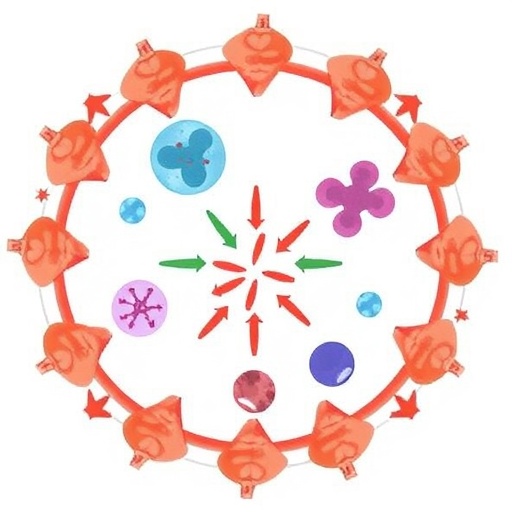
Gene therapy and other macromolecule-based medicines face a persistent obstacle: most delivery routes rely on endocytosis, after which therapeutic cargos are trapped and degraded inside endosomes. In particular, poor endosomal escape efficiency has limited how reliably mRNA, proteins, nucleic acids, and gene-editing tools can reach the cytosol where they must work. A new review in Biomedical Analysis argues that the field is increasingly moving toward strategies that bypass these canonical uptake routes.
Led by Dr. Yang Liu, the authors map recent progress in non-endocytic transmembrane delivery technologies designed for direct cytosolic access. Instead of forcing cargos through endosomes, these approaches aim to cross the cell membrane through mechanisms that are more controllable, potentially more efficient, and better suited to functional biomacromolecule delivery.
The review organizes six major categories of emerging platforms, reflecting both physical and biomimetic engineering trends. The first group uses transient membrane permeabilization, including electroporation-like, sonoporation, photothermal, and mechanical modulation methods that create reversible pores while attempting to limit cellular damage.
Next come cell-penetrating peptides, which promote cargo translocation through a combination of electrostatic interactions and membrane-associated processes. Membrane fusion systems and virus-like particles follow, both borrowing from natural membrane-remodeling events to enable carrier bilayers or viral envelopes to merge with cellular membranes in a receptor-influenced manner.
More recently, phase-separated carriers—often described as membrane-wetting, liquid-like droplets—add an unusual route to membrane entry that leverages phase transitions rather than classical vesicular uptake. At the frontier of design are engineered biological machines that use contractile, injection-like mechanisms to physically breach the membrane and deliver functional payloads.
By surveying these modalities in chronological context, the authors also highlight how micro- and nanoscale engineering is improving delivery performance while focusing on safety constraints. Key remaining challenges include achieving cell-specific targeting, minimizing immune activation, supporting scalable clinical manufacturing, and ensuring long-term tolerability.
Overall, the review frames non-endocytic delivery as a strategic route to unlock precision medicine applications that require cytosolic activity. If these systems can overcome specificity and safety hurdles, they could accelerate next-generation gene therapy, mRNA treatments, protein therapeutics, and cellular engineering workflows.
Subject of Research: Cells
Article Title: Progress in non-endocytic dependent transmembrane delivery of biological macromolecules
News Publication Date: 20-Jun-2026
Web References: https://www.sciencedirect.com/journal/biomedical-analysis
References: DOI: 10.1016/j.bioana.2026.05.003
Image Credits: Maosong Yang, Jiheng Wang, Chang Chen & Yang Liu
Keywords: non-endocytic delivery, transmembrane delivery, cytosolic access, endosomal escape, gene therapy, mRNA, proteins, phase-separated carriers, viral-like particles, cell-penetrating peptides
Tags: advances in gene editing delivery methodsbiomimetic delivery platformsbypassing endosomal entrapmentcell-penetrating peptides for drug deliverydirect cytosolic translocationelectroporation and sonoporation methodsmembrane fusion systems in gene therapymembrane permeabilization techniquesnon-endocytic biomolecule deliveryphysical and biological translocation mechanismstherapeutic macromolecule cytosolic accessvirus-like particles for intracellular delivery