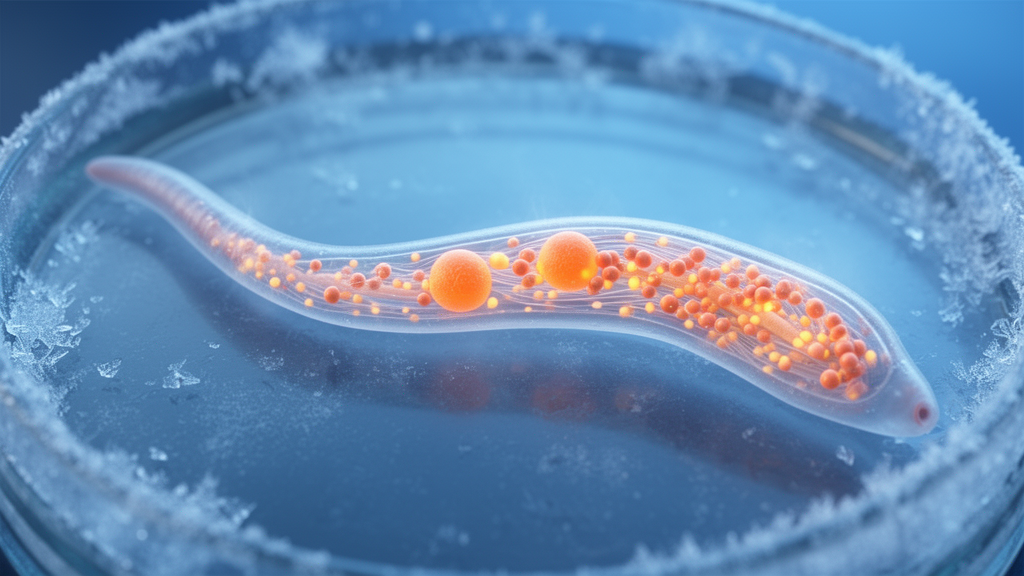
Moderately cold temperatures trigger a metabolic pathway in the nematode Caenorhabditis elegans that increases lifespan and supports protein homeostasis, according to a peer-reviewed experimental study led by David Vilchez at the University of Cologne. The research team found that muscle produces and releases the metabolite dihydrobiopterin, or BH2, under cool conditions. BH2 is then transported to other tissues, where it induces production of the amino acid tyrosine and strengthens cellular machinery responsible for maintaining functional proteins.
The findings were published in Nature as “Cold activates a BH2 metabolic network promoting longevity and proteostasis.” The study used C. elegans as its principal animal model to investigate the molecular link between moderately cold conditions, longevity and proteostasis, the maintenance of protein homeostasis. In the worms, muscle emerged as a central metabolic source of BH2 rather than serving only the needs of its own cells.
The metabolite traveled to other tissues, where its use in the pathway for tyrosine production helped preserve protein quality. This cross-tissue mechanism suggests that cold conditions can coordinate a protective response through signals generated in one tissue and received elsewhere, although the experiments do not show that the same pathway operates in people. The investigators also tested whether supplying the two metabolites identified by the pathway could reproduce some effects associated with cold exposure.
When BH2 and tyrosine were administered together, the combination was sufficient to produce a protective effect in C. elegans and in the cell cultures examined. The supplementation also significantly extended lifespan in worms even when they were maintained at standard or warmer temperatures, the research team reported. The result indicates that the combined pathway could influence longevity and proteostasis without requiring the animals to encounter cold conditions themselves; it does not establish that BH2 and tyrosine are safe or effective treatments for human aging or disease.
To examine the pathway beyond the worm model, the researchers validated their findings in human cell models of Huntington’s disease and amyotrophic lateral sclerosis, or ALS. Both are described in the study as age-associated neurodegenerative diseases in which the accumulation of misfolded or damaged proteins is a major feature. The cell experiments therefore tested the pathway in models relevant to disorders involving disturbed protein homeostasis, rather than demonstrating that cold exposure or metabolite supplementation prevents these diseases in patients.
The co-administration of BH2 and tyrosine reproduced some of the protective effects observed under cold conditions in these models. Vilchez said the study showed that mildly cold temperatures trigger significant production of BH2, which is synthesized, stored and released by muscle tissue before reaching other parts of the body. There, the study’s results indicate that BH2 helps maintain protein homeostasis and contributes to tissue health during aging.
The authors said the muscle-centered network offers a possible starting point for treatments intended to mimic some effects of cold without changing body temperature, but they emphasized that it is far too early to develop a pill that reproduces the longevity-promoting effects of cold exposure. Overall, the experiments identify a biochemical mechanism linking moderate cooling, muscle-derived BH2, tyrosine production, proteostasis and longer lifespan in worms, while leaving its safety, effectiveness and translational relevance in humans unresolved.
Subject of Research: Experimental study of cold-activated BH2 metabolism, longevity and proteostasis in worms and human cell models.
Article Title: Mechanism revealed behind the positive effects of cold temperatures on delaying aging and preventing age-related diseases
Article References: Mechanism revealed behind the positive effects of cold temperatures on delaying aging and preventing age-related diseases. Original publication (Bibliographic details unavailable.)
Image Credits: AI Generated
DOI: Not provided
Keywords: cold exposure, BH2, proteostasis, longevity, Caenorhabditis elegans, muscle metabolism, tyrosine, Huntington’s disease, amyotrophic lateral sclerosis, human cell models, Mechanism, revealed
News Source: Beatrice Stafford. (October 26, 2026). Cold-triggered muscle metabolism promotes longevity in worms. Scienmag.