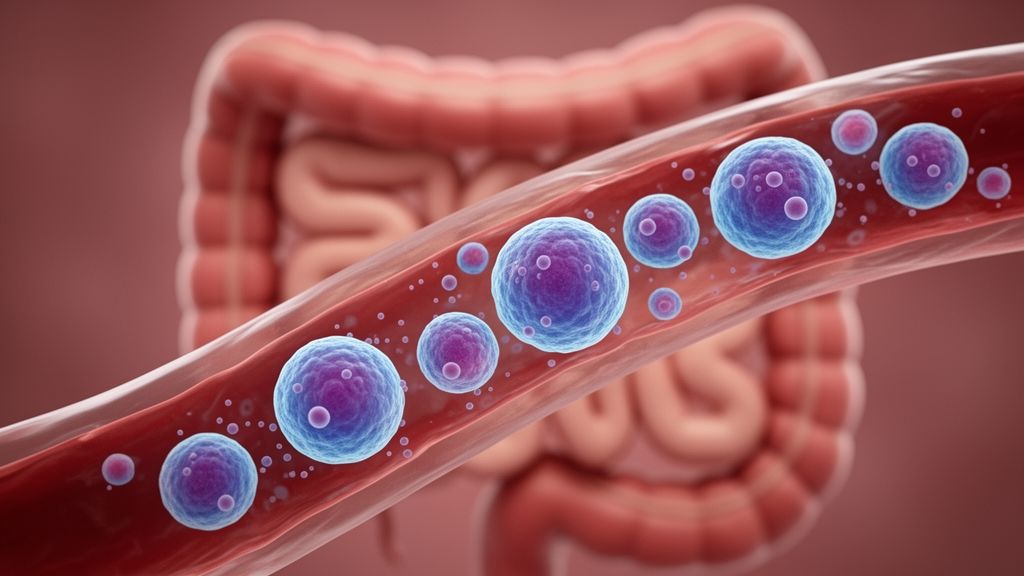
Researchers at the University of Texas MD Anderson Cancer Center have identified a previously unknown role for B cells in immune checkpoint inhibitor–related colitis, an inflammatory complication that can interrupt cancer treatment. In a peer-reviewed study published in Cell Reports, the team found that higher levels of circulating B cells before treatment were associated with an increased risk of colitis in patient samples. Experiments in preclinical models also showed that B-cell activation began before the expansion of inflammatory T cells associated with tissue damage, indicating that changes in these adaptive immune cells may precede symptoms and could potentially serve as a blood-based biomarker for risk.
Immune checkpoint inhibitors help the immune system recognize and eliminate cancer cells, but they can also trigger severe immune-related adverse effects. Colitis, an inflammation of the inner lining of the colon, is among the most common side effects and can cause severe diarrhea, abdominal pain and intestinal bleeding, sometimes leading to a pause or discontinuation of treatment. The researchers said clinicians currently have limited tools for predicting which patients will develop colitis before symptoms appear. Led by Roza Nurieva, Ph.D., with co-first authors Naimah Turner, Synat Keam, Ph.D., and Noha Abdel-Wahab, Ph.D., the study examined B cells in patient samples and in preclinical models designed to reproduce features of the inflammatory process.
The patient analysis found that elevated B-cell levels before treatment were associated with greater risk of immunotherapy-related colitis. To investigate the biological sequence behind that observation, the researchers used preclinical models to track immune changes as colitis-like inflammation developed. B-cell activation occurred early, preceding the expansion of inflammatory T cells that damage tissue and cause the characteristic intestinal inflammation. Depleting B cells before treatment reduced signs of colitis, resulted in less intestinal damage and produced fewer inflammatory T-cell responses in the models. The experiments also indicated that B cells help direct immune-cell movement into the colon, potentially strengthening inflammation after it begins. These findings support the hypothesis that B-cell dysregulation helps initiate and amplify the inflammatory cascade, although the patient association by itself does not establish a causal effect in humans.
The study also examined the gut microbiome in the preclinical models. Animals susceptible to colitis had altered gut microbial communities associated with abnormal B-cell activation before they received immunotherapy. Researchers used fecal microbiota transplantation to restore healthy gut bacteria, which decreased the severity of colitis and reduced inflammation. This experiment indicates a possible connection among microbiome composition, B-cell activity and intestinal inflammation in the models. It does not demonstrate that microbial manipulation is an established preventive treatment for people receiving immunotherapy. The authors proposed that measuring B-cell activity in peripheral blood might eventually help identify patients at higher risk before symptoms emerge, while targeting B cells or improving the gut microbiome could represent possible approaches for future study. The source specifically states that further validation in larger patient cohorts is needed.
For patients, the present implication is not a new clinical test or treatment, but a candidate biomarker and mechanistic strategy for further research. If the relationship between circulating B-cell levels and colitis risk is confirmed in larger, independent cohorts, blood-based monitoring could potentially complement clinical assessment of immunotherapy-related colitis. The study also provides a way to evaluate possible preventive interventions, such as B-cell depletion or microbiome restoration, before they are considered for clinical use. The strongest mechanistic evidence came from preclinical experiments, whereas the human findings reported here were an association observed in patient samples. By linking early B-cell activation to later inflammatory T-cell expansion and intestinal damage in models, the research identifies a specific pathway for additional testing and a potential point at which risk prediction or prevention might eventually be evaluated.
Subject of Research: Circulating B-cell activity as a potential biomarker and inflammatory driver of immunotherapy-related colitis.
Article Title: B cells may help predict risk of colitis from immunotherapy
Article References: B cells may help predict risk of colitis from immunotherapy. Original publication (Bibliographic details unavailable.)
Image Credits: AI Generated
DOI: Not provided
Keywords: B cells, cancer immunotherapy, immune checkpoint inhibitors, immunotherapy-related colitis, inflammatory T cells, gut microbiome, blood biomarkers, preclinical models, cells, help, predict, risk
News Source: Nathaniel Bowman. (October 26, 2026). Circulating B cells linked to immunotherapy-related colitis risk. Scienmag.