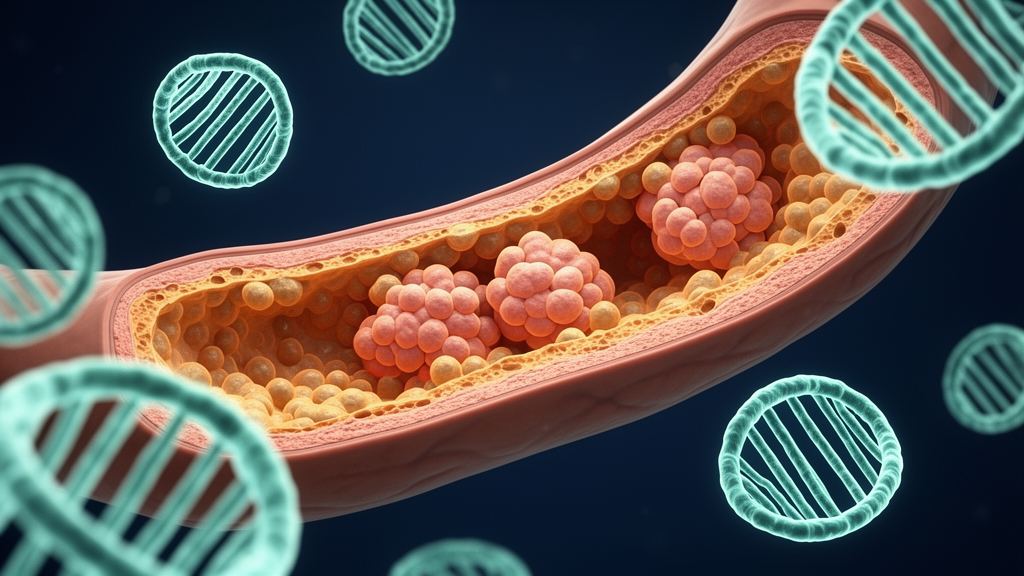
High levels of oncogenic circular RNAs are associated with markedly poorer overall survival in patients with cholangiocarcinoma, while high levels of tumor-suppressive circular RNAs are linked to better outcomes, according to a systematic review and meta-analysis published in BMC Cancer.
They are aberrantly expressed in various human cancers and can regulate tumor cell proliferation, invasion, and metastasis through multiple mechanisms. Until now, however, most studies of circRNAs in cholangiocarcinoma have been single-center efforts with small sample sizes, and no systematic quantitative evaluation of the field existed.
The new analysis, registered on PROSPERO (CRD420261352256), was carried out by two researchers who independently searched the Web of Science and PubMed databases, with a final search date of September 28, 2025. Studies were eligible if they used a cohort or case-control design, detected circRNAs by RT-qPCR, and reported clinicopathological data. Reviews, studies with duplicate data, non-human research, and publications in languages other than English or Chinese were excluded. Risk of bias was assessed with the Newcastle-Ottawa Scale, and all primary meta-analyses used a random-effects model in StataSE 12.0.
The included studies came from China and from a multinational cohort spanning France and Spain, and all used qRT-PCR to measure circRNA expression. High- and low-expression groups were defined using various cut-off criteria, including the median, the mean, X-tile, and the Youden index derived from ROC analysis.
When the pooled results were analyzed, high expression of oncogenic circRNAs was associated with poorer overall survival, with a hazard ratio of 2.27 (95% CI: 2.02–2.55). Conversely, high expression of tumor-suppressive circRNAs was linked to a favorable prognosis, with a hazard ratio of 0.53 (95% CI: 0.47–0.60). The authors note that these pooled hazard ratios are estimates across heterogeneous studies rather than predictions for individual patients.
Beyond survival, the meta-analysis examined whether circRNA expression correlated with clinicopathological features. Expression was not significantly associated with age, CA19-9 levels, or gender, but it was significantly associated with tumor differentiation (OR = 1.72), lymph node metastasis (OR = 3.43), and TNM stage (OR = 2.91). Taken together, the authors write, these findings indicate that dysregulated circRNA expression is closely associated with malignant progression of cholangiocarcinoma.
The study’s conclusion is deliberately cautious. The authors state that circRNAs might represent candidate prognostic markers requiring further validation, not established clinical tools. They also flag several limitations of the evidence base: a geographic bias, since most included studies were conducted in China; heterogeneity in the cut-off values used to define high versus low expression; and potential publication bias. Large-scale, well-designed studies are still needed, they conclude, to verify the actual clinical utility of these molecules.
For researchers, the pooled hazard ratios offer a quantitative benchmark for a biomarker class that has so far been described study by study. For patients, the message is more restrained: the association between circRNA expression and survival in cholangiocarcinoma is now supported by a systematic synthesis of the available literature, but whether measuring these molecules can improve diagnosis, risk stratification, or treatment decisions in routine care remains untested and will require prospective validation in larger and more geographically diverse cohorts.
Subject of Research: Prognostic and clinicopathological significance of circular RNA expression in cholangiocarcinoma
Article Title: Prognostic and clinicopathological significance of circular RNA expression in cholangiocarcinoma: a systematic review and meta-analysis
Article References: Yu, Y., Shen, L., Ni, T., Ding, L., Zhang, X., & Fan, K. (2026). Prognostic and clinicopathological significance of circular RNA expression in cholangiocarcinoma: a systematic review and meta-analysis. BMC Cancer. https://doi.org/10.1186/s12885-026-17232-3
Image Credits: AI Generated
DOI: 10.1186/s12885-026-17232-3
Keywords: cholangiocarcinoma, circular RNA, circRNA, meta-analysis, systematic review, prognosis, biomarkers, overall survival, lymph node metastasis, RT-qPCR, BMC Cancer, Prognostic
News Source: Nathaniel Bowman. (October 29, 2026). Circular RNAs linked to poorer survival in cholangiocarcinoma, meta-analysis finds. Scienmag.