


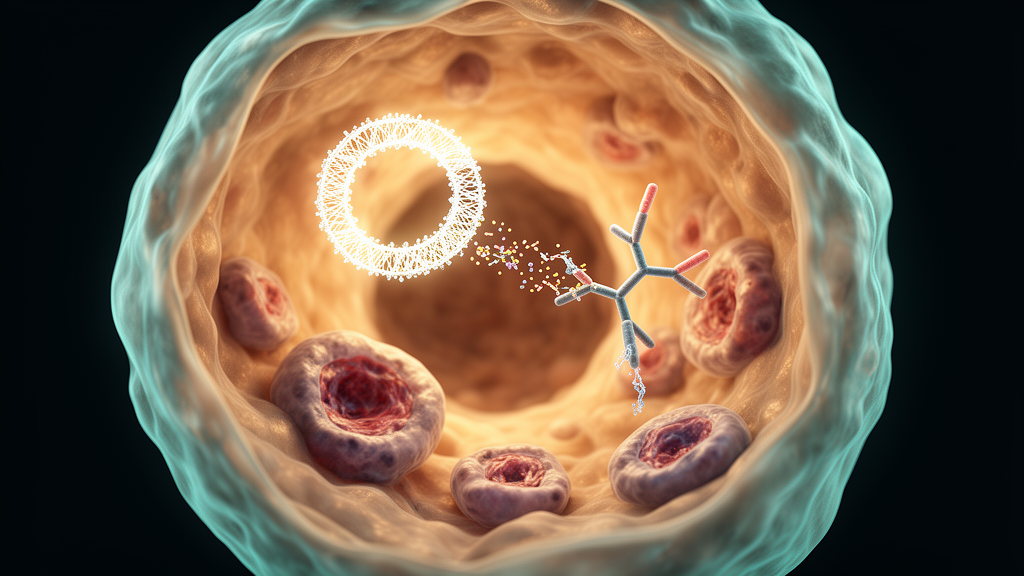
Osteosarcoma, the most common primary malignant bone tumor of adolescents and young adults, continues to claim lives when it spreads or returns, and outcomes for patients with metastatic or relapsed disease remain poor. A new study published in Biological Procedures Online points to an unusual molecular culprit: a circular RNA called circMAP2K4, also known as hsa_circ_0007508, which the researchers found substantially elevated in osteosarcoma tissues and cell lines.
The team behind the new work confirmed that circMAP2K4 has a stable, circular topology and resides predominantly in the cytoplasm, the cellular compartment where such molecules can act as molecular sponges that bind and sequester other regulatory RNAs.
Using paired osteosarcoma clinical specimens and cell lines, the researchers measured circMAP2K4 expression and then probed what the molecule actually does. A battery of functional tests followed: Cell Counting Kit-8 assays and EdU incorporation to track cell proliferation, flow cytometry to measure apoptosis, and Transwell assays to assess migration and invasion. The results consistently showed that circMAP2K4 pushes osteosarcoma cells toward more aggressive behavior, promoting proliferation, migration and invasion while suppressing programmed cell death.
The findings extended beyond the dish. In murine xenograft models, circMAP2K4 influenced tumor growth in living animals, reinforcing the in vitro observations with in vivo evidence.
Mechanistically, the study maps a regulatory circuit known as a competing endogenous RNA, or ceRNA, axis. MicroRNAs normally restrain gene expression by binding target messenger RNAs; by soaking up miR-515-5p, circMAP2K4 lifts this restraint and thereby derepresses G3BP2, a protein-coding gene whose activity then fuels the malignant phenotype.
The causal chain gained further support from rescue experiments. When the researchers silenced circMAP2K4, the aggressive cellular behaviors subsided, but re-expressing G3BP2 restored them. This rescue indicates that G3BP2 sits downstream of the circRNA-microRNA interaction and mediates its effects on tumor cell behavior.
Perhaps the most intriguing discovery involves exosomes, tiny membrane-bound vesicles that cells release into their surroundings and that can carry molecular cargo between cells. The researchers isolated exosomes from conditioned media and found circMAP2K4 enriched in exosome preparations from osteosarcoma cells. Exosomes taken from donor cells engineered to overexpress circMAP2K4 enhanced malignant behavior when applied to recipient cells, and they accelerated xenograft growth in mice.
This exosomal angle raises the possibility that circMAP2K4 helps coordinate tumor progression not only within individual cells but across the tumor ecosystem, as vesicle-borne RNA travels between neighboring cells. However, the authors are careful to flag an open question: whether the biological effects of exosomes from circMAP2K4-overexpressing donor cells are mediated specifically by the transferred circMAP2K4 acting through the same miR-515-5p/G3BP2 axis remains to be determined.
The study, published open access on 30 September 2026 and shared early as a citable, peer-reviewed accepted manuscript, positions circMAP2K4 as a promoter of osteosarcoma progression through an intracellular ceRNA mechanism and as a cargo molecule enriched in tumor-derived exosomes. As with all preclinical cell-line and xenograft work, the findings describe mechanisms in experimental models and will require further investigation before any translation toward human clinical applications can be considered.
Subject of Research: The role of the circular RNA circMAP2K4 and the miR-515-5p/G3BP2 axis in osteosarcoma progression and tumor-derived exosomes
Article Title: CircMAP2K4 Promotes Osteosarcoma Progression through the miR-515-5p/G3BP2 Axis and is Enriched in Tumor-derived Exosomes
Article References: Wu, J. (2026). CircMAP2K4 Promotes Osteosarcoma Progression through the miR-515-5p/G3BP2 Axis and is Enriched in Tumor-derived Exosomes. Biological Procedures Online. https://doi.org/10.1186/s12575-026-00363-z
Image Credits: AI Generated
DOI: 10.1186/s12575-026-00363-z
Keywords: osteosarcoma, circMAP2K4, circular RNA, miR-515-5p, G3BP2, ceRNA axis, exosomes, bone tumor, xenograft models, cell proliferation, RNA sponging, molecular mechanism
News Source: Nathaniel Bowman. (October 29, 2026). Circular RNA CircMAP2K4 Drives Osteosarcoma Growth via the miR-515-5p/G3BP2 Axis. Scienmag.



