• HOME
  • NEWS
  • EXPLORE
    • CAREER
      • Companies
      • Jobs
    • EVENTS
    • iGEM
      • News
      • Team
    • PHOTOS
    • VIDEO
    • WIKI
  • BLOG
  • COMMUNITY
    • FACEBOOK
    • INSTAGRAM
    • TWITTER
Friday, October 30, 2026
BIOENGINEER.ORG
No Result
View All Result
  • Login
  • HOME
  • NEWS
  • EXPLORE
    • CAREER
      • Companies
      • Jobs
        • Lecturer
        • PhD Studentship
        • Postdoc
        • Research Assistant
    • EVENTS
    • iGEM
      • News
      • Team
    • PHOTOS
    • VIDEO
    • WIKI
  • BLOG
  • COMMUNITY
    • FACEBOOK
    • INSTAGRAM
    • TWITTER
No Result
View All Result
Bioengineer.org
No Result
View All Result
Home NEWS Science News Biology

Chemotherapy drug capecitabine linked to sudden facial skin growths in case report

by
October 29, 2026
in Biology
Reading Time: 2 mins read
0
Chemotherapy drug capecitabine linked to sudden facial skin growths in case report

Chemotherapy drug capecitabine linked to sudden facial skin growths in case report

Share on FacebookShare on TwitterShare on LinkedinShare on RedditShare on Telegram

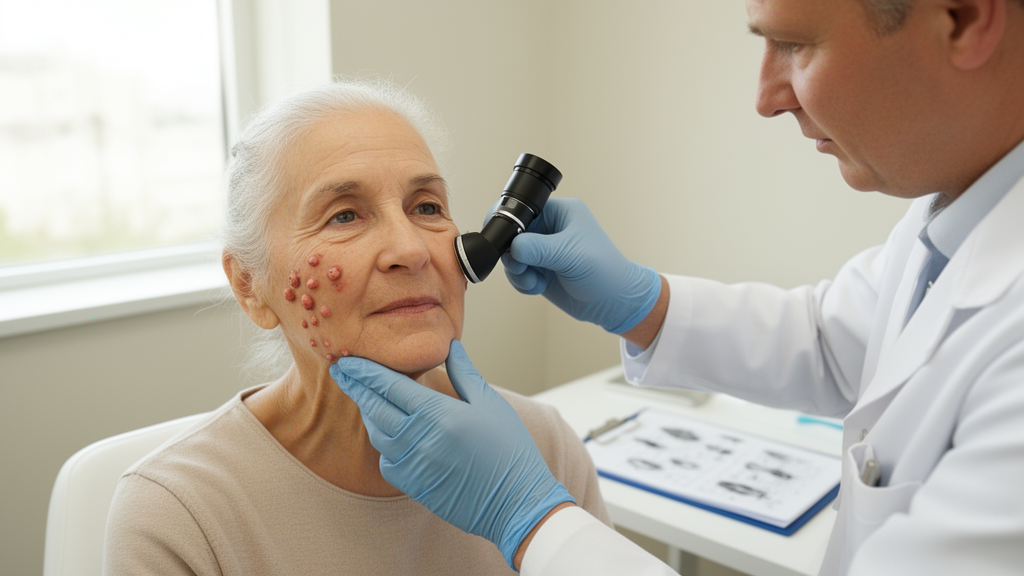
A 75-year-old woman with advanced sigmoid colon cancer and bone metastases developed an explosive eruption of skin lesions while taking oral capecitabine, according to a case report published in the journal Skin on September 22, 2026. Over just two months, densely distributed, uniform papules and nodules spread across her entire face and neck, some capped with tiny hemorrhagic crusts. The diagnosis: capecitabine-induced eruptive keratoacanthoma.

Eruptive keratoacanthoma is a sudden outbreak of multiple skin lesions whose causes remain incompletely understood. Reported contributing factors include ultraviolet exposure, immune dysfunction, viral infection, trauma and immunomodulatory medicines. Capecitabine, an oral prodrug of the chemotherapy agent 5-fluorouracil, is an unlikely suspect on first glance, because 5-FU is itself commonly used to treat keratoacanthomas. That paradox is precisely what makes this drug-related skin reaction easy to overlook in clinical practice, the authors warn.

The patient had not received any immunosuppressive therapy, which strengthened the suspicion that the chemotherapy itself was the trigger. Histopathological examination showed well-differentiated squamous epithelial proliferation within the dermis, with keratin pearls, mild atypia and pushing rather than infiltrative borders.

One additional laboratory finding proved decisive. Ki-67, a marker of cell proliferation, was positive only in the basal layer of the squamous nests. Combined with the clinical history of rapid, widespread onset during capecitabine treatment, these features supported a diagnosis of benign eruptive keratoacanthoma rather than malignant disease.

The authors emphasize that without clinical correlation, the lesion could easily be misdiagnosed as squamous cell carcinoma on histopathology alone.

No standardized treatment protocol has been established for this condition. Reported attempts described in the literature include topical corticosteroids, 5-fluorouracil, methotrexate and triamcinolone acetonide, intralesional injections of these agents, and oral acitretin.

The teaching points the authors draw from the case are threefold: integrate clinical and pathological findings rather than relying on histology in isolation; recognize capecitabine as an atypical trigger of eruptive keratoacanthoma despite the drug’s 5-FU lineage; and consider drug-induced eruptive keratoacanthoma in patients with advanced cancer who suddenly develop widespread multiple skin papules and nodules, even when no immunosuppressive treatment has been given.

As a single case report, the findings describe one patient’s experience and do not establish how frequently capecitabine causes these eruptions. Nevertheless, the authors argue that awareness of this diagnostic trap could spare similar patients unnecessary interventions for suspected squamous cell carcinoma, and they call for clinicians managing advanced cancer to keep this rare reaction in mind when widespread facial lesions appear during treatment.

Subject of Research: Capecitabine-induced eruptive keratoacanthoma in a patient with advanced colon cancer

Article Title: A cancer drug triggered widespread skin growths—and a diagnostic trap

Article References: A cancer drug triggered widespread skin growths—and a diagnostic trap. Original publication (Bibliographic details unavailable.)

Image Credits: AI Generated

DOI: Not provided

Keywords: capecitabine, keratoacanthoma, colon cancer, skin lesions, histopathology, squamous cell carcinoma, 5-fluorouracil, MTOR, case report, drug reaction, dermatology, oncology

News Source: Nathaniel Bowman. (October 29, 2026). Chemotherapy drug capecitabine linked to sudden facial skin growths in case report. Scienmag.


Tags: 5-fluorouracilcapecitabinecase reportcolon cancerDermatologydrug reactionhistopathologykeratoacanthomamTOROncologyskin lesionssquamous cell carcinoma
Share12Tweet7Share2ShareShareShare1

Related Posts

Immobilized Enzyme Shows Enhanced Stability for Alkane Bioconversion

Immobilized Enzyme Shows Enhanced Stability for Alkane Bioconversion

October 30, 2026
From Jaw Cysts to AI Diagnostics: New Dental Research Presented at Portuguese Meeting

From Jaw Cysts to AI Diagnostics: New Dental Research Presented at Portuguese Meeting

October 30, 2026

Viral RNA contacts leave immune gene promoters accessible yet transcriptionally constrained

October 30, 2026

Japanese Safety Science Symposium Brings Everyday Health Risks to the Public

October 30, 2026

POPULAR NEWS

  • Ethosomal nanocarriers aim to reprogram skin cancer microenvironment through transdermal drug delivery

    Ethosomal nanocarriers aim to reprogram skin cancer microenvironment through transdermal drug delivery

    29 shares
    Share 12 Tweet 7
  • Common Immunosuppressant Disrupts Blood Vessel Growth in Zebrafish Embryos

    29 shares
    Share 12 Tweet 7
  • Community co-design reshapes a Malawi mini-grid toward clean cooking

    29 shares
    Share 12 Tweet 7
  • Kidney stone cultures predict sepsis after surgery better than urine tests

    29 shares
    Share 12 Tweet 7

About

We bring you the latest biotechnology news from best research centers and universities around the world. Check our website.

Follow us

Recent News

Fasting-mimicking diet reshapes gut microbiota in mouse Lynch syndrome model

Golf swing curvature reveals skill level, study of 127 driver swings finds

Digital Well-Being Research Is Stalled by a Naming Problem, Scientists Warn

Subscribe to Blog via Email

Enter your email address to subscribe to this blog and receive notifications of new posts by email.

Join 86 other subscribers
  • Contact Us

Bioengineer.org © Copyright 2023 All Rights Reserved.

Welcome Back!

Login to your account below

Forgotten Password?

Retrieve your password

Please enter your username or email address to reset your password.

Log In
No Result
View All Result
  • Homepages
    • Home Page 1
    • Home Page 2
  • News
  • National
  • Business
  • Health
  • Lifestyle
  • Science

Bioengineer.org © Copyright 2023 All Rights Reserved.