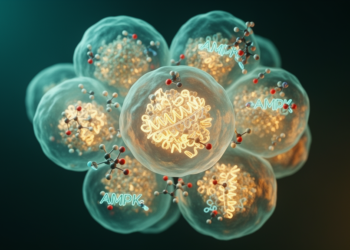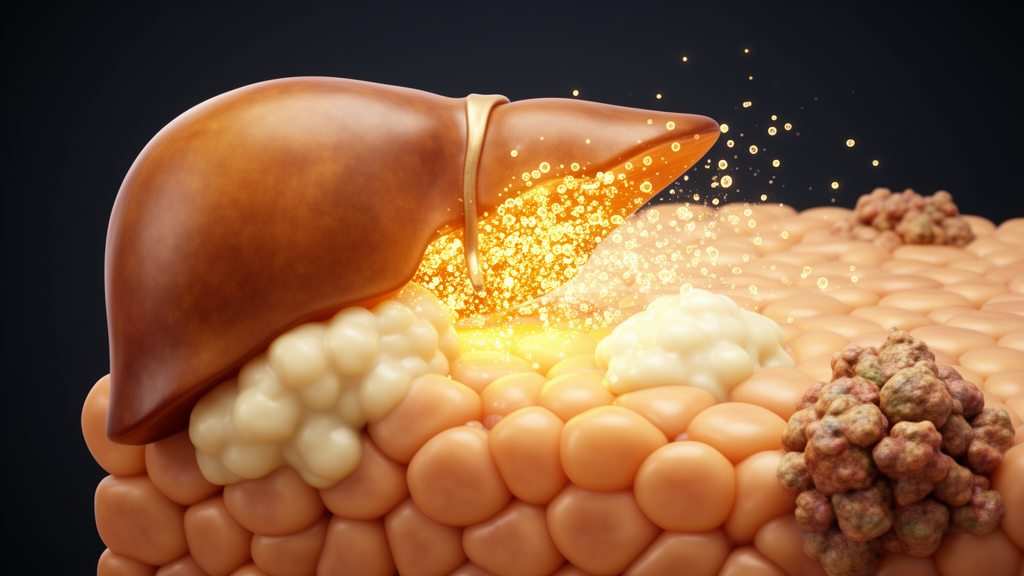
A protein long associated with one form of cell death appears to play a very different role in the liver, where it may help tumors take hold and grow. New research from the University of Oklahoma, published in the journal Hepatology, identifies MLKL, or mixed lineage kinase domain-like protein, as a potential driver of hepatocellular carcinoma, a primary form of liver cancer, in the setting of obesity-related fatty liver disease. The finding, the researchers say, could point toward a new therapeutic approach for a cancer that is often detected only in its later stages and for which current treatments remain limited. The work was conducted in mice, in laboratory-grown liver cancer cells, and in analyses of human liver cancer data sets and tumor samples, and its central conclusion is that MLKL promotes tumor development through mitochondrial dysfunction rather than through its classical role in cell death.
MLKL is best known in the scientific literature for its involvement in necroptosis, a regulated form of cell death. Because of this established role, the research team expected that changes in MLKL in the liver would relate to cell death. What they found instead was surprising: in mice fed a Western-style high-fat diet, MLKL levels rose, but rather than killing liver cells, the protein appeared to reduce the function of mitochondria, the structures inside cells that produce energy, and to promote tumor development in the liver. When the researchers removed MLKL from liver cells in mice, the animals developed fewer and smaller liver tumors. The disconnect between the protein’s reputation and its observed behavior in the fatty liver environment is what makes the result notable, since it suggests a function for MLKL that operates independently of necroptosis.
According to senior author Deepa Sathyaseelan, Ph.D., an associate professor of biochemistry and physiology in the OU College of Medicine and a member of both the OU Health Stephenson Cancer Center and the OU Health Harold Hamm Diabetes Center, the result revealed a previously unrecognized role for the protein. She said the finding was very surprising because it reveals a new role for MLKL and suggests the protein could be a therapeutic target for hepatocellular carcinoma. She expressed enthusiasm about continuing to investigate whether targeting this protein could slow or prevent tumor growth. Her laboratory led the study in collaboration with researchers at the OU Health Stephenson Cancer Center and the Oklahoma Medical Research Foundation, and the experiments were designed to separate MLKL’s role in cell death from its effects on energy metabolism and tumor formation.
The mechanism the team uncovered involves a second protein with a protective role in cellular energy metabolism. MFN2, or mitofusin 2, helps maintain healthy mitochondria. In the study, when MLKL increased in response to a high-fat diet, MFN2 decreased, and mitochondrial function declined as a result. When MLKL was absent, MFN2 returned, mitochondrial function improved, and tumor growth was reduced. This relationship places MLKL upstream of MFN2 in a pathway that connects dietary stress in the liver to the breakdown of mitochondrial health and, ultimately, to tumor progression. Sathyaseelan noted that research has already shown mitochondrial dysfunction to be a key driver of several liver diseases, including liver cancer, and said the new work identifies a mechanism by which that dysfunction occurs.
Perhaps the most unexpected aspect of the study is what did not change when MLKL was removed. Even though the mice developed fewer and smaller tumors, eliminating MLKL did not reduce fatty liver, liver inflammation, fibrosis, or liver injury. Sathyaseelan explained that liver cancer has traditionally been viewed as a progressive disease, so the team expected that removing MLKL would first reduce fatty liver, then reduce fibrosis, and eventually reduce liver tumors. That is not what they observed. Instead, she said, the result indicates that MLKL regulates tumor development through a completely different pathway, which raises the possibility of directly targeting liver cancer itself rather than the upstream stages of liver disease. She described that prospect as good news precisely because liver cancer is often not discovered until its later stages.
That possibility carries particular weight given the clinical realities of the disease. A strategy aimed directly at tumor growth, rather than at the preceding stages of fatty liver disease and fibrosis, could matter for patients whose cancer is found late. The work, however, remains at the experimental stage. The findings are observations from animal models, laboratory-grown liver cancer cells, and analyses of existing human tumor data, rather than demonstrations of benefit in human patients. Any therapeutic implications would need to be established through further research, and the authors themselves frame MLKL as a potential target to be investigated rather than a validated point of intervention.
In the human component of the study, the team analyzed human liver cancer data sets and tumor samples and found that tumors with higher levels of MLKL were associated with poorer overall survival. This association, drawn from existing tumor data and samples rather than from an intervention trial, cannot by itself prove that MLKL causes worse outcomes in people. It does, however, align with the mouse and cell experiments, in which MLKL promoted mitochondrial dysfunction and tumor growth, and it supports the idea that the protein may be relevant to human disease. The team also plans to explore whether MLKL could serve as a biomarker for liver cancer, a measure that could potentially help identify or track the disease, although that application remains a subject for future study.
The clinical backdrop for this research is substantial. Sathyaseelan noted that nearly 30 percent of the adult population in the United States has fatty liver disease. For people who progress to liver cancer, she said, the five-year overall survival is approximately 22 percent, and current therapies are not very effective. She also described a shift in the underlying causes of the disease: in years past, liver cancer was primarily caused by hepatitis B or C infections or chronic alcoholism, but fatty liver disease is now a major contributor. That epidemiological transition, she argued, is precisely why researchers need to understand the basic mechanism by which a fatty liver progresses to liver cancer. The study was conducted in the context of MASLD, the metabolic dysfunction-associated form of fatty liver disease that is closely tied to obesity.
The study, titled “Hepatocyte MLKL drives obesity-driven hepatocellular carcinoma progression via mitochondrial dysfunction independent of necroptosis in MASLD,” was published in Hepatology on August 4, 2026. The work involved collaborators at the OU Health Stephenson Cancer Center and the Oklahoma Medical Research Foundation. Funding came from the National Institutes of Health, the Oklahoma Center for Adult Stem Cell Research, and a team science grant from the OU Health Harold Hamm Diabetes Center and the OU Health Stephenson Cancer Center. The project was also supported by Oklahoma’s Tobacco Settlement Endowment Trust, a primary funder of the Stephenson Cancer Center and the TSET Health Promotion Research Center at the University of Oklahoma, and by the Oklahoma Shared Clinical and Translational Resources through an Institutional Development Award from the National Institute of General Medical Sciences.
Looking ahead, Sathyaseelan and her team plan to continue studying MLKL as a potential therapeutic target. Their planned work includes investigating MLKL inhibitors and testing whether such inhibitors could be combined with existing cancer treatments. They also intend to study whether MLKL can serve as a biomarker for liver cancer. Because the current results come from mouse models, laboratory-grown liver cancer cells, and analyses of human tumor data, any benefit for patients would need to be established through future research. Still, the study reframes a well-known cell death protein as a possible link between mitochondrial dysfunction and tumor growth in obesity-related liver disease, and it offers researchers a concrete molecular target to pursue in a cancer where new options are urgently needed.
Subject of Research: The role of the MLKL protein in mitochondrial dysfunction and hepatocellular carcinoma progression in obesity-related fatty liver disease
Article Title: Protein linked to cell death may also drive liver cancer
Article References: Protein linked to cell death may also drive liver cancer. Original publication (Bibliographic details unavailable.)
Image Credits: AI Generated
DOI: Not provided
Keywords: MLKL, hepatocellular carcinoma, fatty liver disease, MASLD, mitochondrial dysfunction, MFN2, necroptosis, liver cancer, obesity, Hepatology, therapeutic target, University of Oklahoma
News Source: Nathaniel Bowman. (October 26, 2026). Cell Death Protein MLKL Emerges as Unexpected Driver of Obesity-Linked Liver Cancer. Scienmag.