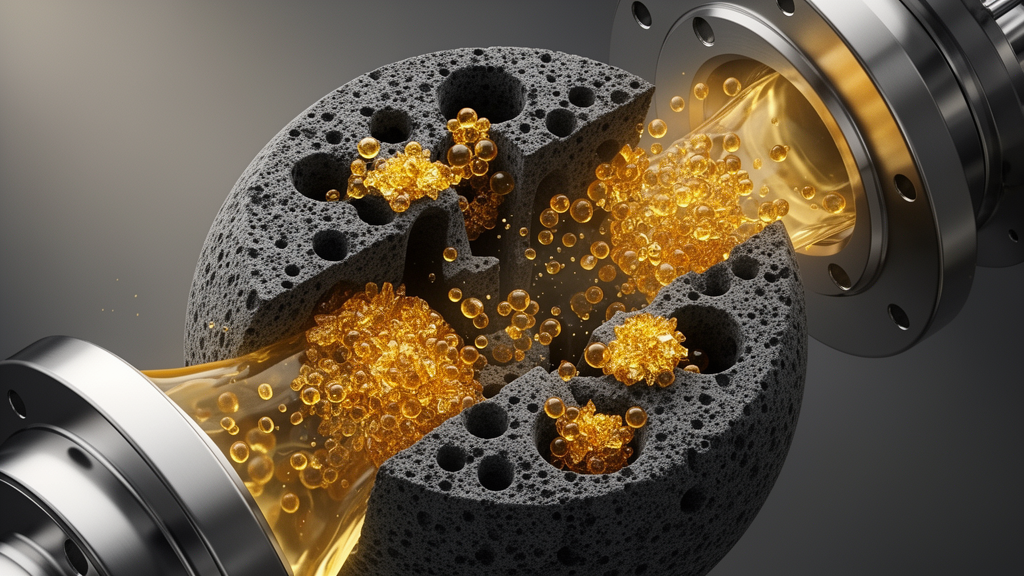
Researchers at Xiamen University have identified two ways that transition-metal sulfide catalysts can lose their effectiveness in all-solid-state lithium-sulfur batteries, offering a failure-focused route to more stable catalysts. In the peer-reviewed experimental study, published in National Science Review, the team found that electrochemical conversion can cause severe phase separation, breaking catalysts into spatially separated products and producing catalyst self-poisoning. In a second pathway, transition-metal species migrate from the catalyst into the surrounding solid electrolyte, accelerating electrolyte degradation. The results suggest that catalytic activity alone cannot make a material effective: catalysts must also preserve their structure, limit atomic migration and maintain continuous pathways for lithium ions and electrons during repeated cycling.
The work addresses a central limitation of all-solid-state lithium-sulfur batteries. These batteries can suppress the polysulfide shuttle effect associated with liquid electrolytes while retaining the sulfur cathode’s high theoretical energy density, but sulfur redox reactions remain slow because they are confined to sparse three-phase boundaries, where sulfur, solid electrolyte and electronic conductor meet. Inadequate transport pathways further restrict sulfur utilization. Transition-metal sulfides have therefore been investigated as catalysts that could accelerate sulfur reactions, but their structural evolution under realistic electrochemical cycling has been insufficiently understood. Rather than beginning with a new composition, the researchers first characterized the failure behavior of commonly used catalysts in experimental battery systems.
Guided by the two observed failure mechanisms, the team constructed a multicomponent, high-entropy sulfide catalyst through a bottom-up design. Its high configurational entropy was intended to stabilize the solid-solution phase and resist phase separation, while sluggish atomic diffusion was expected to hinder long-range migration of transition-metal species. During electrochemical operation, the high-entropy sulfide underwent solid-solution activation and evolved into a stable lithiated phase, LixHES, rather than undergoing the extensive phase separation and atomic reconstruction associated with conversion reactions. The research indicates that a catalyst’s initial composition is not enough to predict its behavior; its structural disorder, atomic mobility and transport properties determine whether it can continue functioning as the battery cycles.
The activated LixHES phase supported sulfur conversion through two complementary mechanisms. First, it conducted both lithium ions and electrons, extending the reaction zone beyond the conventional three-phase boundaries and allowing more of the sulfur to participate. Second, Li-deficient LixHES served as an interfacial redox mediator, spontaneously promoting the oxidation of lithium sulfide during charging. In a composite cathode containing only 3 weight percent catalyst and 40 weight percent sulfur, the researchers measured sulfur utilization of 93.4 percent and sulfur conversion efficiency of 93.0 percent. The battery also retained strong performance at higher sulfur contents, higher sulfur loadings and high cycling rates, although the supplied report does not provide the detailed test conditions for each of those measurements.
The researchers also demonstrated a full cell paired with a lithium-silicon anode, reporting a gravimetric energy density of 571 watt-hours per kilogram based on the total electrode mass. This result is an experimental device demonstration rather than proof of commercial performance, and the energy-density calculation depends on the stated electrode-mass basis. More broadly, the study proposes that catalyst development should begin with identifying how a material changes and fails under operating conditions, then use that information to design stable phases, controlled diffusion and continuous carrier pathways. Important questions remain, including how different transition-metal ions influence sulfide solid electrolytes and how sulfur conversion begins and propagates without a liquid medium. The findings therefore provide both a materials-design strategy and a framework for investigating the less understood chemistry of all-solid-state lithium-sulfur batteries.
Subject of Research: Failure mechanisms and high-entropy catalyst design for sulfur conversion in all-solid-state lithium-sulfur batteries
Article Title: Understanding catalyst failure mechanism guides efficient sulfur conversion in all-solid-state batteries
Article References: Understanding catalyst failure mechanism guides efficient sulfur conversion in all-solid-state batteries. Original publication (Bibliographic details unavailable.)
Image Credits: AI Generated
DOI: Not provided
Keywords: all-solid-state batteries, lithium-sulfur batteries, high-entropy sulfide, catalyst degradation, phase separation, transition-metal migration, sulfur utilization, solid electrolyte, electrochemical cycling, energy density, Understanding, catalyst
News Source: Bethany Barker. (October 26, 2026). Catalyst Failure Mechanisms Guide More Efficient Sulfur Conversion. Scienmag.