A study of 72 clinical isolates of Acinetobacter baumannii collected from a hospital laboratory in Cairo, Egypt, has found that the vast majority of the bacteria could form biofilms, that resistance to most tested antibiotics was high, and that the presence of one gene in particular, blaPER-1, tracked closely with the ability to build these protective surface communities. The research, published in the Future Journal of Pharmaceutical Sciences, examined how biofilm-forming capacity, antimicrobial susceptibility, and three genetic determinants—ompA, bap, and blaPER-1—relate to one another in bacteria recovered from patients.
The isolates were collected from the Microbiology Laboratory at Kasr Al Ainy Hospital, Faculty of Medicine, Cairo University, during 2017 to 2019. Researchers identified the bacteria first through biochemical testing, checking catalase production, citrate utilization, triple sugar iron reactions, and the ability to grow at 44 degrees Celsius. Every isolate phenotypically identified as A. baumannii was then confirmed at the species level by detecting the intrinsic blaOXA-51 gene using conventional polymerase chain reaction, a molecular signature considered reliable for the species.
Susceptibility testing followed Clinical and Laboratory Standards Institute protocols, using disk diffusion for eight antibiotics and broth microdilution for colistin and tigecycline, with tigecycline breakpoints interpreted according to US Food and Drug Administration criteria. The results painted a grim picture of the drug resistance landscape. Resistance rates between 69.4 and 98.6 percent were recorded against most of the antibiotics tested. Tigecycline stood out as the most active agent, with only 12.5 percent of isolates resistant. Colistin and amikacin resistance sat at moderately elevated levels of 45.8 and 56.9 percent respectively. For ceftazidime, sulfamethoxazole–trimethoprim, ciprofloxacin, ampicillin–sulbactam, piperacillin–tazobactam, cefepime, and imipenem, resistance ranged from 70.8 to 95.8 percent.
Classifying the resistance phenotypes, the researchers found that all 72 isolates resisted at least one antibiotic. Using standard definitions, 87.5 percent of the isolates were categorized as either multidrug-resistant or extensively drug-resistant, 6.9 percent were pan-drug-resistant, resisting all ten antibiotics tested, and only 5.6 percent were non-multidrug-resistant. Imipenem resistance, a marker of carbapenem resistance that the World Health Organization flagged in 2018 as a priority research target, reached 76.4 percent in this collection.
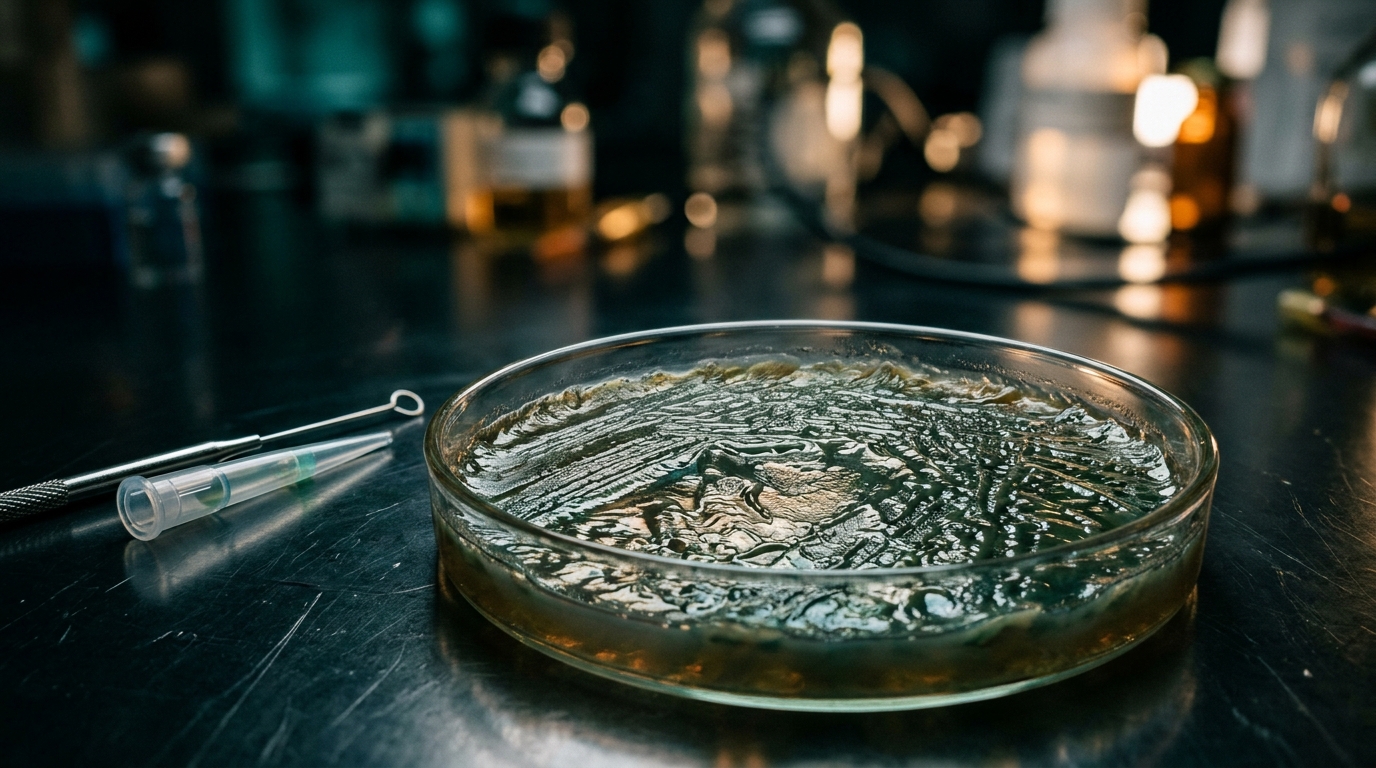
To measure biofilm formation, the team used the crystal violet microtiter plate assay, staining adherent cells and reading the optical density at 570 nanometers. Of the 72 isolates, 62, or 86 percent, produced biofilms to varying degrees, while 10 showed no ability to form them. Within the biofilm-producing group, 19 percent were classified as strong producers, 25 percent as moderate, and 42 percent as weak, using an optical density cutoff calculated from the negative control. The positive control, Pseudomonas aeruginosa PAO1, produced a mean absorbance of 1.313, well above the negative control value of 0.085.
The link between biofilm formation and antibiotic resistance was statistically significant across the tested drugs. Resistance was consistently higher in biofilm-forming isolates than in non-forming ones, with a P value below 0.001. When the researchers broke the isolates down by biofilm strength, strong, moderate, and weak producers all showed significantly greater resistance to tigecycline, colistin, amikacin, piperacillin–tazobactam, and cefepime than non-producers. Resistance to ampicillin–sulbactam was nearly identical in both groups, while resistance to ceftazidime, ciprofloxacin, imipenem, and sulfamethoxazole–trimethoprim appeared independent of biofilm ability, with no notable statistical difference. Among the pan-drug-resistant and extensively drug-resistant isolates, every single one formed biofilm, and a Spearman rank correlation confirmed a significant association between biofilm capacity and resistance phenotype with a P value of 0.002.
Genetic screening revealed that ompA was present in 71 of 72 isolates, or 98.6 percent, and bap in 63 of 72, or 87.5 percent, making these two genes nearly ubiquitous across the collection regardless of biofilm behavior. The blaPER-1 gene was far less common, detected in only 27 of 72 isolates, or 37.5 percent. Strikingly, blaPER-1 was absent from all ten biofilm-negative isolates but appeared in biofilm-forming strains at rates that rose with the intensity of biofilm development, yielding a significant positive association with a P value of 0.018. No significant relationship emerged between biofilm intensity and the presence of ompA or bap, with P values of 0.329 and 0.413 respectively. The researchers suggest that blaPER-1 may serve as a potential marker associated with biofilm-producing strains.
To probe gene function rather than mere presence, the team selected eight representative isolates, two from each biofilm category, and quantified expression using quantitative reverse transcription PCR normalized to the 16S rRNA housekeeping gene, comparing each to the strong biofilm-forming isolates set at a fold change of 1.00. The mean fold expression of ompA was 0.59 in moderate, 0.25 in weak, and 0.13 in non-biofilm-forming isolates. For bap, the corresponding values were 0.57, 0.35, and 0.13. The blaPER-1 gene, assayed only in biofilm-forming isolates, showed mean fold expression of 0.61 in moderate and 0.46 in weak producers. In every case, expression climbed steadily with biofilm-forming strength, and the differences were statistically significant.
Pearson correlation analysis added further texture to the picture. There was no significant correlation between the degree of biofilm formation and detection of bap, with a coefficient of −0.03, or ompA, at −0.05. But the presence of blaPER-1 correlated significantly with biofilm ability, and the co-presence of all three genes showed a positive correlation with biofilm intensity at a coefficient of 0.29. Biofilm-forming isolates also correlated significantly with resistance to tigecycline, colistin, amikacin, piperacillin–tazobactam, and cefepime, with coefficients ranging from 0.15 to 0.54.
The authors conclude that A. baumannii in this clinical setting demonstrates a robust capacity for biofilm production alongside extensive multidrug resistance, with ompA, bap, and blaPER-1 playing critical roles. Because blaPER-1 appeared only in biofilm-forming isolates, the team proposes it as a potential marker of biofilm-producing strains, though they note that further studies are needed to explore whether these genes could become targets for therapeutic intervention. The findings add to a contested but growing body of evidence linking biofilm formation and antimicrobial resistance in this notoriously resilient hospital pathogen, and they underscore how a single genetic marker may help identify the isolates most capable of persisting on medical surfaces and withstanding treatment.
Subject of Research: Biofilm formation, antimicrobial resistance, and biofilm-related gene prevalence in Acinetobacter baumannii clinical isolates
Article Title: Characterization of biofilm development and antimicrobial susceptibility profiles in Acinetobacter baumannii clinical isolates
Article References: Abdelbaset, E., Shahin, M. A., Ali, A. E., Samir, R., & Raafat, M. M. (2026). Characterization of biofilm development and antimicrobial susceptibility profiles in Acinetobacter baumannii clinical isolates. Future Journal of Pharmaceutical Sciences, 12(1), Article 77. https://doi.org/10.1186/s43094-026-00978-9
Image Credits: AI Generated
DOI: 10.1186/s43094-026-00978-9
Keywords: Acinetobacter baumannii, biofilm, antimicrobial resistance, multidrug resistance, ompA, bap, blaPER-1, hospital-acquired infection, tigecycline, colistin, gene expression, clinical isolates
News Source: Kristina Jarvis. (November 5, 2026). Biofilm-Forming Acinetobacter baumannii Strains Show Widespread Drug Resistance. Scienmag.