Transcutaneous spinal neuromodulation (TSN), delivered alongside activity-based rehabilitation, was integrated into routine clinical care for 50 people with neurological conditions without a single documented device-related adverse event, serious adverse event, neurological deterioration, or device-related treatment discontinuation, according to a retrospective post-market study published in Frontiers in Medical Technology.
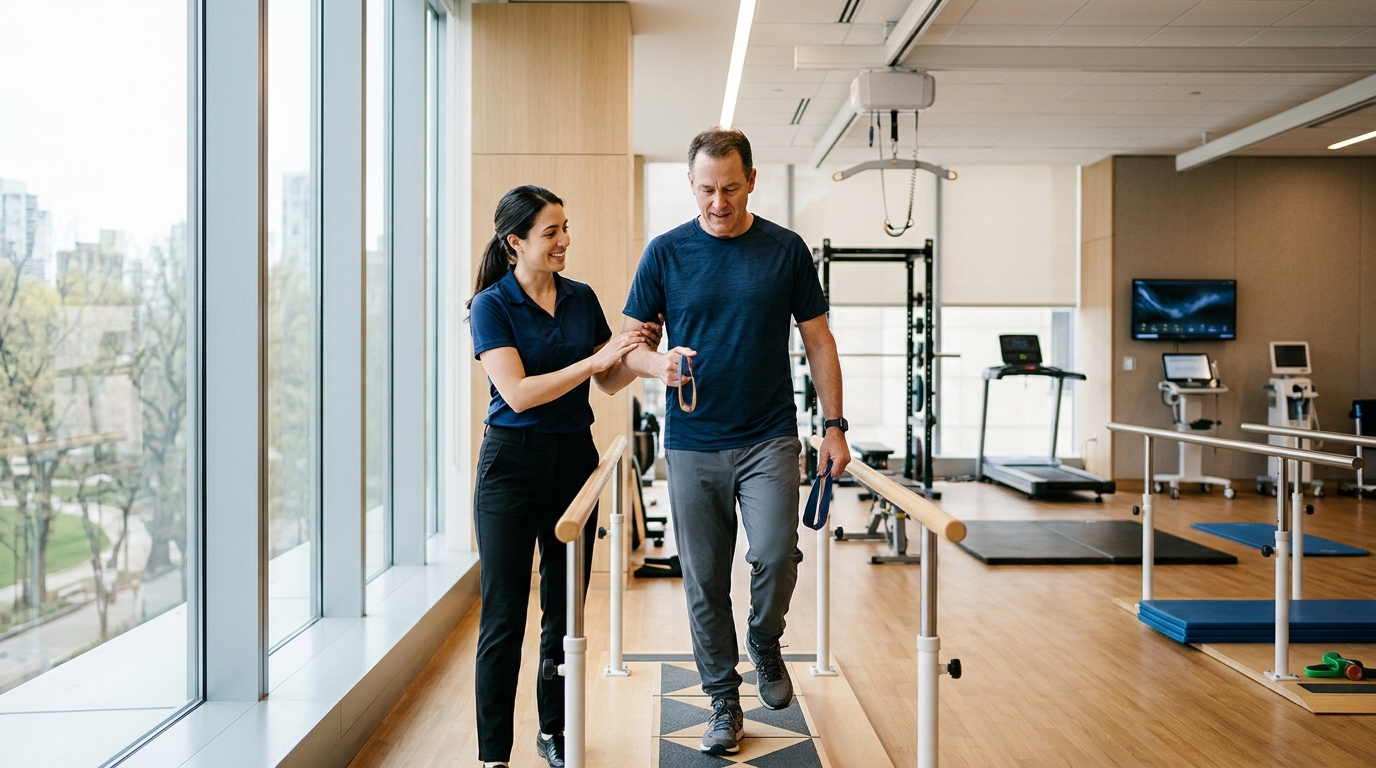
The study reviewed de-identified records from individuals with cerebral palsy (29 participants), spinal cord injury (11 participants), and other neurological or structural conditions (10 participants). The device, known as xStep, was incorporated into individualized activity-based rehabilitation programs lasting approximately one hour per session, delivered two to five days per week. Because the analysis was retrospective and descriptive, the authors emphasize that the findings characterize real-world implementation and documented safety rather than establishing efficacy.
TSN is described in the study as the first therapy of its kind approved by the US FDA, and it is delivered in conjunction with activity-based rehabilitation. The authors note that evidence describing its routine clinical use across heterogeneous neurological populations has remained limited, which motivated this post-market review of clinical records.
Several routinely collected clinical outcomes were available in the records, including hand-held dynamometry, the Modified Ashworth Scale for spasticity, International Standards for Neurological Classification of Spinal Cord Injury motor and sensory scores, the 10-Meter Walk Test, and the Timed Up and Go test. Analyses were descriptive, and the study reports outcome-specific denominators because not every participant completed every assessment.
During same-session dynamometry, mean force increased from 5.41 newtons without stimulation to 6.00 newtons with stimulation across 12 participants, with 10 of the 12 showing a net increase in mean force. Spasticity decreased in at least one assessed muscle group in 13 of 24 participants. Among eight participants with spinal cord injury who had paired assessments, the mean motor score changed from 44.12 to 45.50 and the mean sensory score from 124.62 to 129.12.
Descriptive improvements in gait speed and Timed Up and Go completion time were also observed among ambulatory participants. However, the study highlights important limitations: assessment intervals varied between participants, and there was no untreated comparator group. Without a control condition, these within-participant changes cannot be attributed to the neuromodulation itself rather than to the rehabilitation, natural recovery, or practice effects.
The authors are explicit on this point, stating that the observed within-participant changes are clinical signals and do not establish efficacy or causality. This distinction matters for interpreting post-market data, where records are collected for clinical purposes rather than according to a predefined research protocol, and where the populations, exposure schedules, and outcome measures differ across individuals.
The safety findings, while reassuring within the scope of the reviewed records, also carry caveats. The study reports that no device-related adverse events were documented in the records reviewed, which reflects what was recorded in routine clinical documentation rather than active adverse-event surveillance. The cohort was also heterogeneous, mixing diagnoses with different expected trajectories of change.
The study concludes that diagnosis-specific prospective studies with standardized exposure, predefined endpoints, and comparator conditions are needed to determine whether the observed clinical signals translate into measurable benefits. Until such trials are completed, the research stands as an early characterization of how this FDA-approved neuromodulation approach is being used in everyday rehabilitation practice, and of the safety profile documented in those settings.
Subject of Research: Real-world safety and clinical outcomes of transcutaneous spinal neuromodulation combined with activity-based rehabilitation across neurological disorders
Article Title: Real-world use of transcutaneous spinal neuromodulation combined with activity-based rehabilitation across neurological disorders: a retrospective post-market study
Article References: Gad, P., Desai, S., Gujjewar, S., Kandhari, S., Raj, M., & Sachdeva, R. (2026). Real-world use of transcutaneous spinal neuromodulation combined with activity-based rehabilitation across neurological disorders: a retrospective post-market study. Frontiers in Medical Technology, 8, Article 1984753. https://doi.org/10.3389/fmedt.2026.1984753
Image Credits: AI Generated
DOI: 10.3389/fmedt.2026.1984753
Keywords: transcutaneous spinal neuromodulation, xStep, activity-based rehabilitation, cerebral palsy, spinal cord injury, post-market surveillance, real-world evidence, neurorehabilitation, spasticity, gait speed, device safety, retrospective study
News Source: Ophelia Keating. (November 5, 2026). Spinal Neuromodulation Shows Safety Record in Real-World Rehabilitation Review. Scienmag.