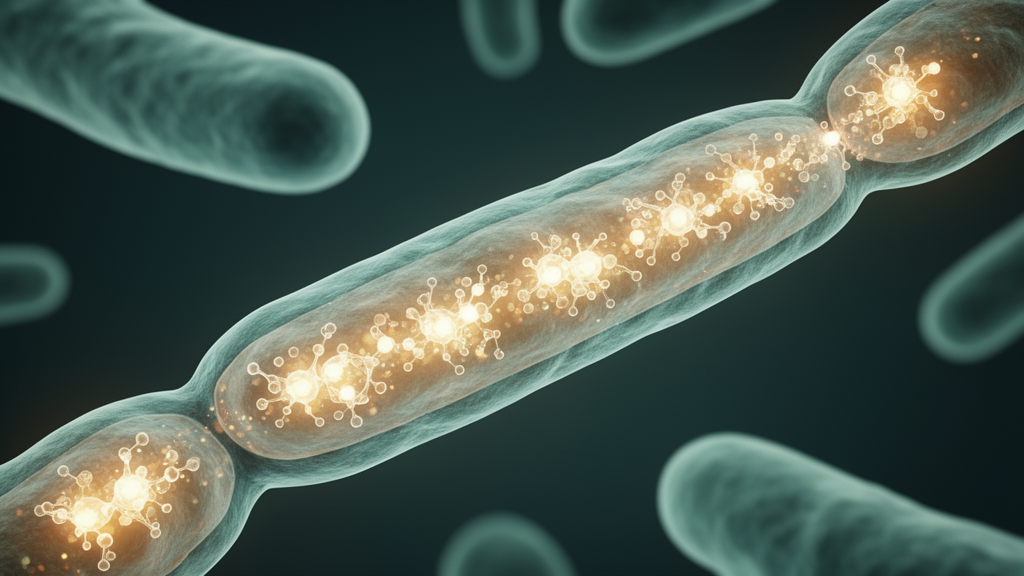
Researchers at the Gladstone Institutes in San Francisco have identified a class of bacterial immune systems that behaves unlike any antiviral defense described before. These systems, called type VI retrons, appear to run the standard retron playbook in reverse, and their peculiar molecular logic has already begun to inspire new tools for gene editing, biosensing, and antimicrobial therapy. The findings, published in the journal Molecular Cell, reveal machinery so convoluted that the scientists themselves describe it as the strangest of its kind ever encountered.
Retrons are bacterial defense modules that protect cells against phages, the viruses that infect bacteria. When a phage attack is detected, most retrons respond by unleashing a toxin that kills the infected cell, sacrificing it to prevent the virus from replicating and spreading to neighboring bacteria in the colony. This altruistic self-destruction is a powerful form of population-level immunity, and decades of research have established what seemed to be a universal rule for how retrons operate.
According to that established model, every retron produces a toxin that sits dormant inside uninfected cells, held in check by small single-stranded DNA molecules that the retron continuously manufactures. The DNA acts as a molecular brake. When a phage invades and disrupts the cell’s DNA, the brake is released, the toxin is freed, and the cell dies before the virus can multiply. Detection of abundant single-stranded DNA in healthy cells has therefore been the standard signature researchers use to identify retron systems in bacterial genomes.
Type VI retrons broke that rule from the start. Karen Zhang, a doctoral student in the laboratory of senior author Seth Shipman at Gladstone, noticed that these systems lacked the single-stranded DNA signature that all previously known retrons display. The absence was so conspicuous that the team initially suspected the systems might be nonfunctional relics. Yet when the researchers tested bacteria carrying type VI retrons, the systems robustly defended their hosts against phage infection, proving that the machinery was very much alive.
What followed was, in Shipman’s words, a long molecular odyssey. Standard experimental approaches for studying retrons failed repeatedly, forcing the team to devise new methods and repurpose existing techniques in unfamiliar ways. A key breakthrough came when the researchers turned to Spacer-seq, a tool previously developed in Shipman’s laboratory that borrows components of the CRISPR-Cas immune system to record gene activity inside cells. Just as the team was on the verge of concluding that no DNA was being produced at all, Spacer-seq revealed a vanishingly low level of single-stranded DNA synthesis in uninfected cells.
That faint signal proved to be the clue that unraveled the entire mechanism. Unlike other retrons, type VI systems produce neither detectable single-stranded DNA nor toxin in healthy cells. Instead, the arrival of a phage triggers the retron to begin producing single-stranded DNA in earnest. As the DNA accumulates, it interacts with an RNA molecule that had been physically blocking translation of the toxin protein. This interaction lifts the block, allowing toxin production to surge. The toxin itself appears to be a tiny protein that embeds in the cell membrane, destabilizing the cell and killing it. In effect, the DNA acts as an activator rather than an inhibitor, a mirror image of the canonical retron architecture.
The discovery rewrites assumptions about how retrons can be wired and raises evolutionary questions about the origins of these systems. Zhang notes that it would be fascinating to determine whether type VI retrons are older or newer than other retron types, or whether they represent an intermediate stepping stone in the diversification of bacterial antiviral strategies. The inverted design also suggests that bacterial evolution can arrive at solutions to the same defensive problem through radically different molecular routes, some of which defy the intuitive logic that biologists had constructed over decades of study.
Beyond rewriting the retron rulebook, the work carries practical significance. Retrons are prized in synthetic biology because they can efficiently modify and deliver single-stranded DNA, a capability that researchers including Shipman’s team are working to harness for rewriting disease-causing mutations inside human cells with high precision. Understanding how type VI retrons regulate their own components adds a new set of molecular parts to the toolbox available for engineering DNA-editing technologies aimed at human health and therapies.
The unusual control circuit of type VI retrons is already inspiring new instruments in Shipman’s laboratory, including synthetic sensors and switches that can control gene activity. Because the system encodes its sensing and switching logic in DNA and RNA, it offers a design template that no one had previously conceived. Such molecular sensors and switches have potential applications both in treating disease and in designing experiments to probe how diseases operate at the cellular level, giving the discovery relevance well beyond its origins in bacterial immunity.
The miniature, highly potent toxins generated by type VI retrons may also find a medical use of their own. The scientists are exploring ways to incorporate these toxins into new classes of antimicrobial therapies capable of targeting and killing bacteria that cause human disease. For Shipman, the study underscores a guiding principle of his laboratory: nature remains the richest source of engineering inspiration, and the molecular machines that evolution has produced can serve as starting points for building complex technologies that would be tremendously difficult to conceptualize from scratch.
Subject of Research: Type VI retron bacterial antiviral defense systems and their reverse molecular mechanism
Article Title: Newly discovered antiviral system in bacteria is ‘strangest of its kind’
Article References: Newly discovered antiviral system in bacteria is ‘strangest of its kind’. (n.d.). Original publication
Image Credits: AI Generated
DOI: Not provided
Keywords: retrons, type VI retrons, bacterial immunity, phage defense, Gladstone Institutes, Seth Shipman, single-stranded DNA, toxin activation, gene editing, synthetic biology, Molecular Cell, antimicrobial therapy
News Source: Juliet Wilcox. (October 18, 2026). Bacterial antiviral system that works in reverse stuns scientists. Scienmag.