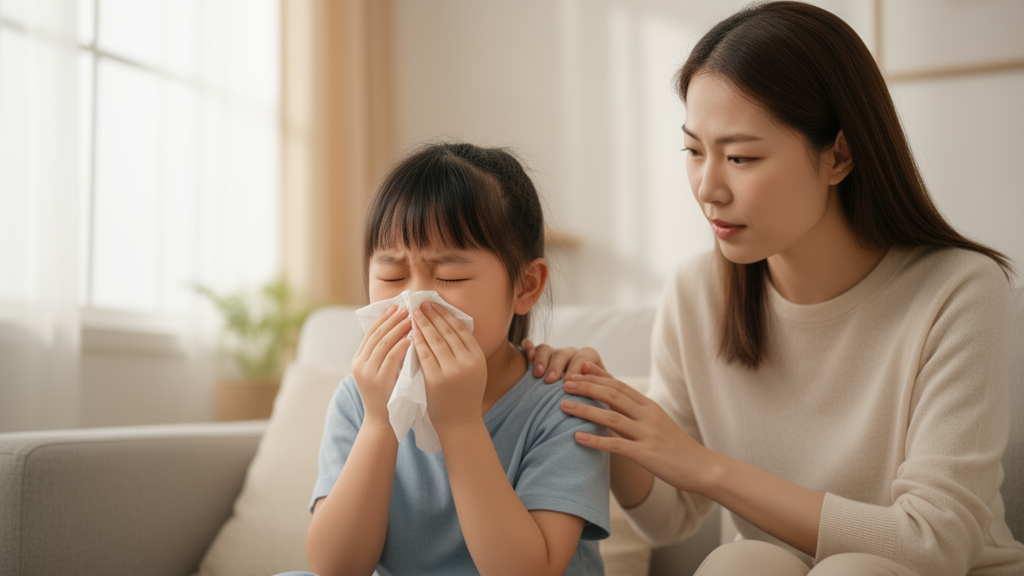
Allergic rhinitis, the sneezing, congestion, and itchy eyes that flare when the immune system overreacts to airborne allergens, now affects an estimated one in six children in China, according to one of the largest pediatric allergy syntheses ever conducted. Researchers from the Children’s Hospital of Chongqing Medical University and Sichuan University systematically reviewed a decade of studies published between January 2014 and June 2024, screening 7,403 records across Embase, PubMed, Web of Science, the Cochrane Library, and major Chinese databases including CNKI, VIP, and Wanfang. After full-text assessment of 226 papers, 42 studies covering 1,405,844 children aged 0 to 18 years made the final analysis, yielding a pooled prevalence of 16.1 percent with a 95 percent confidence interval of 13.8 to 18.3 percent.
The sheer scale of the evidence base gives the finding unusual weight for a field often dominated by small regional surveys. Yet the pooled figure conceals enormous variability between studies, with an I-squared heterogeneity statistic of 99.7 percent, meaning nearly all the variance in reported prevalence reflects differences in study design, geography, diagnostic criteria, and population characteristics rather than sampling noise alone. Several regional estimates rested on a single study, so the authors caution that the true national picture may differ from the pooled average. Prevalence surged in parallel with rapid urbanisation and distinctive environmental exposures, a pattern consistent with the hygiene hypothesis and with documented rises in allergic disease across low- and middle-income countries undergoing swift economic transformation.
Beyond prevalence, the meta-analysis synthesised observational evidence on factors associated with allergic rhinitis, identifying a constellation of demographic, familial, clinical, and environmental correlates. Male sex emerged as a consistent demographic risk marker, echoing international findings that boys carry higher odds of allergic rhinitis during childhood, with the sex gap often narrowing or reversing after puberty. Caesarean delivery also appeared among the associated factors, a result that aligns with mechanistic hypotheses about birth mode and the developing immune system: infants born surgically miss exposure to the maternal vaginal microbiome, potentially altering early immune programming and skewing Th1-Th2 balance toward the allergic phenotype.
Family history proved among the strongest correlates. Parental allergy, family history of atopic disease, and personal asthma diagnosis each raised the odds of allergic rhinitis, consistent with the substantial heritability of allergic conditions and with the clinical reality that allergic rhinitis, asthma, and eczema frequently coexist as manifestations of a shared atopic diathesis. Antibiotic exposure during the first year of life was likewise associated with higher odds, a finding that fits hypotheses linking early disruption of gut microbiota to immune dysregulation, though the observational design cannot determine whether antibiotics themselves, the infections prompting them, or confounding factors such as healthcare utilisation drive the association.
Environmental tobacco smoke exposure, whether in the home or more broadly, was associated with increased odds of allergic rhinitis, adding to the extensive literature linking secondhand smoke to pediatric respiratory morbidity. Tobacco smoke irritates airway mucosa, impairs mucociliary clearance, and promotes inflammatory pathways that may sensitise the nasal epithelium to allergens. Having no siblings also emerged as a correlate, a result consistent with the hygiene hypothesis, which proposes that siblings bring infections and microbial exposures that train the developing immune system away from allergic responses. Home redecoration during infancy showed only a borderline association and should be interpreted cautiously, the authors note, since volatile organic compounds from paints and new furnishings have been proposed as respiratory irritants but the evidence here did not reach conventional thresholds of certainty.
Breastfeeding stood out as the one factor associated with lower odds of allergic rhinitis. Human milk delivers immunoglobulins, cytokines, and prebiotic oligosaccharides that shape the infant gut microbiome and support immune maturation, and prior cohorts have suggested protective or neutral effects on allergic outcomes. The meta-analysis result adds weight to the argument that breastfeeding may confer modest protection against allergic rhinitis in childhood, though the authors stress that observational associations of this kind are vulnerable to confounding by socioeconomic status, parental health behaviours, and reverse causation, and cannot establish causation.
The methodological apparatus behind the synthesis reflects contemporary standards for evidence appraisal. Study quality was evaluated using the Newcastle-Ottawa Scale for cohort and case-control studies and Joanna Briggs Institute criteria for cross-sectional designs. Meta-analysis employed random-effects or fixed-effect models depending on heterogeneity, and the team assessed publication bias, sensitivity, and between-study heterogeneity across the pooled estimates. The protocol was prospectively registered on PROSPERO under registration number CRD42024581359, providing transparency about the review questions and analysis plan before the literature search began.
The authors emphasise that the associations identified should not be read as causal. Because the included studies were observational, reverse causation, selection bias, and residual confounding remain plausible explanations for many of the reported relationships. Substantial heterogeneity across studies further complicates interpretation, since prevalence estimates varied markedly across regions and settings, and diagnostic criteria ranged from validated questionnaires such as ISAAC and SFAR to clinical diagnoses. The key message from the synthesis is that allergic rhinitis is common among Chinese children, that several early-life, familial, and environmental factors are associated with its occurrence, and that these relationships require confirmation in well-designed prospective studies before they can inform targeted prevention.
For clinicians and public health practitioners, the findings carry practical implications. A pooled prevalence of 16.1 percent suggests allergic rhinitis imposes a substantial burden on pediatric populations in China, with consequences for sleep quality, school performance, quality of life, and the risk of progression to asthma, a well-documented phenomenon known as the allergic march. The identification of modifiable correlates, particularly environmental tobacco smoke exposure and antibiotic use in infancy, points to potential intervention targets even before causal pathways are fully established. Reducing secondhand smoke exposure in households with children and promoting judicious antibiotic prescribing during the first year of life align with broader pediatric health goals and may plausibly reduce allergic disease risk, though definitive evidence will require longitudinal designs.
The study, published open access in BMC Pediatrics as a research article with no external funding, arrives at a moment of growing international attention to the pediatric allergy epidemic in rapidly urbanising societies. As China’s cities expand and environmental exposures shift, the trajectory of allergic rhinitis prevalence among children will depend on the interplay of genetic susceptibility, early-life microbial exposures, air quality, tobacco control, and healthcare access. This synthesis of more than 1.4 million children provides the most comprehensive snapshot to date of where that trajectory currently stands, and a benchmark against which future prevalence surveys and prospective cohort studies can measure progress in understanding and preventing one of the most common chronic conditions of childhood.
,
Subject of Research: Prevalence and risk factors of allergic rhinitis in Chinese children
Article Title: Prevalence and risk factors of allergic rhinitis in Chinese children: a systematic review and meta-analysis
Article References: Ke, H., Hao, C., Pu, X., Wei, P., & Yao, H. (2026). Prevalence and risk factors of allergic rhinitis in Chinese children: a systematic review and meta-analysis. BMC Pediatrics. https://doi.org/10.1186/s12887-026-07590-z
Image Credits: AI Generated
DOI: 10.1186/s12887-026-07590-z
Keywords: allergic rhinitis, Chinese children, meta-analysis, prevalence, risk factors, pediatric allergy, environmental tobacco smoke, breastfeeding, caesarean delivery, BMC Pediatrics, risk, factors
News Source: Ophelia Keating. (October 18, 2026). Allergic Rhinitis Affects One in Six Chinese Children, Massive Meta-Analysis Finds. Scienmag.