Researchers at the University of Texas MD Anderson Cancer Center have identified a previously unknown mechanism through which the immune checkpoint protein B7-H3 helps advanced prostate tumors resist treatment. In genetically engineered models of castration-resistant prostate cancer, blocking B7-H3 reduced tumor-associated immune suppression but also triggered a compensatory response in which myeloid-derived suppressor cells increased production of a signal that strengthened the tumor’s physical barrier. Adding the MEK inhibitor trametinib to B7-H3-targeted therapy suppressed this response, producing more durable antitumor activity and longer survival than either treatment alone. The findings were published in Cancer Discovery and remain preclinical.
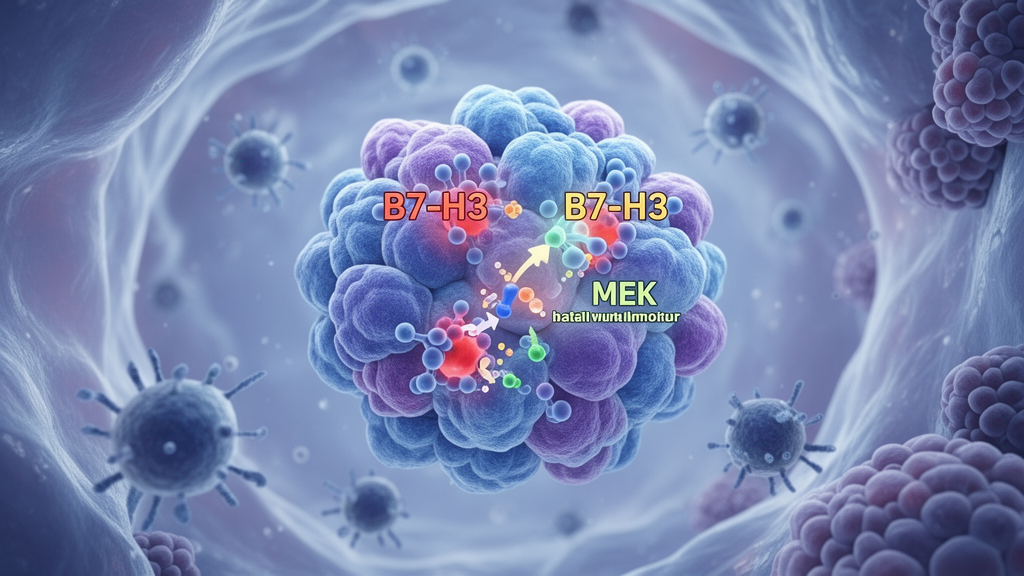
The study focused on how B7-H3 affects not only immune cells but also the cellular environment surrounding a tumor. Researchers used genetically engineered models of castration-resistant prostate cancer, single-cell sequencing and immune profiling to examine interactions among cancer cells, immune cells and stromal cells. They found that B7-H3 directly interacts with a subset of immune cells called monocytic myeloid-derived suppressor cells, or MDSCs. This interaction activates a signaling pathway that drives the MDSCs into a senescent, or aged-like, state. Senescent MDSCs then release inflammatory molecules that alter their surroundings and generate signals attracting additional suppressive immune cells.
The mechanism revealed what the researchers described as a dual function for B7-H3. Rather than functioning only as a brake on immune activity, it also reshaped nearby cells in a way that supported tumor growth and treatment resistance. In the experimental models, blocking B7-H3 lowered the number of suppressive MDSCs and slowed tumor progression. That effect was not sufficient by itself, however. After B7-H3 was blocked, MDSCs produced higher levels of a protein that caused cancer-associated fibroblasts to reinforce a dense structural barrier around the tumor. Such barriers can hinder the infiltration of immune cells and limit the penetration of drugs, providing a potential physical defense that allows the cancer to persist when one treatment target is inhibited.
Trametinib, a Food and Drug Administration-approved MEK inhibitor that acts on the same signaling pathway, was used to counter this compensatory defense. The combination of B7-H3-targeted therapy and trametinib more effectively suppressed tumor growth and prolonged survival than either approach alone. Additional analysis showed that combined treatment reduced the abundance of suppressive MDSCs, limited fibroblast-associated tissue remodeling and increased the infiltration of T cells into tumors. The result was consistent with the idea that simultaneous inhibition could prevent a tumor from deploying a backup barrier after one immune-checkpoint target was disrupted. Because the experiments involved engineered preclinical models, the findings do not establish that the combination will benefit people with advanced prostate cancer, nor do they determine its safety, dosing or effectiveness in patients.
The results point to a possible strategy for addressing resistance to B7-H3-directed therapy, an approach already being evaluated as a cancer treatment target. The researchers said the work could help guide future clinical-trial development for patients whose tumors are unlikely to respond to B7-H3 therapy alone, but they emphasized that the combination requires further examination and validation before it can be translated into clinical practice. They also plan to investigate how the signaling pathway regulates interactions between immune and stromal cells, including in other tumor types in which B7-H3 is abundant. For now, the central finding is a mechanistic one: in preclinical prostate cancer models, B7-H3 helped coordinate immune suppression and structural resistance, while simultaneous B7-H3 and MEK inhibition disrupted both processes and improved antitumor outcomes.
Subject of Research: B7-H3-mediated immune suppression and MEK-inhibitor resistance in preclinical prostate cancer models
Article Title: Researchers uncover dual role of B7-H3 in tumor immune suppression
Article References: Researchers uncover dual role of B7-H3 in tumor immune suppression. Original publication (Bibliographic details unavailable.)
Image Credits: AI Generated
DOI: Not provided
Keywords: B7-H3, prostate cancer, MEK inhibition, trametinib, immune checkpoint, tumor microenvironment, myeloid-derived suppressor cells, cancer-associated fibroblasts, treatment resistance, Researchers, uncover, dual
News Source: Nathaniel Bowman. (October 26, 2026). B7-H3 blockade and MEK inhibition overcome immune defenses in prostate cancer models. Scienmag.