A protein better known for ferrying cargo across the cell membrane has stepped into the spotlight of ageing research. A brief review published in Discover Aging on 31 August 2026, written by André Henrique Furtado Torres and Tatiane Araujo Soares, brings together what is currently known about AP2A1, the alpha 1 subunit of the AP-2 adaptor protein complex, and its newly recognised role in cellular senescence, the state in which cells permanently stop dividing and enter a form of dormancy. The review argues that this protein, traditionally associated with clathrin-mediated endocytosis, may act as a marker and a potential therapeutic target for ageing, although the authors themselves stress that the evidence base remains thin and almost entirely confined to laboratory cell cultures.
Cellular senescence is far more than simple wear and tear. First described in 1961 by Hayflick and Moorhead, who showed that human cells can divide only a finite number of times in culture, the process involves a suite of characteristic changes: upregulation of the cyclin-dependent kinase inhibitors p16 INK4A and p21 WAF1/CIP1, increased activity of senescence-associated beta-galactosidase, and the expression of a wide variety of secretory proteins. Senescent cells also undergo extensive remodelling of their compartments, including the plasma membrane, nucleus, endoplasmic reticulum, Golgi complex, endolysosomal system, mitochondria and cytoskeleton. These changes contribute to degeneration and have been linked to cardiovascular disease, cancer, Alzheimer’s disease, diabetes, kidney failure and osteoarthritis.
One of the most consequential features of senescence is the senescence-associated secretory phenotype, or SASP. Senescent cells begin to secrete cytokines, chemokines, growth factors and enzymes associated with extracellular matrix remodelling, which can alter the tissue microenvironment around them. While the SASP has beneficial functions in wound healing and tissue repair, its chronic activation contributes to persistent inflammation, tissue ageing and the progression of age-related diseases. The review notes that senescence itself is not simply synonymous with ageing: it can occur at any point in an organism’s lifetime, and it also serves essential purposes, inhibiting tumour formation, limiting tissue damage and aiding embryonic development.
Against this backdrop, AP2A1 entered the picture. The protein encodes the alpha 1 adaptin subunit of the AP-2 complex, a heterotetramer found in clathrin-coated vesicles that links clathrin to receptors on the vesicle surface. Adapter protein complexes are heterotetrameric structures essential for intracellular membrane trafficking; five types have been identified, with AP-1, AP-2 and AP-3 associated with clathrin and AP-4 and AP-5 not. AP-2 sits at the plasma membrane, where it is the main adaptor protein involved in forming clathrin-coated vesicles during endocytosis, the process by which cells internalise macromolecules, membrane receptors, ligands, transporters and adhesion molecules.
Because clathrin cannot interact directly with the lipids or proteins of the plasma membrane, adaptor proteins are needed to bridge the two, and AP2A1 plays a direct role in recognising cellular cargo and forming endocytic vesicles. This function influences receptor recycling, plasma membrane organisation, the internalisation of growth receptors and the regulation of cell signalling. Beyond classical endocytosis, studies indicate that AP-2-associated adaptor proteins participate in membrane deformation during vesicle formation, contributing to cellular plasticity and efficient intracellular trafficking, and the AP-2 complex has also been implicated in autophagy, the evolutionarily conserved mechanism that degrades and recycles cellular components.
The review’s authors surveyed the literature systematically, searching PubMed for the keyword AP2A1 and finding 35 articles published between 2014 and 2024, with the highest number appearing in 2021. When they restricted the search to AP2A1 combined with ageing, only three articles emerged: one focused on the relationship between AP2A1 and cellular senescence, and two addressing the protein’s association with Alzheimer’s disease. That scarcity frames both the excitement and the caution surrounding the field, since the central claim about AP2A1 and senescence rests largely on a single recent study.
That study, conducted by Chantachotikul and colleagues, investigated the reorganisation of actin stress fibres in human fibroblasts during replicative senescence as well as drug-induced senescence. The researchers found that AP2A1 is significantly upregulated in senescent cells and associates with stress fibres, contributing to increased cell area and strengthened cell adhesions through the regulation of integrin beta 1 translocation to focal adhesions. Similar functions were observed not only in replicative senescence but also in senescence induced by ultraviolet light or drugs, in both fibroblasts and epithelial cells.
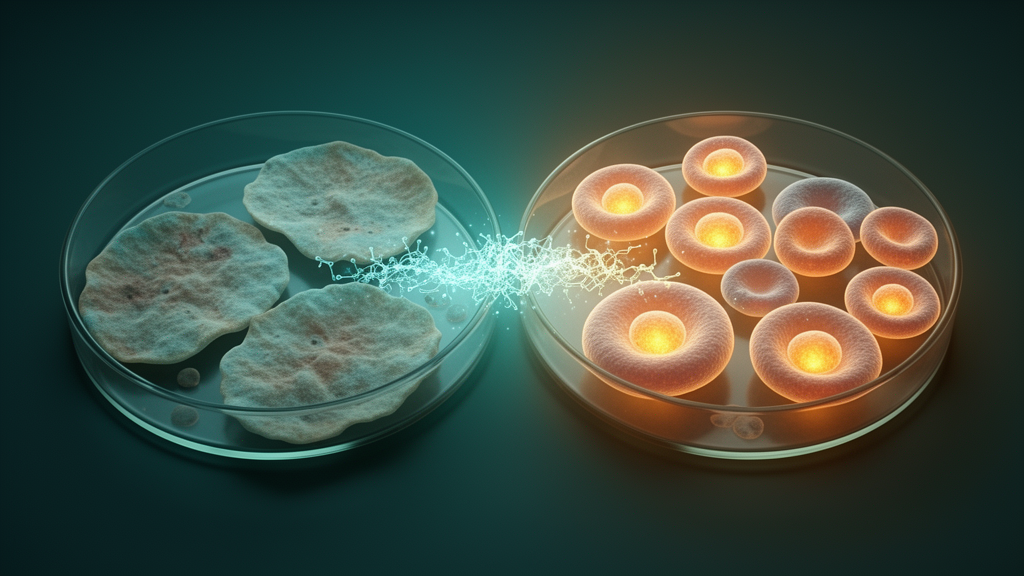
More striking still were the manipulation experiments. When the researchers reduced AP2A1 expression through knockdown, the senescent phenotype was reversed, with reductions in markers including p53, p21 and senescence-associated beta-galactosidase activity. Conversely, overexpressing AP2A1 in young cells induced senescent characteristics. Taken together, these findings suggest that AP2A1 acts as a key regulator in the balance between senescence and rejuvenation, and the researchers concluded that it is a potential marker and therapeutic target for diseases related to senescence and ageing. It is worth emphasising that these results come from in vitro cell models, and the review’s authors are explicit that this limits our understanding of the protein’s pathophysiological relevance in complex tissues and living organisms.
The connection to neurodegeneration adds a further dimension. Wang and colleagues demonstrated that AP2A1 is directly involved in regulating neuronal autophagy through the activation of Ras-associated GTP-binding protein 7, known as Rab7. In their study, overexpression of AP2A1 restored autophagic flux, improved the retrograde transport of autophagosomes in axons, and reduced neuropathological changes in APP/PS1 transgenic mice, an Alzheimer’s disease model. Other work has shown that the AP-2 complex prevents amyloidogenesis by acting downstream of BACE1 endocytosis, regulating the endosomal trafficking of BACE1 and its delivery to lysosomes; AP-2 expression is reduced in neurons derived from induced pluripotent stem cells of patients with late-onset Alzheimer’s disease, while mice with conditional AP-2 knockout exhibit increased amyloid-beta production. The alpha-adaptin subunits AP2A1 and AP2A2 also show isoform- and brain region-specific expression patterns in Alzheimer’s disease, and large-scale sequencing analyses have identified AP2A1, AP2A2 and PICALM as key genes with splicing alterations associated with the disease.
The review’s critical evaluation section is candid about the limits of the evidence. The molecular mechanisms by which AP2A1 influences the senescent phenotype remain insufficiently understood, and it is not yet clear whether the observed effects stem specifically from the AP2A1 subunit or from broader functional alterations of the AP-2 complex as a whole. Possible interactions between AP2A1 and key senescence pathways, including the response to DNA damage, mitochondrial dysfunction, the SASP and autophagy, remain largely unexplored. The authors also note that because alterations in endocytosis and intracellular trafficking have been linked to tumour progression and treatment resistance, AP2A1 may represent a potential link between senescence, ageing and diseases related to the loss of cellular homeostasis, but the scarcity of mechanistic and translational studies still prevents definitive conclusions about its biological role and therapeutic potential. What the field now has is a well-defined hypothesis: that a single endocytic adaptor protein can tilt cells between senescence and rejuvenation, and a clear agenda for the experiments, in richer cell systems and eventually living organisms, that will determine whether that hypothesis holds.
Subject of Research: The role of the AP2A1 protein in cellular senescence and ageing
Article Title: Advances in AP2A1 and its role in cellular senescence: a brief review
Article References: Torres, A. H. F., & Soares, T. A. (2026). Advances in AP2A1 and its role in cellular senescence: a brief review. Discover Aging, 1(1), Article 11. https://doi.org/10.1007/s44518-026-00011-4
Image Credits: AI Generated
DOI: 10.1007/s44518-026-00011-4
Keywords: AP2A1, cellular senescence, ageing, clathrin-mediated endocytosis, AP-2 adaptor complex, actin stress fibres, integrin beta 1, Alzheimer's disease, autophagy, SASP, human fibroblasts, senescence markers
News Source: Beatrice Stafford. (October 28, 2026). AP2A1 emerges as a possible switch between senescence and rejuvenation in human cells. Scienmag.