Every living cell is wrapped in a membrane whose hydrophobic core has stayed remarkably conservative across billions of years, while the polar headgroups facing the water have diversified into an astonishing chemical menagerie of sugars, cyclitols, phosphates, sulfosugars, betaines and amino alcohols. A new open-access perspective article, published on 20 August 2026 in the journal Discover Life by Valery M. Dembitsky and Alexander O. Terent’ev, proposes a sweeping answer to where that diversity came from. The authors’ Universal Polyol Platform Hypothesis argues that the earliest membrane headgroups were not glycerol phosphates or glycolipids, but simple polyhydroxylated compounds—diols, triols, sugar alcohols and cyclic polyols—generated directly by abiotic carbon chemistry before enzymes, metabolism or genes existed. Crucially, the authors themselves stress that this is a conceptual and chemically grounded framework, a testable working hypothesis rather than a demonstrated reconstruction of history.
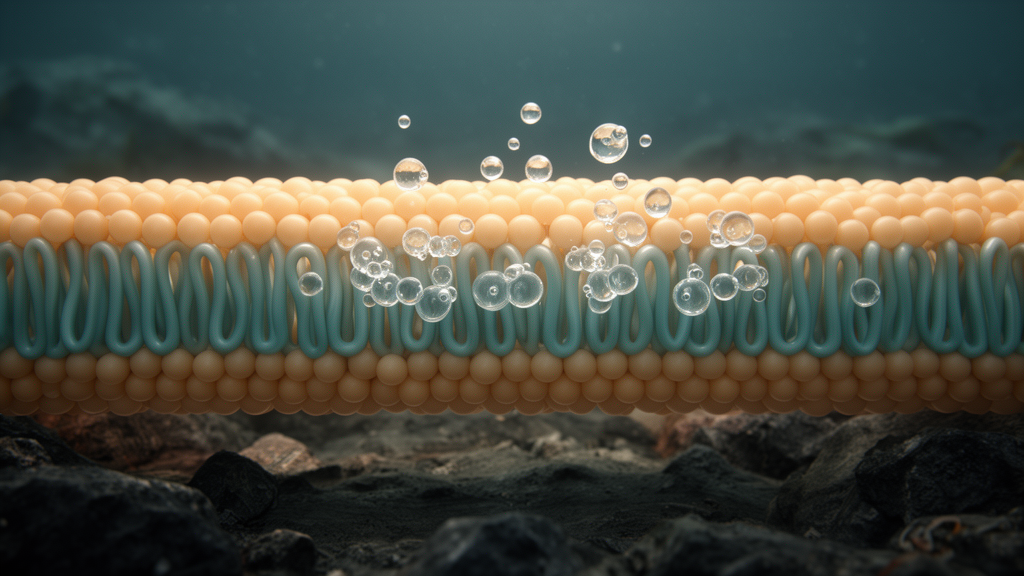
The starting point of the argument is a structural observation about modern membranes. Across bacteria, archaea and eukaryotes, the hydrophobic cores of membranes are built mainly from hydrocarbon chains of roughly ten to eighteen carbon atoms linked through ester or ether bonds, a stable scaffold that drives spontaneous self-assembly into bilayers. The polar headgroups attached to those scaffolds, by contrast, show extraordinary structural variety, and decades of membrane biophysics have shown that this variety is not decorative. Headgroup chemistry governs membrane hydration, electrostatics, molecular recognition, protein interactions, signal transduction, ion binding and membrane curvature. The authors condense this into a slogan: hydrophobic tails build membranes, but polar headgroups create membrane function. Most origin-of-life models, they argue, start with amphiphiles that already possess recognizable headgroups, leaving the deeper question of how headgroup diversity arose largely unexplored.
The hypothesis begins with prebiotic chemistry. Carbon chemistry before life is expected to have been network-based rather than pathway-based: the formose reaction, first described by Butlerov, converts formaldehyde into complex mixtures of carbohydrates through successive aldol condensations, isomerizations and rearrangements, and similar diversity is expected from hydrothermal synthesis, photochemical carbon fixation and mineral-catalyzed reactions. These networks do not produce a single dominant compound but continuously generate dynamic populations of structurally related molecules differing in carbon number, stereochemistry, oxidation state and functional-group distribution. On top of this, aldoses and ketoses are readily reduced to the corresponding sugar alcohols through geochemically plausible processes such as mineral-catalyzed hydrogenation, hydrothermal reduction, photochemical reactions and disproportionation, making sugar alcohols expectedly abundant components of the prebiotic organic inventory.
The result, in the authors’ framing, is a Universal Polyol Pool: a continuous spectrum of compounds ranging from ethylene glycol and glycerol through the four-carbon sugar alcohols erythritol and threitol, the five-carbon pentitols ribitol, arabitol and xylitol, the six-carbon hexitols mannitol, sorbitol and galactitol, and onward to cyclic polyols known as cyclitols such as myo-inositol, scyllo-inositol, quercitols, conduritols and calditol. Open-chain carbohydrates belong in the same continuum, since monosaccharides are chemically polyhydroxylated aldehydes or ketones. The authors emphasize that these molecular classes would not have appeared sequentially but coexisted simultaneously, maintained by ongoing formation, degradation, reduction, oxidation and isomerization reactions, creating an extensive reservoir of molecular architectures on which natural selection could later act.
Within this framework, the first amphiphiles were polyol amphiphiles. Hydrophobic chains could have arisen independently through abiotic hydrothermal synthesis, Fischer–Tropsch-type reactions or photochemical processes, and there is no chemical reason, the authors argue, to assume that these two molecular families evolved sequentially rather than coexisting in the same prebiotic environments. When polyols attached to independently generated hydrophobic chains, the polyol itself would have functioned directly as the polar headgroup. Because the pool contained molecules of many sizes and stereochemistries, primitive membranes need not have been composed of a single lipid species but of heterogeneous mixtures, generating a broad spectrum of membrane properties. On this reading, glycolipids—often treated as primitive because they lack phosphate—are actually second-generation amphiphiles, chemically modified structures in which carbohydrate residues are attached to pre-existing lipid scaffolds.
The hypothesis assigns each polyol class a distinct region of physicochemical space rather than treating them as stages in a replacement sequence. Diols are compact and highly flexible; glycerol, with three hydroxyl groups, offers an optimal balance that eventually made it the dominant backbone of modern phospholipids, though the authors interpret it as a successful member of the pool rather than its ancestral seed. Larger tetritols, pentitols and hexitols increase hydration, hydrogen-bonding capacity and intermolecular connectivity. Cyclitols occupy what the authors call the stereochemical apex: cyclization locks hydroxyl groups into rigid, precisely defined three-dimensional arrangements, transforming flexible molecules into organized recognition surfaces. The biological persistence of this chemistry is visible today in phosphatidylinositol signaling, in archaeal calditol-containing tetraether lipids of thermoacidophilic species, and in the widespread use of sugar alcohols as osmoprotectants and compatible solutes.
A particularly distinctive element of the proposal concerns borate. Rather than discussing borate almost exclusively as a stabilizer of ribose, as much prebiotic chemistry has done, the authors propose that borate acted as the first molecular selector across the entire polyol platform. In aqueous alkaline environments, boric acid converts to tetrahydroxyborate ions, which reversibly condense with vicinal hydroxyl groups to form cyclic borate esters. These complexes are dynamic: association and dissociation occur continuously, allowing rapid ligand exchange in response to pH, temperature, ionic strength and competing ligands. Classical work by Angyal, Klavins, Bell and collaborators showed that closely related cyclitols with identical molecular formulas exhibit markedly different equilibrium constants for borate complex formation, meaning borate recognizes molecular geometry rather than hydroxyl abundance. Ribose, in this view, is one particularly favorable ligand within a much larger family, not the exclusive target of the chemistry.
This coordination chemistry leads to the hypothesis’s most provocative claim: the earliest membranes were not passive compartments but chemically active interfaces. Once polyol headgroups assembled into membrane surfaces, they retained their full reactivity, generating hydrogen-bonding networks with water, reversibly coordinating dissolved polyhydroxylated molecules through borate centers, and transiently enriching compatible carbohydrates at the interface according to stereochemical compatibility—all without proteins, enzymes or genetic information. Molecular selection, the authors propose, preceded genetic selection, with physicochemical selection at hydrated polyol interfaces establishing preferential molecular organization before Darwinian evolution became possible. The hypothesis is explicitly positioned as complementary to, not competitive with, the Lipid World, the Lipid Divide, protocell models and the RNA World, addressing an earlier evolutionary stage: the origin of the membrane interfaces those models presuppose.
The authors are candid about the limits of the framework. The precise composition of prebiotic polyol mixtures, the relative abundance of individual polyols under specific geochemical conditions, the mechanisms coupling hydrophobic chains to polyol headgroups, and the pathways to stable polyol amphiphiles all remain uncertain, and the proposed roles of borate-mediated selection and chemically active membranes have not yet been tested under realistic prebiotic conditions. The paper therefore lays out a concrete experimental program: synthesizing polyol amphiphiles abiotically from glycerol, erythritol, ribitol, xylitol, mannitol, sorbitol, myo-inositol and cyclobutane tetraols; exposing polyol-headgroup vesicles to borate under mildly alkaline conditions to test whether reversible coordination alters membrane stability, permeability and molecular organization; comparing cyclitol-containing model membranes with linear polyol analogues; quantifying ribose enrichment at membrane surfaces by NMR, LC–MS or equilibrium dialysis; and running molecular dynamics simulations and systems-chemistry experiments with complex mixtures, pH cycling, drying–wetting cycles, minerals and temperature gradients.
Whether the Universal Polyol Platform survives those tests remains an open question, and the authors concede that its significance will ultimately depend on experimental results rather than conceptual appeal. What the perspective offers now is a unifying lens: it reframes membrane evolution as the history of the polar interface rather than of the hydrophobic tail, connects classical organic and carbohydrate chemistry with modern membrane biophysics, and converts a long-neglected question—where lipid headgroups came from—into a set of specific, laboratory-accessible predictions about amphiphile formation, borate-mediated recognition and the chemistry of the earliest membranes.
Subject of Research: The evolutionary origin and diversification of biological membrane lipid headgroups from prebiotic polyol chemistry
Article Title: The universal polyol platform explains the evolution of lipid headgroups and the origin of membrane function
Article References: Dembitsky, V. M., & Terent’ev, A. O. (2026). The universal polyol platform explains the evolution of lipid headgroups and the origin of membrane function. Discover Life, 56(1), Article 40. https://doi.org/10.1007/s11084-026-09760-6
Image Credits: AI Generated
DOI: 10.1007/s11084-026-09760-6
Keywords: membrane evolution, polyols, lipid headgroups, origin of life, borate, cyclitols, prebiotic chemistry, amphiphiles, glycolipids, phospholipids, protocells, molecular recognition
News Source: Drew Townsend. (October 29, 2026). Ancient polyols may have seeded the first membrane headgroups, new hypothesis proposes. Scienmag.