Artificial intelligence is reshaping how epilepsy is diagnosed, predicted, treated and monitored, according to a review published in Acta Epileptologica that maps the technology’s progress across four core areas of clinical practice. The review, authored by a team led by Qi Ren and Jinfeng Zhang and published on 10 August 2026, describes a field in which some AI tools have already earned regulatory approval and entered routine hospital use, while many others remain stuck in the long gap between promising laboratory results and validated clinical deployment.
Epilepsy is one of the most common chronic neurological disorders, characterized by transient, repetitive and recurrent seizures. Data from the Global Burden of Disease Study indicate that by 2021 approximately 52 million people worldwide had active epilepsy, and prevalence differs markedly across nations, regions and urban versus rural settings. The condition imposes substantial physical, psychological, social and economic burdens on patients, families and society, and it ranks among the top causes of mortality among people with neurological disorders. Its pathogenesis has been linked to ion channel dysfunction, inflammatory responses, physiological network dysfunction and abnormal glial cell activity, although the exact mechanisms remain incompletely understood.
The clinical need is considerable. Despite advances in diagnostic tools such as stereo electroencephalography and PET-MRI, and despite improved anti-seizure medications, the review notes that existing approaches are limited by low diagnostic accuracy and insufficient individualized treatment strategies. Roughly one-third of patients fail to achieve seizure control with current medications, and no biomarkers that robustly predict treatment response or the risk of drug-resistant epilepsy exist in routine clinical practice. It is against this backdrop that machine learning, which learns patterns from data to generate predictions, and deep learning, which uses multi-layer artificial neural networks to process large volumes of complex data, have become central to epilepsy research.
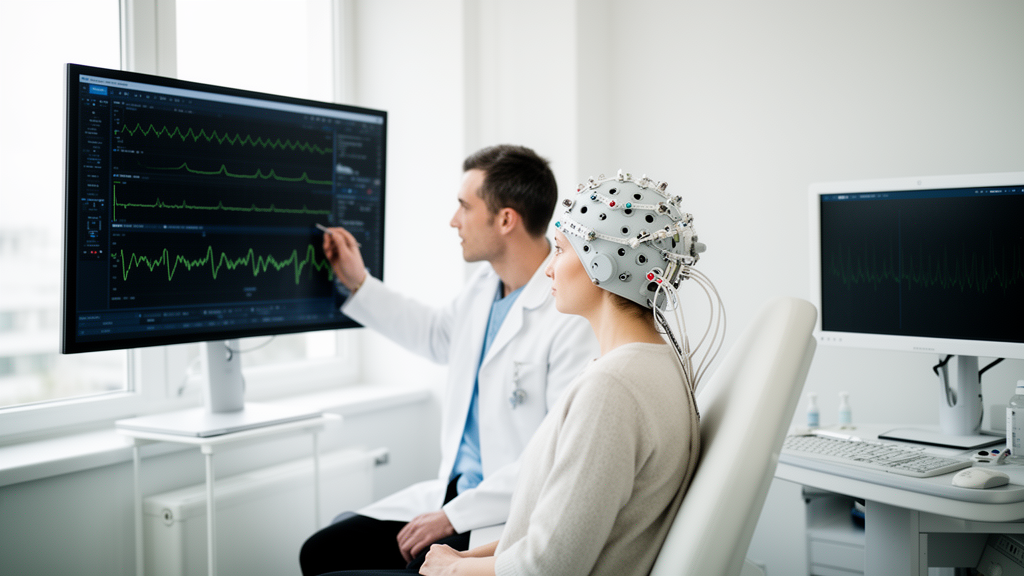
In diagnosis, the review identifies electroencephalography as the primary arena for AI. EEG offers millisecond-level temporal resolution, cost effectiveness and portability, and video-EEG adds multi-dimensional information that helps clinicians distinguish epileptic seizures from non-epileptic events. Machine learning and deep learning have substantially increased the accuracy and efficiency of EEG analysis, with convolutional neural networks particularly adept at identifying spatial patterns associated with epileptic activity. A newer automated detection method combining path signatures with a bidirectional long short-term memory network and an attention mechanism extracts long-term EEG information to enhance seizure detection accuracy. These algorithms can rapidly process large volumes of EEG data, alleviate clinician workload and shorten follow-up time.
Neuroimaging analysis is a second diagnostic frontier. Traditional visual assessment often fails to detect subtle lesions, but AI algorithms that automate the analysis of MRI, PET and functional imaging data significantly improve lesion detection rates. A CNN-based model can automatically detect and classify abnormalities in MRI data, and a machine learning algorithm called Subtype and Stage Inference identifies different spatiotemporal trajectories of brain atrophy progression, offering a rationale for individualized prognosis. AI approaches integrating FDG-PET and flumazenil-PET also show predictive power for localizing epileptic foci. Beyond imaging, automated electronic health record phenotyping can identify epilepsy patients from clinical notes and medication prescriptions, while natural language processing extracts seizure symptoms, treatment responses and lifestyle factors from unstructured records.
Seizure prediction has evolved through distinct generations of methods. The review traces the field back to 1972, when Stevens and colleagues conducted long-term multi-channel continuous EEG recordings that provided early neurophysiological evidence for seizure prediction, though technical constraints limited its scope. Machine learning algorithms such as support vector machines and random forests later relied on manually extracted features, before deep learning architectures such as CNNs and LSTM networks enabled automatic extraction of spatiotemporal features. More recent work has shifted toward multimodal fusion of clinical, EEG and imaging data, and toward contrastive learning approaches that mitigate insufficient labelled data. A fundamental methodological choice now divides the field: patient-specific models offer high accuracy but do not transfer between patients, while cross-patient models trained on multiple patients enable large-scale deployment at some cost in individual accuracy. Open benchmark datasets, including the Boston Children’s Hospital-MIT scalp EEG dataset, the Temple University Hospital EEG Corpus, the Siena scalp EEG dataset, the EPILEPSIAE dataset and the Freiburg intracranial dataset, have driven algorithm development, though data heterogeneity and annotation uncertainty remain challenges.
In treatment, AI is accelerating drug development for the roughly one-third of patients whose seizures resist current medications. A virtual repositioning screening platform integrating deep learning with molecular docking, established by Xiaoying Lv and colleagues, focused on key targets encoded by epilepsy-related genes and identified numerous candidate drugs with potential antiepileptic activity, providing a computational basis for repurposing existing drugs. In personalized medicine, Kyung-Il Park’s team used AI on data from 2,586 epilepsy patients at initial consultation to predict responses to different anti-seizure medications, finding that AI was moderately effective and that sodium valproate monotherapy and a levetiracetam-carbamazepine combination yielded the best predicted outcomes. AI-assisted surgery is another active area: algorithms analyse preoperative EEG, MRI and fMRI data to localize the epileptic focus and predict the language-dominant hemisphere, supporting surgical planning and intraoperative decisions.
Long-term management increasingly relies on wearable and implantable devices. Wearable sensors collect physiological data that AI processes to identify seizure precursors, improving detection rates and distinguishing seizures from normal physical activity; one deep learning-based hardware architecture offers real-time, low-power seizure detection. Implantable systems such as the NeuroPace Responsive Neurostimulation System monitor brain activity continuously and deliver automated electrical stimulation to interrupt ongoing seizures, reducing seizure burden, and a tiny machine learning detection model has been proposed for implantable closed-loop stimulation systems. Telemedicine platforms integrating AI and open-source electronic health records may further reduce clinician workload and improve access to diagnostic services.
The review draws a careful line between technologies ready for the clinic and those that are not. Claritγ, an FDA-approved machine learning system validated on Rapid-EEG data from 353 critically ill and emergency department patients across six US hospitals, screens highly sensitively for non-convulsive status epilepticus in intensive care. SCORE-AI, developed and validated by Jesper Tveit and colleagues in a multi-centre study, interprets routine EEG automatically with 90% specificity and accuracy comparable to human experts. By contrast, ST-CANet, a multimodal localization system for drug-resistant temporal lobe epilepsy, has only single-centre validation and a small sample size, and PyHFO, a deep learning tool for high-frequency oscillation analysis, lacks prospective multi-centre trials demonstrating improved clinical outcomes. Still earlier-stage work includes AI video analysis of seizures in mice, a closed-loop neuromodulation chip awaiting chronic animal testing, and a mouse seizure-frequency prediction system with only 75% accuracy.
Substantial obstacles stand between this potential and routine practice. EEG datasets are often small and imbalanced across seizure types, causing conventional classifiers to overfit, miss seizures and lose sensitivity on real-world clinical data. Regulatory pathways remain unclear, particularly for long-term monitoring and intraoperative localization systems that lack guidelines for efficacy evaluation and post-market surveillance. Most clinicians lack systematic AI training, risking both over-reliance and complete distrust, and EEG signals vary widely with patient physiology, equipment and recording environment. Many deep learning models are black boxes that output results without revealing their reasoning, limiting clinician trust and regulatory approval, while the handling of sensitive EEG signals and health records raises unresolved privacy and data-sharing questions. The review’s authors conclude that systematically integrating AI into clinical workflows could deliver more precise, individualized care for epilepsy patients, but only if these translation, validation and ethical challenges are addressed.
Subject of Research: Clinical applications of artificial intelligence in epilepsy diagnosis, prediction, treatment and management
Article Title: Clinical application of artificial intelligence technology in epilepsy
Article References: Ren, Q., Zhang, Y., Deng, X., Fu, M., Li, X., Wang, L., Chen, X., Yang, Y., & Zhang, J. (2026). Clinical application of artificial intelligence technology in epilepsy. Acta Epileptologica, 8(1), Article 29. https://doi.org/10.1186/s42494-026-00268-0
Image Credits: AI Generated
DOI: 10.1186/s42494-026-00268-0
Keywords: artificial intelligence, epilepsy, machine learning, deep learning, electroencephalography, seizure prediction, drug-resistant epilepsy, neuroimaging, wearable devices, responsive neurostimulation, clinical translation, FDA approval
News Source: Blake Davidson. (October 28, 2026). AI Moves From Lab Bench to Epilepsy Clinic, Review Finds. Scienmag.