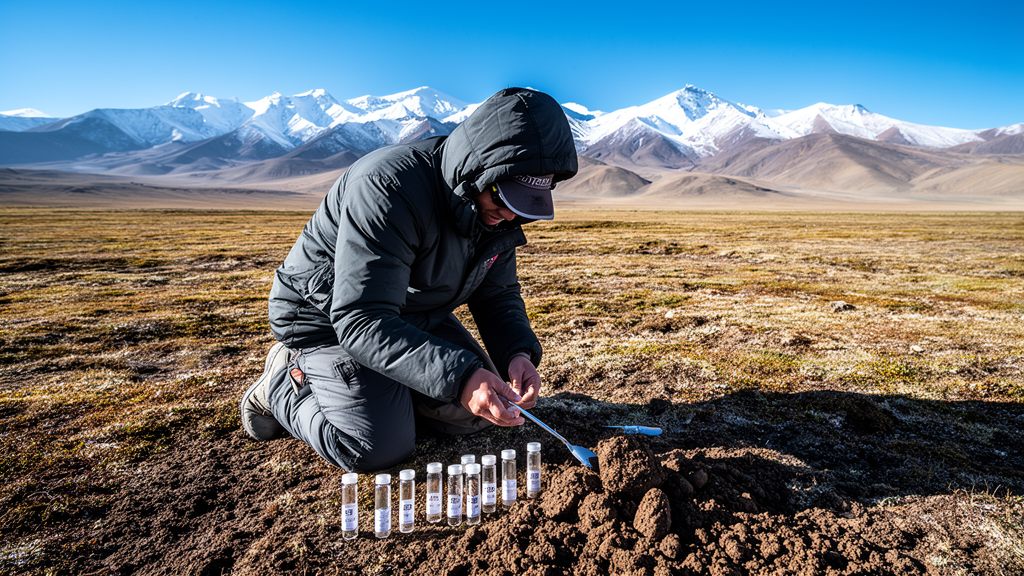
Researchers have completed a comprehensive metagenomic survey of the Tibetan Plateau, identifying 51,921 metagenome-assembled genomes (MAGs) spanning diverse terrestrial and aquatic ecosystems. This vast collection, termed the Tibetan Environmental Genome (TEG) catalogue, provides a systematic resource for understanding microbial diversity and unlocking new biotechnological applications. By surveying 1,698 samples from 868 sites, the study establishes a foundational dataset for exploring the genetic repertoire of Earth’s highest and largest mountain region. The findings indicate that nearly 90% of the recovered genomes represent previously uncharacterized species, highlighting the plateau as a significant, yet largely unexplored, reservoir of prokaryotic genetic material. This catalogue reveals a rich pool of enzymes, bioactive compounds, and programmable molecular systems, moving beyond simple ecological census to create an application-oriented genomic resource.
The Tibetan Plateau, characterized by extreme environmental stresses such as high ultraviolet radiation, low temperatures, and oligotrophy, serves as a unique ecological crucible for microbial evolution. Unlike previous studies that often focused on single ecosystems or specific biogeochemical cycles, this research utilized a cross-ecosystem perspective encompassing soil, wetland, lake, river, glacier, and hot spring habitats. This multi-ecosystem approach enabled a robust analysis of taxonomic composition and functional genetic potential across 20 distinct habitats, revealing how these conditions drive the evolution of previously undescribed natural products.
The methodology involved rigorous quality control, assembly, and binning processes to ensure the reliability of the resulting genomic data. After filtering for quality based on empirical standards for metagenome-assembled genomes, the researchers identified 105 phyla encompassing 17,920 species-level groups. The team employed multiple binning algorithms, including MetaBAT, MaxBin2, and MetaWRAP, as well as deep-learning-based tools like VAMB and SemiBin2, to reconstruct high-quality genomes. To further refine this dataset, MAGScoT was used for scoring and refinement, ensuring that only medium- or high-quality genomes were retained. By comparing these sequences to public reference databases, including the SMAG, GEM, and GTDB collections, the study demonstrated that the vast majority of the taxa were novel, substantially expanding the known global landscape of prokaryotic diversity and providing a dense census of the plateau’s microbiota.
A major focus of the study was the characterization of secondary metabolite biosynthetic gene clusters (BGCs), which were predicted on contigs longer than 5 kb using antiSMASH. The analysis uncovered 44,719 BGCs, with approximately 97% of these exhibiting low sequence homology to known reference databases like MIBiG and the BGC Atlas. This high proportion of previously undescribed clusters mirrors the high diversity of the microbial species themselves, a trend seen in other extreme microbiome studies. This suggests that secondary metabolism is governed by ecological selection and metabolic trade-offs rather than passive accumulation, with key biosynthetic pathways preferentially retained in smaller genomes due to their adaptive value in the intense plateau environment.
The TEG catalogue also serves as a fertile source for antimicrobial peptides (AMPs), with 19,168 candidates identified through large-scale computational screening using the Macrel tool. To validate the functional relevance of these findings, the team selected 29 candidate peptides for solid-phase peptide synthesis and experimental characterization. These peptides were rigorously purified to exceed 95% purity as confirmed by high-performance liquid chromatography and mass spectrometry. All 29 synthesized peptides exhibited inhibitory activity against at least one of seven tested pathogens, including common human opportunistic pathogens like Staphylococcus aureus and Pseudomonas aeruginosa, as well as phytopathogenic fungi such as Fusarium oxysporum and Fusarium pseudograminearum. Five of these peptides demonstrated broad-spectrum activity, providing proof-of-concept for the translation of genome-resolved data into functional discovery.
The findings highlight the Tibetan Plateau as a significant reservoir for gene-editing tool development, with the identification of 216 Cas9 loci, predominantly belonging to the compact type II-C subtype, which is highly prized for its suitability in tool development. These systems, particularly those found in uncultivated lineages like Patescibacteria and Nanoarchaeota, offer substantial potential for the next generation of genome-editing technology. The team confirmed that these identified loci were enriched in Bacteroidota and Pseudomonadota, mirroring global distribution patterns observed in other groundwater and soil surveys, although they emphasize that cleavage efficiency and off-target effects require further empirical study.
The catalogue also contains 1,077 candidate polyethylene terephthalate (PET) hydrolases, suggesting latent potential for microplastic bioremediation. By using DIAMOND to screen against PlasticDB, researchers identified homologues that met stringent amino acid identity and query coverage thresholds. The widespread detection of these enzymes indicates a diverse reservoir of esterases and hydrolases across the plateau’s glaciers and other habitats. Researchers suggest that these enzymes, evolved to function under low-temperature or high-temperature conditions, may offer valuable tools for specialized biotechnological contexts. While these conclusions remain based primarily on computational predictions, the existence of this enzymatic repertoire—with confirmed signal peptides and conserved catalytic triads—provides a robust starting point for future experimental validation in industrial and environmental processing.
The authors acknowledge inherent limitations in metagenomic approaches, such as incomplete assembly and the reliance on computational predictions, which necessitate further validation through the study of cultured isolates. Despite these challenges, the TEG catalogue serves as an application-oriented genomic resource with direct relevance to medicine and biotechnology. In the context of rapidly advancing artificial intelligence applications in the life sciences, the researchers suggest that large-scale, environment-resolved datasets like the TEG can enhance functional prediction accuracy.
These findings position the Tibetan Plateau as a critical foundation for addressing global challenges such as antimicrobial resistance and environmental pollution. The synergistic effects of long-term geographical isolation and environmental stress are thought to shape the competitive strategies of Tibetan prokaryotes, favoring the evolution of unique natural products as energy-efficient molecular weapons. The study suggests that extreme environments globally may act as similar reservoirs of adaptive functions and exploitable microbial resources. By systematically organizing this previously inaccessible diversity, the TEG catalogue provides a roadmap for future exploration into the functional genes that mediate microbial interactions and ecological competition in some of Earth’s most challenging and underexplored habitats.
In summary, the comprehensive mapping of the Tibetan Plateau microbiome underscores the value of systematic bioprospecting in extreme environments. The identified repertoire of enzymes, bioactive compounds, and programmable molecular systems offers significant potential for medical and agricultural innovation. As the global scientific community continues to grapple with the need for new sustainable technologies and therapeutics, the TEG dataset provides a high-quality genomic foundation that will likely inform and accelerate efforts to uncover novel functional systems. The transition from large-scale genomic inventory to functional validation represents a strategic shift in how environmental metagenomics can inform the future of biotechnology, providing a necessary resource for discovery in the post-genomic era.
Detailed experimental assays provided concrete validation for the functional potential of the computationally predicted antimicrobial peptides. Beyond the human opportunistic pathogens, the testing panel incorporated the plant pathogen Pseudomonas syringae, which infects diverse agricultural crops, as well as the soil-borne fungi Fusarium oxysporum and Fusarium pseudograminearum, which cause vascular wilt and cereal crown rot. Researchers evaluated the synthesized peptides using standardized broth microdilution protocols across a twofold serial dilution series ranging from 1 to 256 micrograms per milliliter across three independent biological replicates. Inhibitory activity was established by measuring optical density values corrected for background interference, identifying the lowest concentration preventing visible bacterial growth or yielding at least fifty percent inhibition of fungal growth.
The investigation also uncovered specialized functional machinery across several other molecular classes. In addition to Cas9, the catalogue revealed versatile Cas12a systems possessing multi-substrate nuclease activity against double-stranded DNA, single-stranded DNA, and RNA, with complete type V loci discovered within the candidate phyla Patescibacteria and Nanoarchaeota. For plastic degradation, candidate polyethylene terephthalate hydrolases were verified by identifying the conserved catalytic triad of serine, aspartate, and histidine alongside a specific pentapeptide motif and signal peptides. To assess functional viability, predicted enzyme structures were evaluated against the crystal structure of an engineered reference variant characterized by a melting temperature of 83.2 degrees Celsius and robust hydrolytic activity at 60 degrees Celsius.
Field sampling protocols were designed to capture environmental heterogeneity across distinct physical matrices. Terrestrial and wetland soil samples were gathered as composite cores spanning depths from zero to twenty centimeters across one-square-meter quadrats, while aquatic microbes from lakes, rivers, and glacial meltwaters were concentrated onto zero-point-twenty-two-micrometer polycarbonate filter membranes following prefiltration. For glacial habitats, researchers scooped surface snow and ice from five-centimeter surface layers or retrieved cryoconite from cryoconite holes. Sequencing of newly generated libraries on the MGISEQ-2000RS platform yielded an average of 32 gigabases of paired-end reads per sample, supplying the sequence coverage necessary for assembly and strain-level dereplication.
Subject of Research: Metagenomic survey of microbial diversity and functional potential on the Tibetan Plateau.
Article Title: Mapping the Tibetan Plateau microbiome across ecosystems provides a resource for biodiscovery
Article References: Liu, Y., Yu, T., Ji, M., Battin, T. J., Dumont, M. G., Yang, Y., Liu, P., Zhuang, X., Xing, P., Wang, J., Mao, G., Deng, Y., Hu, A., Zhu, Y., & Jiao, N. (2026). Mapping the Tibetan Plateau microbiome across ecosystems provides a resource for biodiscovery. Nature Microbiology. https://doi.org/10.1038/s41564-026-02536-8
Image Credits: AI Generated
DOI: 10.1038/s41564-026-02536-8
Keywords: Tibetan Plateau, metagenomics, microbial diversity, biodiscovery, biotechnology, biosynthetic gene clusters, antimicrobial peptides, CRISPR-Cas systems, plastic-degrading enzymes, prokaryotic evolution, bioremediation, genomics, environmental microbiology, natural product discovery, genome-resolved metagenomics, functional genetics, extreme environments
News Source: Morgan Morrow. (November 16, 2026). Comprehensive Tibetan Plateau Microbiome Map Reveals Vast Biodiscovery Potential. Scienmag.