• HOME
  • NEWS
  • EXPLORE
    • CAREER
      • Companies
      • Jobs
    • EVENTS
    • iGEM
      • News
      • Team
    • PHOTOS
    • VIDEO
    • WIKI
  • BLOG
  • COMMUNITY
    • FACEBOOK
    • INSTAGRAM
    • TWITTER
Wednesday, November 18, 2026
BIOENGINEER.ORG
No Result
View All Result
  • Login
  • HOME
  • NEWS
  • EXPLORE
    • CAREER
      • Companies
      • Jobs
        • Lecturer
        • PhD Studentship
        • Postdoc
        • Research Assistant
    • EVENTS
    • iGEM
      • News
      • Team
    • PHOTOS
    • VIDEO
    • WIKI
  • BLOG
  • COMMUNITY
    • FACEBOOK
    • INSTAGRAM
    • TWITTER
No Result
View All Result
Bioengineer.org
No Result
View All Result
Home NEWS Science News Biology

TopoPPI Reduces Residue Footprint Fragmentation Across Complex Protein Interfaces

by
November 18, 2026
in Biology
Reading Time: 2 mins read
0
TopoPPI Reduces Residue Footprint Fragmentation Across Complex Protein Interfaces

TopoPPI Reduces Residue Footprint Fragmentation Across Complex Protein Interfaces

Share on FacebookShare on TwitterShare on LinkedinShare on RedditShare on Telegram

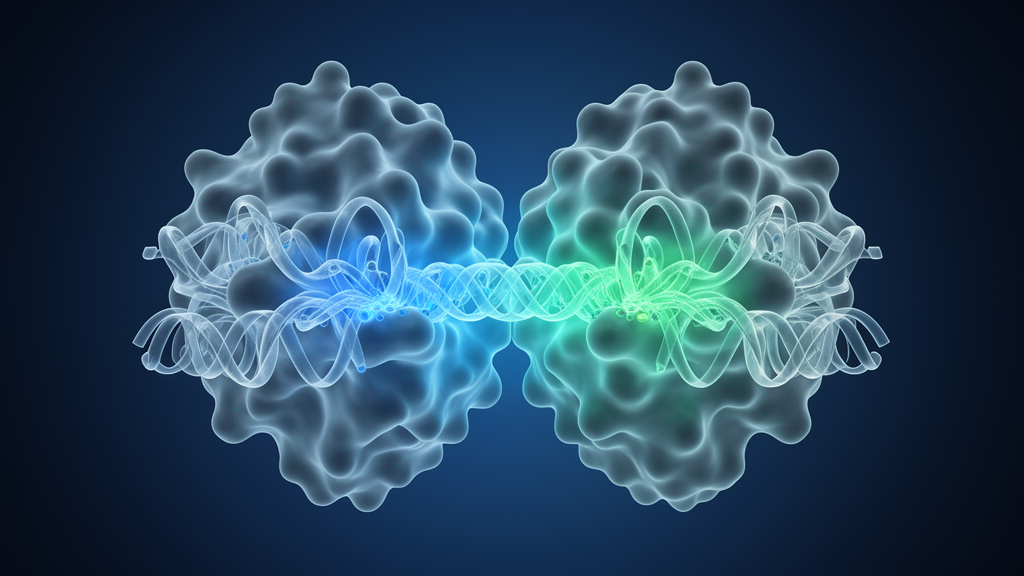
A newly developed computational platform called TopoPPI converts curved protein–protein interaction surfaces into low-distortion two-dimensional atlases while retaining direct links to source atoms, residues, and molecular contacts. Buried interaction surfaces encode critical molecular recognition patterns, yet their intricate three-dimensional curvature makes comprehensive inspection difficult. While flattening such surfaces can expose interface organization, conventional methods introduce geometric distortion and split individual residues into disconnected fragments across the resulting map.

To resolve these mapping artifacts, TopoPPI extends the OptCuts parameterization method by adding a contact-weighted penalty specifically designed to counteract seam-induced fragmentation of residue footprints. Residue footprints represent the surface regions assigned to individual residues. By incorporating this penalty, the platform simultaneously balances surface continuity, seam length, and geometric distortion during the flattening process. In a benchmark of 2,236 experimental complexes, the underlying geometry-only OptCuts foundation achieved 88.39 percent lower family-weighted scale-fair distortion than the next-best tested parameterization across 2,209 complete comparable outputs.

Across 2,204 exact-domain comparisons, TopoPPI reduced family-weighted residue-footprint fragmentation by 12.81 percent, with a 95 percent confidence interval spanning 11.50 to 14.05 percent. This improvement in structural continuity incurred a 2.60 percent increase in normalized seam length and a minor 0.061 percent increase in scale-fair distortion. Continuity gains extended to computational structures, reducing fragmentation by 18.60 percent across 1,180 fixed-pose pairs of AlphaFold monomer models and by 11.65 percent across 145 predicted complexes.

Biological evaluations further demonstrated that TopoPPI successfully reconnected the surface footprints of experimentally characterized binding and specificity residues in functionally annotated antibody and colicin–immunity interfaces. Additional applications mapped published binding and folding free-energy estimates onto the KRAS–RAF1 interface and compared shared receptor residues across two growth-hormone recognition sites. Available through graphical and command-line interfaces, the framework integrates structural contacts and functional annotations within geometrically controlled interface maps.

Subject of Research: Two-dimensional low-distortion mapping and visualization of protein-protein interaction interfaces

Article Title: TopoPPI: A geometry-aware platform for visualization and low-distortion mapping of protein-protein interaction interfaces

Article References: Zhong, S. (2026). TopoPPI: A geometry-aware platform for visualization and low-distortion mapping of protein-protein interaction interfaces. PLOS Computational Biology, 22(11), e1014963. https://doi.org/10.1371/journal.pcbi.1014963

Image Credits: AI Generated

DOI: 10.1371/journal.pcbi.1014963

Keywords: TopoPPI, protein-protein interactions, interface mapping, OptCuts, residue footprints, surface flattening, scale-fair distortion, molecular recognition, AlphaFold models, structural contacts, KRAS-RAF1 interface, colicin-immunity interfaces, antibody interfaces, growth-hormone recognition, two-dimensional atlases, computational biology

News Source: Drew Townsend. (November 18, 2026). TopoPPI Reduces Residue Footprint Fragmentation Across Complex Protein Interfaces. Scienmag.


Tags: AlphaFold modelsantibody interfacescolicin-immunity interfacescomputational biologygrowth-hormone recognitioninterface mappingKRAS-RAF1 interfacemolecular recognitionOptCutsprotein-protein interactionsresidue footprintsscale-fair distortionstructural contactssurface flatteningTopoPPItwo-dimensional atlases
Share12Tweet7Share2ShareShareShare1

Related Posts

New Flying Frog Species Discovered in Indonesia's Mekongga Mountains

New Flying Frog Species Discovered in Indonesia’s Mekongga Mountains

November 18, 2026
Adaptive Pseudo-References Improve Copy Number Variant Detection in Low-Input Sequencing

Adaptive Pseudo-References Improve Copy Number Variant Detection in Low-Input Sequencing

November 18, 2026

African Simian Arteriviruses Pose Potential Cross-Species Transmission Risk to Humans

November 18, 2026

Stemness Gene Profiling Identifies Prognostic Subtypes and Drug Targets in Osteosarcoma

November 18, 2026

POPULAR NEWS

  • Multi-Environment Trials Identify Four Superior High-Yielding Barley Genotypes in Egypt

    Multi-Environment Trials Identify Four Superior High-Yielding Barley Genotypes in Egypt

    29 shares
    Share 12 Tweet 7
  • Shandong Listeria Study Links Food and Clinical Isolates Using Genomic Profiling

    29 shares
    Share 12 Tweet 7
  • Engineers Develop Curved Lithium-Sulfur Battery Electrodes for Drone Frame Energy Storage

    29 shares
    Share 12 Tweet 7
  • Maternal Serum Elements Link to Cardiometabolic Risk Factors in Pregnancy

    29 shares
    Share 12 Tweet 7

About

We bring you the latest biotechnology news from best research centers and universities around the world. Check our website.

Follow us

Recent News

Dabie Bandavirus Fatality Linked to Genotype B in Coastal East Asia

Aged Mice Show Impaired Drainage of Small Nanoparticles to Lymph Nodes

Severe Healthcare Worker Shortages Impair Communicable Disease Control Across Afghanistan

Subscribe to Blog via Email

Enter your email address to subscribe to this blog and receive notifications of new posts by email.

Join 88 other subscribers
  • Contact Us

Bioengineer.org © Copyright 2023 All Rights Reserved.

Welcome Back!

Login to your account below

Forgotten Password?

Retrieve your password

Please enter your username or email address to reset your password.

Log In
No Result
View All Result
  • Homepages
    • Home Page 1
    • Home Page 2
  • News
  • National
  • Business
  • Health
  • Lifestyle
  • Science

Bioengineer.org © Copyright 2023 All Rights Reserved.