In a comprehensive scientific literature review published in the journal Advanced Cancer Research, researchers report that the critical tumor suppressor protein p53 operates as a flexible, dynamic signaling hub rather than an invariant static barrier against malignancy. The functional behavior and anti-tumor capabilities of p53 are dynamically directed by an intricate, combinatorial network of post-translational modifications that continuously dictate cellular responses to oncogenic stress. Rather than functioning as a simple on-and-off switch, the protein relies on coordinated biochemical inputs to control critical downstream biological programs. This complex modification code governs normal wild-type protein performance, drives the aggressive characteristics of common cancer-associated mutations, and explains why malignant cells can neutralize tumor suppression across diverse cellular contexts.
At the molecular level, p53 serves as a master stress-responsive transcription factor responsible for integrating a broad spectrum of cellular stresses and translating them into context-dependent transcriptional programs. Under appropriate physiological conditions, the activation of p53 triggers precise biological cascades that prevent damaged cells from propagating, including cell-cycle arrest, apoptotic programmed cell death, cellular senescence, DNA-damage repair mechanisms, and metabolic rewiring. The review details how combinatorial circuits of post-translational modifications continuously orchestrate these protective responses by modulating the fundamental biochemical properties of the p53 protein, including its cellular stability, DNA-binding affinity, subcellular localization, assembly with essential transcriptional co-regulators, and ultimate gene-specific transcriptional output.
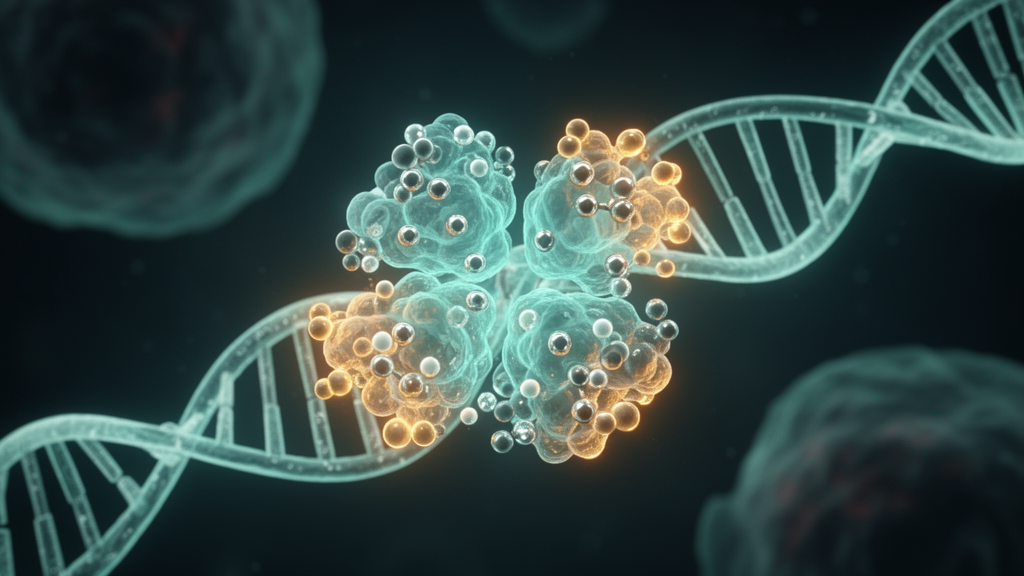
While scientific investigations have historically focused on well-characterized phosphorylation and acetylation events, the authors emphasize that the documented repertoire of modifications decorating p53 has expanded substantially. The context-dependent regulatory code now encompasses methylation, ubiquitination, ubiquitin-like conjugation, O-GlcNAcylation, lactylation, β-hydroxybutyrylation, ADP-ribosylation, hydroxylation, and diverse redox-related chemical alterations. Rather than functioning as isolated biochemical events along the polypeptide chain, these chemical modifications participate in continuous, dynamic crosstalk. Dedicated enzymatic writers install specific chemical moieties onto the protein, eraser enzymes selectively remove them, and specialized reader proteins interpret the resulting combinatorial signatures to reshape the broader interactome of p53 and dictate which genomic targets are engaged by the transcription factor.
Beyond managing normal cellular stress responses, post-translational modifications play a decisive role in shaping the aberrant biology of mutant p53 variants in malignant cells. The review highlights that the marked stability and oncogenic gain-of-function properties observed in hotspot mutant p53 proteins are not inherent outcomes of TP53 gene mutations alone. Instead, mutation-specific and context-dependent post-translational modifications actively govern the stability profiles, oncogenic activities, and drug sensitivities of these altered proteins. Distinct hotspot mutants, such as R175H, R273H, R158G, and R181C, display unique post-translational modification patterns that produce distinct stability characteristics and alter how these specific mutant proteins respond to therapeutic anti-cancer agents.
The influence of this modification network also accounts for malignant progression in tumors where the TP53 gene remains entirely unmutated. The authors point out that in TP53-intact cancers, aberrant post-translational regulation can functionally silence wild-type p53 protein activity even in the complete absence of coding mutations. In particular, dysregulated signaling pathways controlling normal phosphorylation and acetylation can prevent the unmutated protein from executing its protective tumor-suppressive roles. This mechanism demonstrates that post-translational disruptions alone are capable of functionally inactivating wild-type p53 defenses, effectively mimicking the loss of tumor suppression typically caused by genetic disruptions within the coding sequence.
The authors further conclude that adopting a comprehensive PTM-centric framework conceptually unifies canonical p53 signaling pathways with a broader spectrum of physiological and pathological processes. Specifically, this integrated perspective connects classical transcriptional defense mechanisms to ferroptosis regulation, tumor immune modulation, DNA-damage repair coordination, and cellular metabolic stress sensing.
These regulatory insights reveal numerous druggable molecular nodes within the p53 modification network, presenting promising therapeutic avenues for developing personalized, PTM-guided anti-tumor strategies. Nevertheless, the review underscores that substantial preclinical and translational obstacles continue to hinder the clinical implementation of these approaches. Major translational challenges include dose-limiting toxicities in healthy tissues, the development of adaptive drug resistance, extensive heterogeneity among distinct mutant alleles, and the persistent lack of robust predictive biomarkers necessary to identify which patient populations will benefit from targeted interventions.
Subject of Research: Post-translational modifications regulating p53 activity and therapeutic opportunities in cancer
Article Title: An update on post-translational modifications of p53 from molecular mechanisms to therapeutic opportunities in cancer
Article References: An update on post-translational modifications of p53 from molecular mechanisms to therapeutic opportunities in cancer. Original publication (Bibliographic details unavailable.)
Image Credits: AI Generated
DOI: Not provided
Keywords: p53, post-translational modifications, tumor suppressor, Advanced Cancer Research, PTM code, transcriptional regulation, gain-of-function mutations, hotspot mutants, acetylation, phosphorylation, ubiquitination, lactylation, ferroptosis, tumor immunology, drug resistance, biomarkers, cancer therapeutics
News Source: Nathaniel Bowman. (November 12, 2026). Combinatorial Post-Translational Modifications Dynamically Regulate p53 Activity in Cancer. Scienmag.