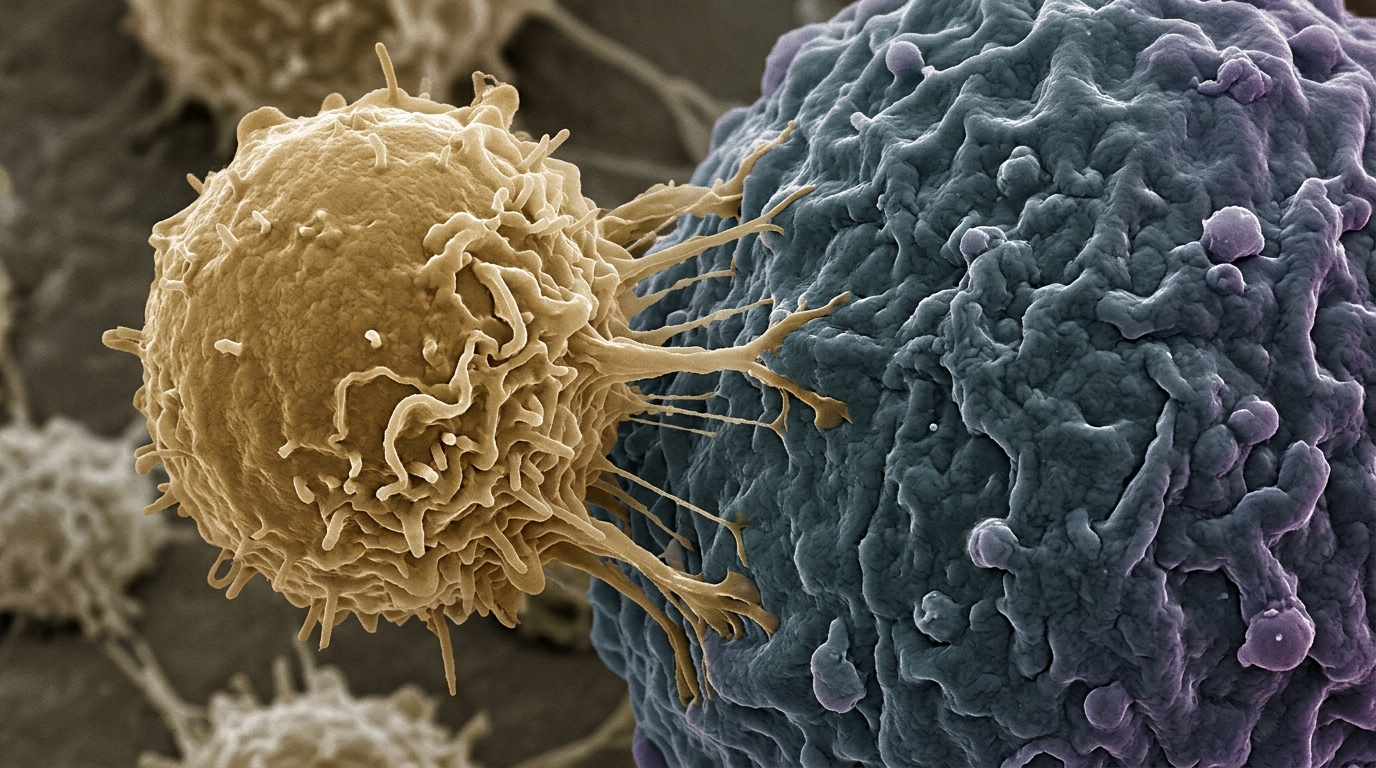
The study, published in Cancer Immunology, Immunotherapy, introduces loop-structured bispecific CAR-T cells that simultaneously recognize two distinct surface markers, CD38 and CD123. This dual-targeting approach aims to broaden the therapeutic coverage of CAR-T therapy in AML, a condition where heterogeneous antigen expression has historically limited the efficacy of single-target immunotherapies. The research team, led by Jianxiang Wang and colleagues, generated two reciprocal loop configurations to evaluate their antileukemic activity and safety profile in preclinical models.
The rationale for targeting both CD38 and CD123 stems from their expression patterns across different compartments of AML. While these markers are expressed in overlapping but non-identical subsets of malignant cells, their combined recognition may mitigate the risk of tumor escape due to antigen loss. To validate this hypothesis, the researchers reanalyzed two public single-cell RNA-sequencing datasets, GSE241989 and SciLifeLab 23715648. These datasets allowed for a detailed assessment of CD38 and IL3RA expression across various malignant cell states, individual AML samples, molecular subtypes, and normal hematopoietic progenitor compartments. The analysis revealed substantial interpatient heterogeneity in the expression of these markers, with partially complementary transcript coverage, supporting the theoretical benefit of dual-targeting strategies.
The study focused on two specific loop-structured CAR constructs: Loop 123 × 38 CAR and Loop 38 × 123 CAR. These were compared against monovalent CD38 CAR and CD123 CAR controls to isolate the effects of the loop structure and dual recognition. Antileukemic activity was rigorously evaluated against CD38/CD123-expressing AML cell lines and primary AML samples using cytotoxicity, degranulation, and cytokine assays. The results demonstrated that both loop CAR-T cells successfully recognized both CD38 and CD123 and exhibited significant activity against AML cell lines and primary samples that expressed both antigens. Furthermore, the loop CAR-T cells maintained activity against reciprocal single-antigen-loss cells, a critical advantage over monovalent counterparts that failed to recognize populations lacking one of the target antigens.
A key aspect of the investigation involved longitudinal analysis of the CAR-T cell products to understand their persistence and safety. The study observed altered expansion and apoptosis in CD38-targeting products, accompanied by selective depletion of CD38-expressing cells within the live GFP+ CAR-T cells. In a 12-day mixed-target co-culture assay, the monovalent CAR-T products could not recognize the corresponding single-antigen-loss population, leading to the accumulation of this uncontrolled population. In contrast, both loop CAR-T products effectively suppressed the outgrowth of both reciprocal antigen-loss populations, demonstrating superior control over heterogeneous tumor burdens.
The antitumor efficacy of the loop CAR-T cells was further assessed in cell line-derived, patient-derived, and mixed-antigen-loss xenograft models. Treatment with Loop CAR-T cells reduced leukemia burden and prolonged survival in these models, indicating robust in vivo activity. However, the study also examined hematopoietic toxicity, a significant concern in CAR-T therapy due to the expression of target antigens on normal hematopoietic progenitors. Colony-forming assays using human umbilical cord blood (UCB) CD34+ progenitors were conducted to evaluate this risk. After 24 hours of co-culture, neither loop CAR-T cell type showed significantly reduced colony formation. However, after 72 hours, the Loop 123 × 38 CAR-T cell treatment group exhibited a decrease in BFU-E and CFU-GM formation, whereas the Loop 38 × 123 CAR-T cells did not show a significant decrease compared to vector-T controls.
Statistical analysis revealed that BFU-E and CFU-GM formation was significantly higher in the Loop 38 × 123 CAR-T co-cultured group than in the Loop 123 × 38 CAR-T co-cultured group, with P-values less than 0.01 and less than 0.0001, respectively. This finding suggests a differential toxicity profile between the two loop configurations. While both configurations demonstrated strong antileukemic activity, the Loop 123 × 38 configuration was associated with greater suppression of normal hematopoietic progenitor colony formation after prolonged exposure.
The study concludes that CD38/CD123 dual recognition retains activity in antigen-heterogeneous AML models, including those with reciprocal single-antigen loss. Among the two loop configurations tested, Loop 123 × 38 CAR-T cells displayed a stronger overall antileukemic profile. However, this enhanced efficacy was accompanied by greater suppression of BFU-E and CFU-GM formation, indicating a higher risk of hematopoietic toxicity.
By leveraging the complementary expression of CD38 and CD123, the loop-structured CAR-T cells offer a potential solution to the limitations of single-target therapies.
Subject of Research: Development and evaluation of loop-structured CD38/CD123 bispecific CAR-T cells for acute myeloid leukemia
Article Title: Loop-structured CD38/CD123 bispecific CAR-T cells for antigen-heterogeneous acute myeloid leukemia
Article References: Li, W., Ma, H., Yu, H., Ding, F., Huang, Q., Wang, S., Xu, Y., Tang, K., Xing, H., Tian, Z., Rao, Q., Qiu, S., Wang, Y., Gu, R., Wang, M., & Wang, J. (2026). Loop-structured CD38/CD123 bispecific CAR-T cells for antigen-heterogeneous acute myeloid leukemia. Cancer Immunology, Immunotherapy. https://doi.org/10.1007/s00262-026-04623-5
Image Credits: AI Generated
DOI: 10.1007/s00262-026-04623-5
Keywords: CAR-T therapy, acute myeloid leukemia, CD38, CD123, bispecific antibodies, immunotherapy, antigen heterogeneity, hematopoietic toxicity, xenograft models, single-cell RNA sequencing, Loop-structured, bispecific
News Source: Nathaniel Bowman. (November 8, 2026). Loop CAR-T Cells Target Heterogeneous Leukemia Antigens. Scienmag.