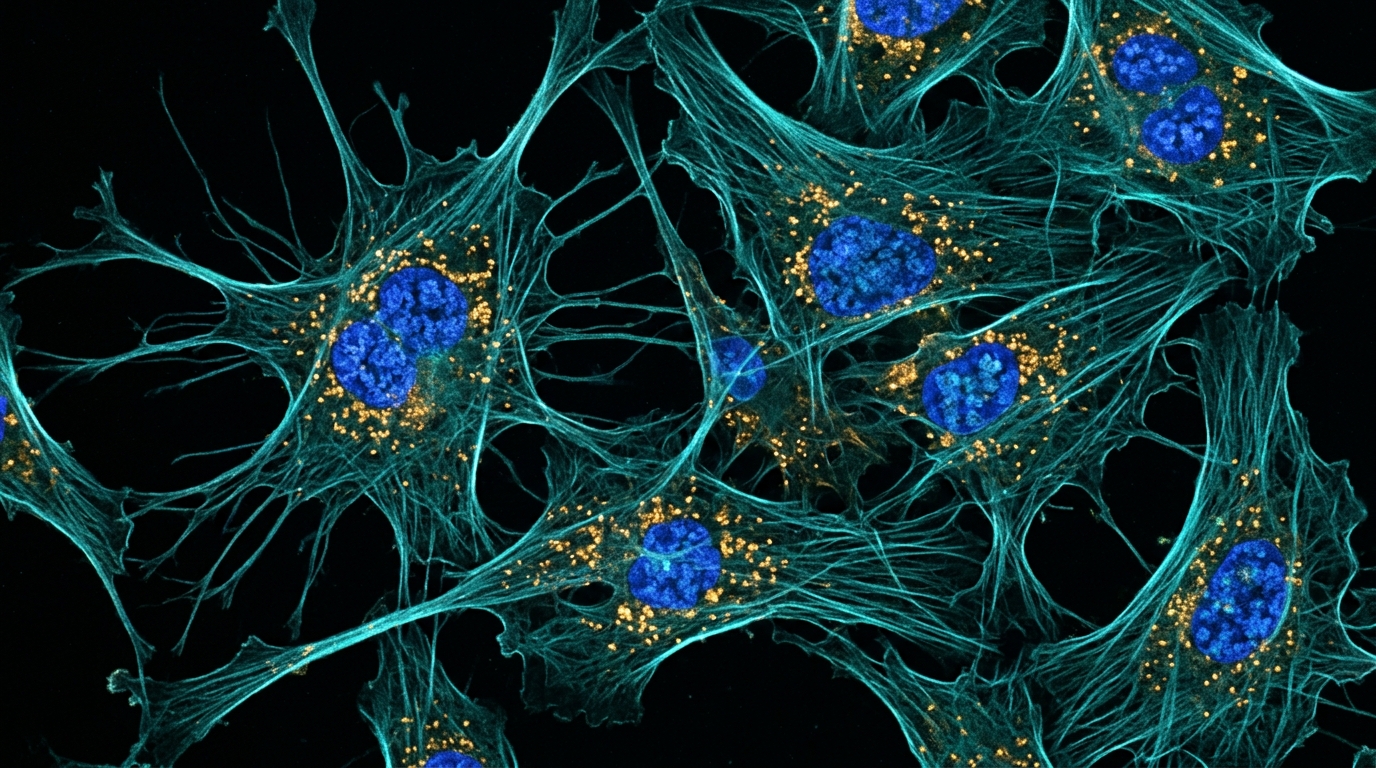
Glioblastoma remains one of the most difficult tumors to treat, and a new study published in the Journal of Neuro-Oncology points to a reason why: the cancer cells adapt to therapy by rewiring their metabolism. Researchers report that when mTOR signaling is suppressed in glioblastoma cells, the cells respond by inducing NFS1, a cysteine desulfurase enzyme. This adaptive induction of NFS1 appears to help the cells survive the metabolic stress of treatment and maintain the stem-like, flexible state that makes glioblastoma so resistant to therapy.
Suppressing mTOR signaling triggers a compensatory program in which the cells shift toward a stemness-associated phenotype and become dependent on NFS1.
To uncover this mechanism, the team subjected human glioblastoma cells to sphere-forming conditions or pharmacological inhibition of mTOR signaling. Both interventions induced stemness-associated changes in the cells. The researchers then performed unbiased proteomic profiling following mTORC2 inhibition to identify which metabolic alterations accompanied the adaptation.
Functional experiments confirmed that NFS1 is not merely a passive marker of stress but an active participant in the adaptive response. When the researchers used knockdown techniques to deplete NFS1, the glioblastoma cells lost some of their stemness-associated responses and became more sensitive to mTOR pathway inhibition. In other words, the enzyme appears to act as a metabolic dependency that emerges specifically when the cells are pushed into an adaptive state by therapeutic pressure.
The team also turned to orthotopic xenograft models. In these highly tumorigenic settings, increased NFS1 expression was confirmed. The researchers additionally explored whether iron availability modulates this adaptive phenotype, describing those analyses as exploratory but suggestive of a potential modulatory role for iron in shaping how glioblastoma cells respond to mTOR suppression.
Because the study relied on cell culture models, xenografts and publicly available datasets rather than patient trials, the findings should be understood as preclinical. The authors themselves frame the work as identifying a mechanism rather than validating a treatment.
Subject of Research: NFS1 induction as an adaptive metabolic response linking mTOR suppression to stemness-associated plasticity in glioblastoma
Article Title: Adaptive induction of NFS1 links mTOR suppression to stemness-associated plasticity in glioblastoma
Article References: Morino, A., Hayakawa, Y., Masui, K., Murakami, K., & Kurata, A. (2026). Adaptive induction of NFS1 links mTOR suppression to stemness-associated plasticity in glioblastoma. Journal of Neuro-Oncology, 180(2), Article 37. https://doi.org/10.1007/s11060-026-05856-1
Image Credits: AI Generated
DOI: 10.1007/s11060-026-05856-1
Keywords: glioblastoma, NFS1, mTOR, stemness, cellular plasticity, proteomics, iron-sulfur clusters, orthotopic xenograft, treatment resistance, metabolic dependency, cysteine desulfurase, preclinical study
News Source: Nathaniel Bowman. (November 6, 2026). NFS1 Emerges as Stress-Induced Vulnerability When mTOR Is Suppressed in Glioblastoma. Scienmag.