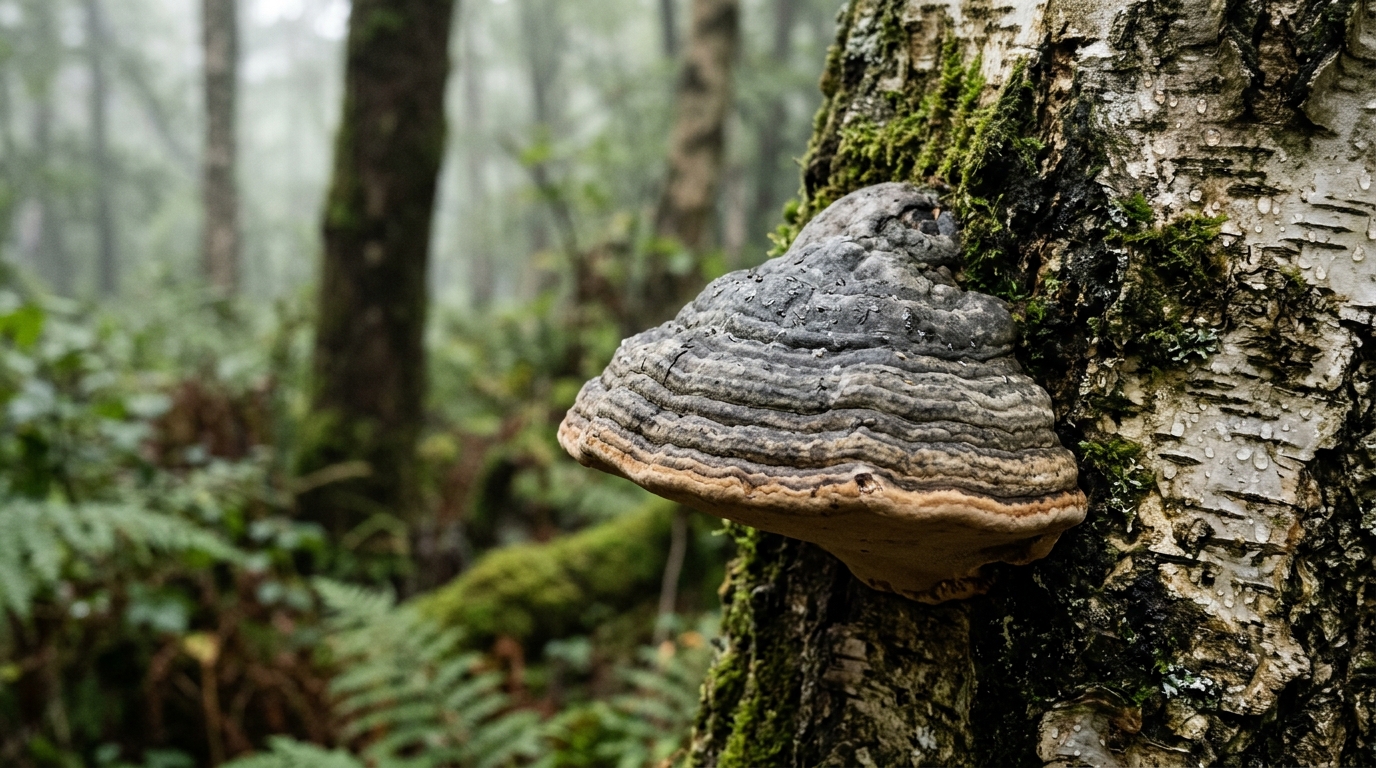
The tinder fungus Fomes fomentarius, long prized for carrying embers between campsites, has now been persuaded to accept foreign DNA. In a proof-of-principle study published in the journal Fungal Biology and Biotechnology, researchers report the first successful genetic transformation of this white-rot basidiomycete, a species that grows lightweight, durable and flexible materials from plant waste streams. The team, led by Carmen Regner, Justus Zillessen and Vera Meyer, established a working selection system, demonstrated stable integration of introduced gene cassettes and showed for the first time that the fluorescent proteins eGFP and mCherry function inside its cells. They also stumbled on an unexpected obstacle: the fungus is loaded with DNase activity that rapidly shreds DNA and may complicate future engineering efforts.
Fungal-based materials are currently studied as renewable alternatives to fossil-based materials used in construction, packaging, textile and fashion industries. In these processes, plant material is colonized by fungal hyphae to generate composite or non-composite materials with desired parameters such as size, shape, weight or tensile strength. Nearly 30 different filamentous fungal species have been experimentally confirmed as suitable for material production, most of them white-rot basidiomycetes including Ganoderma lucidum, Schizophyllum commune, Pleurotus ostreatus, Trametes versicolor and Fomes fomentarius. Performance of composite materials made with these fungi, measured in traits such as tensile strength, flammability and weight, is often competitive with conventional materials such as expanded polystyrene. Quantitative comparisons with conventional materials such as concrete show the biomaterials performing favourably with respect to water usage, air pollution and greenhouse gas emissions, and because the fungal-plant composites sequester carbon in the plant-derived substrate, they are viewed as a technology for the transition from a petroleum-based to a bio-based economy.
Despite these advantages, the underlying biology of wood-degrading fungi during composite formation remains largely uncharacterized. Genetic engineering studies in material-producing fungi have begun to answer important questions over the last decade, for example how cell surface hydrophobins affect material formation in S. commune and P. ostreatus, how laccase activity and lignin modification operate in G. lucidum, and how regulatory proteins such as the transcription factor Ace3 in Dichomitus squalens or PacC in G. lucidum function. These studies relied on classical deletion, over-expression, genome editing and RNAi tools. For F. fomentarius, however, no transformation method had been described, even though the group had previously reported using the fungus as a cell factory to generate composites, foams and paper based on moulding and 3D-printing techniques. The researchers considered genetic engineering a high-priority methodological advance for understanding and optimizing the materials this fungus produces.
The transformation route chosen was protoplast-mediated, one of the two main methods used for basidiomycetes, the other being Agrobacterium-mediated transfer. The researchers removed the fungal cell walls enzymatically to release protoplasts, membrane-bound cells that readily take up DNA. Preliminary experiments showed that mycelium from both static and shaken liquid cultures generated abundant protoplasts using protocols originally developed for the ascomycete Aspergillus niger, with only minor modifications. Starting biomass proved crucial: five-day-old static liquid cultures grown in Fernbach flasks with a large surface-to-volume ratio gave better growth and less mycelial debris among the purified protoplasts than shaken flasks. The multi-enzyme blend VinoTaste Pro also generated more viable protoplasts for this species than an enzyme mix from Trichoderma harzianum or the enzyme Yatalase, so the protocol was built around that blend.
Selection was the next hurdle. Transformation of agaricomycetes can be achieved using the protein synthesis inhibitor nourseothricin as the selective agent and the nourseothricin N-acetyltransferase gene, natR, as the resistance marker. As preliminary evidence, the team transformed protoplasts with the plasmid pHom2, which carries natR under the control of an S. commune gpdA promoter. Protoplast-based transformation yielded more than one colony-forming unit per microgram of plasmid across six technically replicated experiments, equivalent to roughly 10 to 30 putative transformants per agar plate. Negative control plates, derived from protoplasts incubated with sterile water instead of plasmid DNA, produced no colonies or very few, between zero and three. On that basis the researchers concluded that nourseothricin and natR could serve as a dominant selection system for this fungus.
Native promoters matter for efficient gene expression in agaricomycetes, so the team placed the natR cassette under the control of a native F. fomentarius promoter. They analysed the promoter region of the translation elongation factor gene tef1 in silico, finding a predicted intron, an initiator element, a downstream promoter element, one GC-box, three CAAT boxes and a transcription start site. Data from previously published transcriptional datasets spanning biomaterial, laboratory growth and in planta cultivation conditions confirmed that tef1 is consistently highly expressed, ranking on average fifth most highly expressed out of 14,754 genes, with a lowest ranking of 18th. Using modular cloning, they built a plasmid in which natR sits under the tef1 promoter, alongside 250-base-pair targeting arms for deletion of a predicted ku70 gene, a strategy that in many fungi improves homologous recombination by inhibiting non-homologous end joining. A linear cassette was transformed into protoplasts together with a pre-assembled CRISPR/Cas12a ribonucleoprotein complex targeting the ku70 locus. The natR cassette was confirmed by PCR in putative transformants, but ku70 deletion was unsuccessful as determined by diagnostic PCR, so precise genome targeting remains an unsolved problem in this species.
Stability and copy number were then addressed at the molecular level. DNA extracted from three PCR-confirmed transformants was digested and probed for the tef1 promoter region in Southern blot analyses, which confirmed multicopy integration of the transformation cassette into each transformant genome. Radial growth assays on complete agar revealed minor but detectable impacts on colony morphology for two isolates, while a third mutant showed a marked reduction in radial growth and altered colony morphology. Interestingly, that slow-growing mutant also carried the most frequent marker integration events, which the authors suggest may indicate a metabolic cost of expressing numerous natR copies, or alternatively integration of one or more cassettes at loci necessary for normal growth or metabolism. The overall conclusion was that stable integration of exogenous DNA cassettes can be mediated by protoplast-based transformation, and that expression of the tef1-driven natR cassette does not cause severely defective growth in all engineered strains, although transformants may display phenotypes dependent on cassette copy number or integration site.
The fluorescent toolkit followed the same logic. The researchers constructed two plasmids expressing mCherry or eGFP under the control of an S. commune H2B promoter fused to a nuclear localisation sequence, with selection again mediated by the tef1-driven natR cassette. After PCR confirmed integration in a subset of transformants, qRT-PCR screening showed that several transformants carrying the natR cassette did not express the H2B or fluorescent genes at all, which the team attributes either to integration of a non-functional truncated cassette or to recombination of the exogenous DNA into transcriptionally inactive chromosomal loci. Encouragingly, other transformants expressed the H2B and either eGFP or mCherry encoding genes at moderate to high levels, reaching 10 to 30 percent of the endogenous actin transcript level. Distinct expression levels between two eGFP-expressing mutants were consistent with the non-targeted multicopy integration seen earlier. Fluorescence microscopy then confirmed that both proteins are functional in transformant hyphae, with fluorescence detected in punctate locations consistent with the nucleus, while autofluorescence from the progenitor control was minimal. The H2B localisation signal, the authors hypothesize, likely directs proteins to the nucleus of F. fomentarius as shown previously for other fungi.
An unexpected discovery emerged from routine failures of standard genomic DNA extractions and fluctuating numbers of primary transformants: the fungus degrades DNA aggressively. When the researchers incubated one microgram of a linear PCR product with crude cell lysate from F. fomentarius, the DNA was fully degraded within 10 minutes at room temperature. Minor but clearly detectable DNase activity was also observed in culture supernatants after 60 minutes of incubation, and rapid degradation of plasmid DNA confirmed endonuclease activity in crude cell lysate. In the same assay, DNase activity was barely detectable using supernatant or lysate from A. niger, the model industrial cell factory used as a control. The activity was moderately inhibited by 5 millimolar EDTA, but the inhibition was counteracted by adding magnesium, fully restoring DNase activity, which strongly suggests the enzyme depends on divalent cations with magnesium as a potential catalytic cofactor. Zinc chloride also inhibited the activity, but this inhibition was not reversed by magnesium supplementation, suggesting zinc acts through direct metal substitution or binding at the catalytic site rather than by simply depleting magnesium.
The authors consider this DNase activity a surprising technical challenge both for genomic DNA extraction and possibly for genetic engineering itself, hypothesizing that exogenous DNA cassettes may be degraded during transformation and possibly after the cassettes have entered the fungal cell. While not prohibitive for transformation, they speculate the activity could be reducing transformation efficiency and possibly interfering with targeting of the ku70 cassette during disruption efforts, and they suggest similar DNase activity could be limiting transformation efficiency in other material-forming fungi. Work is underway to reduce DNase activity during transformation, for example through magnesium chelation with EDTA. For now, the study delivers a functioning entry point: a validated selection marker and promoter, stable multicopy integration, two working fluorescent reporters suitable for future subcellular localization and protein turnover studies, and a clearly mapped list of challenges, including off-target multicopy integration and the absence of precise genome targeting, that must be overcome before targeted genetic engineering of this biomaterial-producing fungus becomes routine.
Subject of Research: First genetic transformation and fluorescent protein expression in the biomaterial-producing fungus Fomes fomentarius
Article Title: Genetic transformation and fluorescent protein expression in the biomaterial-producing fungus Fomes fomentarius
Article References: Regner, C., Zillessen, J., Hoberg, F., Elsner, S., Cairns, T. C., Freidank-Pohl, C., & Meyer, V. (2026). Genetic transformation and fluorescent protein expression in the biomaterial-producing fungus Fomes fomentarius. Fungal Biology and Biotechnology, 13(1), Article 20. https://doi.org/10.1186/s40694-026-00228-w
Image Credits: AI Generated
DOI: 10.1186/s40694-026-00228-w
Keywords: Fomes fomentarius, genetic transformation, fungal biomaterials, fluorescent proteins, mCherry, eGFP, nourseothricin selection, protoplast-mediated transformation, Southern blot, DNase activity, white-rot fungi, sustainable materials
News Source: Roger Howard. (November 6, 2026). Scientists crack open the tinder fungus with first genetic transformation toolkit. Scienmag.