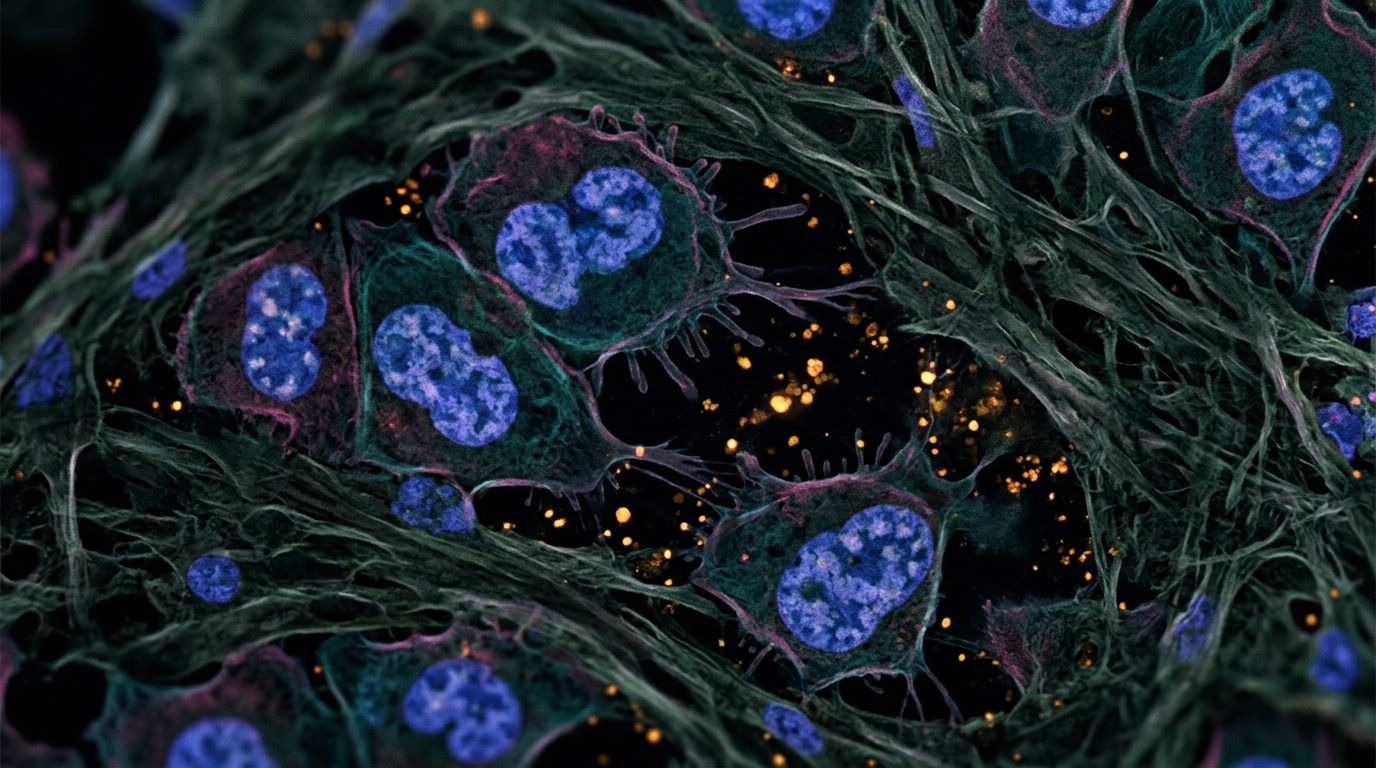
A family of three secreted carrier proteins that fine-tune fibroblast growth factor signaling is drawing attention as a source of prognostic biomarkers and, potentially, therapeutic targets in cancer. A comprehensive review published in Biomarker Research on 3 November 2026 synthesizes what is known about the fibroblast growth factor-binding proteins, or FGFBPs, arguing that their context-dependent behavior in tumors makes them a promising but still underexploited dimension of cancer biology. The authors, Jie Xia, Yang Xiao, Yongsheng Li and Huakan Zhao, map the physiological roles of FGFBP1, FGFBP2 and FGFBP3 and then trace how each member behaves across a spectrum of malignancies, from squamous carcinomas to gliomas.
FGFBPs work by binding FGF ligands reversibly and regulating where, when and how strongly those ligands engage their receptors. FGF signaling drives cell proliferation, migration, differentiation and survival through the RAS–MAPK, PI3K–AKT and PLCγ cascades, and its dysregulation is a recognized driver of oncogenesis. Because FGFBPs modulate the spatial distribution, stability and bioavailability of extracellular FGFs, they effectively tune both the amplitude and duration of FGF/FGFR signaling. The review identifies four principal mechanistic models for how this happens: direct capture of newly secreted FGFs before they are sequestered by heparan sulfate proteoglycans in the extracellular matrix; competitive or allosteric displacement of matrix-bound FGFs; binding of FGFs liberated by enzymatic degradation of the matrix; and liquid-liquid phase separation, in which FGFBP1 and FGF5 form membrane-associated co-condensates that cluster FGFRs and amplify signaling. A fifth category covers FGF-independent functions, including FGFBP1’s promotion of type IV collagen deposition to support blood-brain barrier integrity and its capacity to trigger intracellular F-actin rearrangement as an extracellular signaling molecule.
The structural basis for these interactions is only partly resolved. All three FGFBPs carry an N-terminal signal peptide, a heparin-binding domain and a C-terminal FGF-binding domain, and sequence analysis identifies two conserved motifs shared across the family. Molecular docking simulations suggest that the FGFBP1-FGF2 and FGFBP3-FGF2 interfaces sit within the C-terminal binding domains, while the predicted FGFBP2-FGF2 interface lies in the central region, consistent with biophysical evidence that FGFBP2 adopts a noncanonical, partially unwound coiled-coil conformation upon FGF binding. The authors caution that artificial intelligence-driven structural predictions remain hypotheses that require orthogonal validation through yeast two-hybrid assays, site-directed mutagenesis coupled with surface plasmon resonance, and crosslinking mass spectrometry.
Under physiological conditions, FGFBPs are indispensable. In chick embryos, knockdown of FGFBP1 causes death within three days, FGFBP2 knockdown disrupts FGF signaling and produces ventral body wall closure defects leading to death within five days, and FGFBP3 overexpression provokes acute vascular leakage with a 50 percent embryonic mortality rate within 24 hours. In embryonic stem cells, FGFBP1 participates in a bidirectional feedback loop between the pluripotency factor NANOG and ERK signaling that governs exit from pluripotency. In the adult small intestine, FGFBP1-positive isthmus progenitor cells serve as the origin of Lgr5-positive crypt-base columnar stem cells, challenging the traditional view that Lgr5-positive cells are the sole intestinal stem cells. FGFBP1 also drives angiogenesis and wound healing by potentiating FGF7, FGF10 and FGF22, and it supports liver regeneration after acute injury through an endocrine pathway involving muscle-derived FGFBP1 and hepatic FGF5.
The nervous system adds further layers of complexity. FGFBP1 promotes neuromuscular junction repair in amyotrophic lateral sclerosis mouse models, where enriched expression attenuates disease progression and deficiency impairs re-innervation following injury. FGFBP3, which is robustly expressed in the central nervous system, is linked to neurodevelopmental and psychiatric phenotypes: loss-of-function mutations attenuate ERK-c-Fos activity in orbitofrontal cortex neurons and produce anxiety-like behaviors, while copy number analysis in families with expanded autism spectrum disorders has identified FGFBP3 duplications as a candidate risk factor. In zebrafish, loss of FGFBP3 stunts axonal growth and reduces branching of spinal motor neurons. FGFBP1 also participates in blood pressure regulation, where angiotensin II upregulates its expression in cardiomyocytes and the secreted protein enhances the contractile sensitivity of peripheral resistance vessels to angiotensin II, and clinical data show FGFBP1 expression in the kidneys of hypertensive patients is elevated 1.5-fold compared with normotensive subjects.
In cancer, the three family members diverge sharply. FGFBP1 functions broadly as a pro-tumorigenic promoter across most malignancies examined. In esophageal squamous cell carcinoma, immunohistochemical analysis of 172 patients showed FGFBP1-positive signals predominantly in the cytoplasm and cell membranes of carcinoma cells, with only weak or absent expression in normal esophageal mucosa, and mechanistic work links BAP1-stabilized KLF5 to FGFBP1 transcription, which in turn stimulates SNAIL2 and epithelial-mesenchymal transition. In head and neck squamous cell carcinoma, FGFBP1 is significantly overexpressed in malignant epithelial cells and activates FGF2/FGFR1 signaling, promoting proliferation, migration, invasion and tumor-initiating cell stemness. In triple-negative breast cancer, elevated FGFBP1 is associated with significantly shorter disease-free survival, and the protein activates the KLK10-AKT signaling axis. In colorectal cancer, both mRNA and protein levels rise during early carcinogenesis through premature activation of the Wnt/β-catenin pathway, and exosomal FGFBP1 from highly metastatic SW620 cells enhances the proliferative, migratory and invasive capacity of low-metastatic SW480 cells.
FGFBP1 also mediates therapeutic resistance. In colorectal cancer liver metastasis, tumor-derived FGFBP1 mobilizes FGF2 from the extracellular matrix, facilitating its binding to FGFRs on hepatic stellate cells and activating the ERK1/2 pathway, which upregulates EGR1 and subsequently FAPα, remodeling the tumor microenvironment and driving resistance to bevacizumab. In pancreatic ductal adenocarcinoma, FGFBP1 expression correlates closely with clinical stage and is positively associated with reduced overall survival; the tumor suppressor FBW7 is downregulated, allowing c-Myc accumulation and direct transactivation of the FGFBP1 promoter, while the secreted protease KLK6 cleaves FGFBP1 at the Lys149-Leu150 site, removing its heparin-binding domain and releasing bioactive FGFs that drive invasion. In hepatocellular carcinoma, patients testing positive for FGFBP1 show significantly shorter overall survival and higher recurrence rates than those who are negative, and epigenetic regulation through SETD2-mediated H3K36 methylation relieves transcriptional repression of the FGFBP1 promoter.
FGFBP2 presents a contrasting profile. It is primarily secreted by lymphocytes and is functionally associated with immune cytotoxicity. Single-cell RNA sequencing of biopsy samples from eight hormone receptor-positive breast cancer patients before and after neoadjuvant chemotherapy identified a CD8-positive T cell subset marked by high FGFBP2 expression that expresses cytotoxicity-related genes including FCGR3A and NKG7 and carries significantly higher cytotoxic signature scores; high abundance of these cells correlates with prolonged overall survival and predicts favorable chemotherapy response in both hormone receptor-positive and triple-negative cohorts. In lung adenocarcinoma, flow cytometric analysis of peripheral blood from five EGFR-mutant and five EGFR wild-type patients showed that the proportion of FGFBP2-positive natural killer cells was significantly lower in the mutant group, and preclinical work found that FGFBP2-high NK cells combined with anti-PD-1 therapy achieved the most potent anti-tumor activity across experimental cohorts. In cervical squamous cell carcinoma, a rare CD16-positive NK population marked by high FGFBP2 is significantly diminished in tumor tissue compared with normal cervix, and its abundance correlates with prolonged overall survival. In acute myeloid leukemia, FGFBP2 mRNA and protein are significantly downregulated, impairing NKT cell anti-tumor activity, and in acral melanoma the abundance of FGFBP2-positive NKT cells is significantly reduced in tumors with lymph node metastasis.
FGFBP3 behaves as a double-edged sword whose molecular basis remains unresolved. In pancreatic ductal adenocarcinoma, transcriptomic data from 532 patients show that elevated FGFBP3 expression is significantly associated with superior overall survival and improved disease-free survival, yet all members of one familial pancreatic cancer kindred who developed the disease carried a missense variant, p.A242T, in the FGFBP3 gene, and low-frequency variants constitute a susceptibility factor for familial pancreatic cancer. In breast cancer, an Illumina Human Exome SNP array analysis of 2,984 cases and 7,545 controls identified rare FGFBP3 variants that potentially confer increased risk, particularly in estrogen receptor-positive subtypes, though the findings did not reach genome-wide significance. In low-grade glioma, FGFBP3 expression is significantly and negatively correlated with the degree of M2 macrophage infiltration, and multivariate Cox regression validated it as an independent prognostic factor with a hazard ratio of 0.708 and a p value of 0.023. In H3K27M-mutant pediatric high-grade glioma, by contrast, FGFBP3 acts as a maintainer of stem-like malignant phenotypes, and its significant downregulation is required to enable neuronal trans-differentiation.
The translational implications are substantial but preliminary. In bladder cancer, a study of 99 patients and 50 healthy controls found urinary FGFBP1 significantly elevated and positively correlated with tumor stage, grade and size, achieving an area under the curve of 0.951 in a LASSO regression model for early diagnosis. In esophageal squamous cell carcinoma, elevated FGFBP1 is significantly associated with shortened overall and progression-free survival. Genetic knockdown or knockout of FGFBP1 suppresses proliferation, migration and invasion in multiple preclinical models, and Fgfbp1 knockout mice show significantly delayed formation and reduced frequency of chemically induced skin papillomas. Natural products including baicalein, guanidinoacetic acid, eldecalcitol and the anti-lymphoma agent B4 downregulate or bind FGFBP1 through distinct mechanisms. Yet the review’s authors emphasize that current characterizations of FGFBP2-positive immune subsets rely predominantly on single-cell transcriptomic profiling, which is inherently correlative and cannot establish causal relationships, and that the indispensable physiological roles of FGFBPs pose potential safety risks for systemic targeting. Future work, they argue, should prioritize functional validation, genetically engineered models, and the screening of highly selective ligands that inhibit tumor growth while minimizing off-target effects on healthy tissue.
Subject of Research: The roles of fibroblast growth factor-binding proteins in physiology and as prognostic biomarkers and therapeutic targets in cancer
Article Title: FGFBPs in health and tumors: emerging prognostic biomarkers and therapeutic implications
Article References: Xia, J., Xiao, Y., Li, Y., & Zhao, H. (2026). FGFBPs in health and tumors: emerging prognostic biomarkers and therapeutic implications. Biomarker Research, 14(1), Article 158. https://doi.org/10.1186/s40364-026-01038-3
Image Credits: AI Generated
DOI: 10.1186/s40364-026-01038-3
Keywords: FGFBP1, FGFBP2, FGFBP3, FGF signaling, prognostic biomarkers, tumor microenvironment, liquid biopsy, therapeutic resistance, NK cells, pancreatic cancer, glioma, biomarker research
News Source: Nathaniel Bowman. (November 5, 2026). Secreted FGF Carriers Emerge as Prognostic Biomarkers Across Cancers. Scienmag.