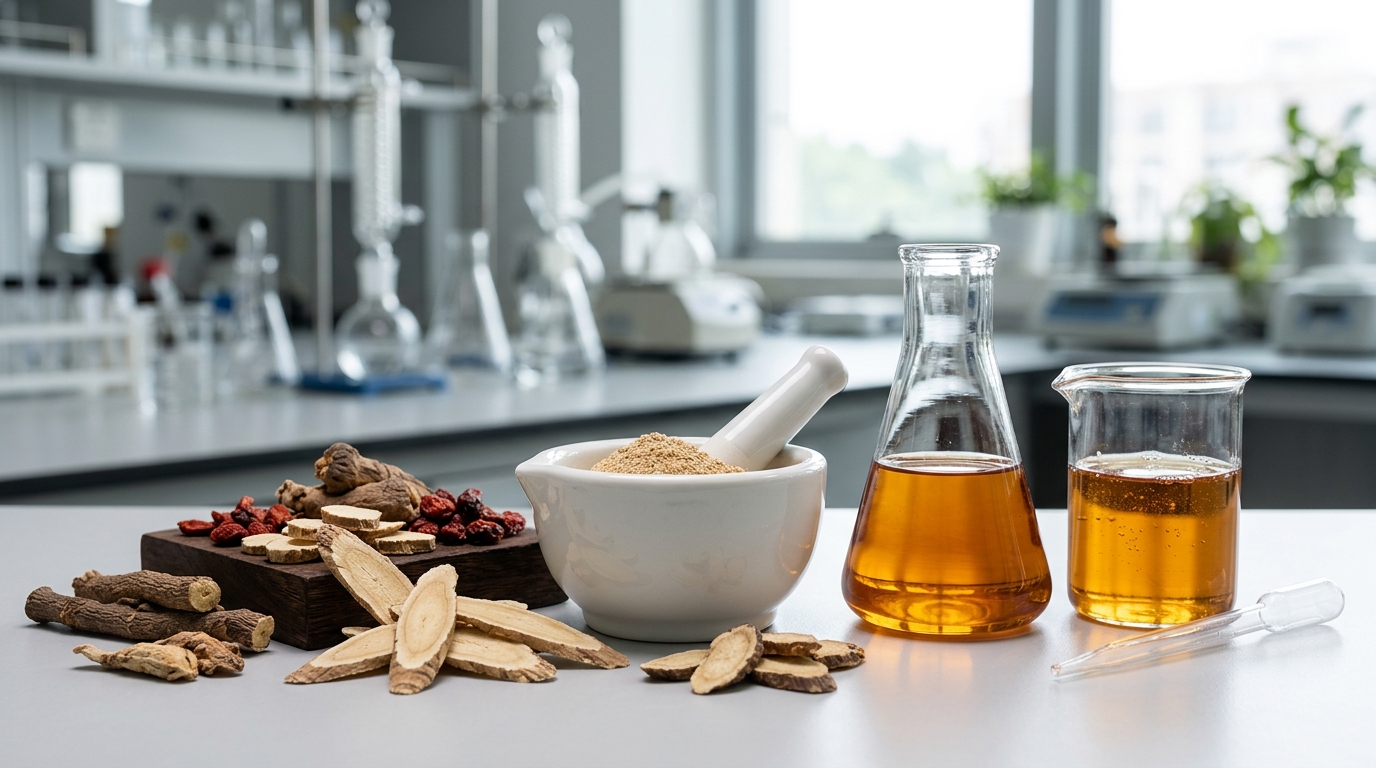
A traditional Chinese medicine formula has shown measurable antifibrotic effects in rat and cell models of liver fibrosis, according to a new study published in Biological Procedures Online. The formula, called Ruangan Huayu Formula (RGHY), was investigated using a combination of chemical profiling, network pharmacology, molecular docking, and laboratory experiments. The findings provide mechanistic evidence supporting the formula’s traditional use and suggest it may be a candidate for further development as a liver cirrhosis therapy.
Liver cirrhosis is the end stage of chronic liver disease and is characterized by the growth of diffuse fibrous tissue. It is a leading cause of morbidity and mortality worldwide and commonly follows continuing causes such as viral hepatitis, alcoholism, or metabolic dysfunction-associated steatohepatitis. Liver injury, inflammation, cell death, activation of hepatic stellate cells, and excessive deposition of extracellular matrix proteins all contribute to the cirrhotic process, resulting in a non-reversible condition that diminishes regenerative capacity. Despite better understanding of the molecular basis of liver fibrosis, few adequate antifibrotic therapies exist today. The study notes that current treatment options for liver cirrhosis are largely limited to managing acute liver failure, with no definitive curative therapies available.
Traditional Chinese Medicine has been positioned as a source of holistic and multi-target therapeutic approaches for chronic diseases. Several related formulas, including Biejia Ruangan tablet, Huangjia Ruangan granules, and Shaoyao Ruangan Decoction, have shown promising therapeutic effects in treating liver fibrosis and cirrhosis. Ruangan granules consist of eight raw materials, including Biejia (Carapax Trionycis), Chishao (Radix Paeoniae Rubra), Huangqi (Radix Astragali Mongolici), Baizhu (Rhizoma Atractylodis Macrocephalae), Danggui (Radix Angelicae Sinensis), Danshen (Radix Salviae Miltiorrhizae), Juemingzi (Semen Cassiae Obtusifoliae), and Xiakucao (Spica Prunellae Vulgaris). Fuzheng Huayu formula, which is clinically used for liver fibrosis treatment and has an anticirrhotic effect, comprises Danshen, Cordyceps, Taoren, Jiaogulan, Wuweizi, and Songhuafen.
RGHY formula shares some raw materials with these established formulas, including Biejia, Chishao, Baizhu, and Danshen, which are thought to nourish yin, invigorate the spleen and qi, clear heat, remove blood stasis, and relieve pain. RGHY also comprises Taizishen (Radix Pseudostellariae), Fuling (Poria), Mudanpi (Cortex Moutan Radicis), Baihuasheshecao (Herba Hedyotdis), Muli (Concha Ostreae), and Foshou (Fructus Citri Sarcodactylis). Among these, Taizishen, Fuling, and Baihuasheshecao have anti-inflammatory and antioxidant activities. Mudanpi is widely employed in traditional Chinese medicine for its analgesic, antipyretic, antioxidant, anti-inflammatory, and antitumor properties. Muli has sedative and anticonvulsant effects, and Foshou has anti-inflammatory and blood pressure-lowering activities. However, the potential mechanism of RGHY formula against liver cirrhosis remained unclear before this study.
To characterize the chemical profile of RGHY, the researchers used ultra-high-performance liquid chromatography-Orbitrap-explorative mass spectrometry (UHPLC-OE-MS). This untargeted metabolomics approach identified 21 major bioactive compounds in the formula, including sulfuretin, 7,3′,4′-trihydroxyflavone, caffeic acid, and vanillic acid. The team then applied network pharmacology, a paradigm that integrates systems biology, bioinformatics, and polypharmacology to decipher complex multi-component, multi-target, and multi-pathway mechanisms. By intersecting the predicted targets of RGHY compounds with known liver cirrhosis targets from four biomedical databases, the analysis pinpointed 57 intersecting targets. A protein-protein interaction network of these targets revealed core hub proteins including AKT1, SRC, PIK3CA, EGFR, STAT3, KRAS, MMP9, IL1B, and ESR1.
Gene Ontology enrichment analysis suggested that the main biological processes were responses to bacterial molecules and lipopolysaccharide, while molecular functions were significantly enriched in carboxylic acid binding and serine-type peptidase activity. Cellular component analysis highlighted enrichment in vesicle lumen and secretory granule lumen. The Kyoto Encyclopedia of Genes and Genomes (KEGG) analysis showed the top 30 significantly enriched pathways included lipid and atherosclerosis, AGE-RAGE signaling pathway in diabetic complications, resistance to EGFR tyrosine kinase inhibitors, and several cancers. The researchers note that these results strongly indicated RGHY may affect liver cirrhosis through a multi-target and multi-pathway mechanism.
Molecular docking studies were then performed to evaluate the binding affinity between key bioactive compounds and target proteins. The results showed that 7,3′,4′-trihydroxyflavone had high-affinity binding to both AKT1 (binding energy: -10.3 kcal/mol) and SRC (binding energy: -8.3 kcal/mol). Sulfuretin showed strong binding to PIK3CA (binding energy: -8.8 kcal/mol). Caffeic acid maintained stable binding with PIK3CA (-6.5 kcal/mol) and STAT3 (-5.8 kcal/mol), while 2,3-dihydroxy-4-methoxyacetophenone showed good docking with PIK3CA (binding energy: -6.3 kcal/mol). These docking results explored the possibilities of direct interactions among the major bioactive ingredients of RGHY and illuminated the major target proteins purportedly implicated in the anti-cirrhotic mechanism.
To test the formula’s effects in vivo, the researchers used a thioacetamide (TAA)-induced liver fibrosis model in male Sprague-Dawley rats. TAA is a well-established hepatotoxin that induces severe liver injury, inflammation, and fibrosis, mimicking pathological processes occurring during human liver cirrhosis. Rats were divided into five groups: a control group, a TAA model group, and three TAA+RGHY groups receiving low (0.62 g/kg/d), medium (1.24 g/kg/d), or high (2.48 g/kg/d) doses of RGHY granules. The study lasted two months. Histopathological examination revealed that TAA administration caused severe hepatic injury characterized by marked inflammatory infiltration, collagen deposition, and strong α-SMA expression. Treatment with RGHY at all three doses significantly ameliorated these pathological changes in a dose-dependent manner.
Biochemical tests showed that medium and high doses of RGHY treatment significantly decreased serum AST by 34.91% and 54.04% and serum ALT by 35.31% and 54.51% in TAA-induced rats. Conversely, low, medium, and high doses of RGHY treatment significantly induced 1.45-, 1.77-, and 1.97-fold increases in serum albumin. Hydroxyproline content, a direct indicator of collagen deposition, was increased in the TAA group and significantly decreased by 16.77%, 23.56%, and 38.47% in the low, medium, and high dose RGHY groups respectively. Western blot analysis revealed that RGHY decreased α-SMA protein levels by 27.97%, 52.58%, and 58.83% in fibrotic liver tissues, and also decreased p-PI3K levels by 14.76%, 36.09%, and 62.62% and p-AKT levels by 15.38%, 44.15%, and 54.20% respectively. These results indicate that RGHY effectively protects against TAA-induced liver fibrosis, improves liver function, and its mechanism is associated with the blocking of the PI3K/AKT signaling pathway.
In vitro experiments used TGF-β-stimulated human hepatic stellate cells (LX-2) to further investigate the cellular mechanisms. RGHY-containing serum, prepared by orally administering RGHY granules to rats, was applied to the cells at 2%, 5%, and 10% concentrations. Wound healing assays showed that the TGF-β-induced increase in LX-2 cell migration was decreased by RGHY-containing serum treatment. The serum treatments decreased hydroxyproline content by 9.90%, 30.05%, and 44.35% respectively, and suppressed TGF-β-induced α-SMA upregulation by 20.64%, 56.31%, and 66.60%. The two key bioactive compounds, 7,3′,4′-trihydroxyflavone and sulfuretin, were then tested individually and in combination. The combination treatment significantly and dose-dependently inhibited TGF-β-induced migration of LX-2 cells, reduced hydroxyproline content by 42.72%, and inhibited the expression of α-SMA, p-PI3K, and p-AKT by 20.26%, 21.58%, and 33.66% respectively. A rescue experiment using the PI3K/AKT pathway activator 740 Y-P confirmed that the pathway mediates the antifibrotic effects, as the activator partially restored the migratory capacity of LX-2 cells and abrogated the compound combination’s downregulation of hydroxyproline content and α-SMA protein expression. The authors note that this research primarily relies on animal models and in vitro experiments, and the efficacy and safety of RGHY need to be validated in clinical settings before it can transition from laboratory research to clinical application.
Subject of Research: Therapeutic mechanisms of a traditional Chinese medicine formula in liver fibrosis and cirrhosis
Article Title: Therapeutic Mechanisms of Ruangan Huayu Formula in Liver Cirrhosis: Network Pharmacology, Molecular Docking and Experimental Validation
Article References: Xie, H., Wang, Y., Zhu, M., Hou, L., Sun, X., Gao, X., Gao, S., & Zhu, J. (2026). Therapeutic Mechanisms of Ruangan Huayu Formula in Liver Cirrhosis: Network Pharmacology, Molecular Docking and Experimental Validation. Biological Procedures Online, 28(1), Article 39. https://doi.org/10.1186/s12575-026-00354-0
Image Credits: AI Generated
DOI: 10.1186/s12575-026-00354-0
Keywords: liver cirrhosis, liver fibrosis, Ruangan Huayu Formula, traditional Chinese medicine, network pharmacology, molecular docking, PI3K/AKT pathway, hepatic stellate cells, TAA-induced fibrosis, UHPLC-OE-MS, antifibrotic therapy, LX-2 cells
News Source: Drew Townsend. (November 5, 2026). Traditional Chinese Formula Shows Antifibrotic Effects Through PI3K/AKT Pathway. Scienmag.