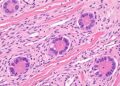
Patients with metastatic fumarate hydratase-deficient renal cell carcinoma whose tumors carry mutations in DNA damage response and repair genes respond better to a combination of immunotherapy and a tyrosine kinase inhibitor than patients whose tumors lack such mutations, according to a multicenter study published in Cellular Oncology. Among 88 patients with successful next-generation sequencing results who received systemic treatment, those with deleterious alterations in DNA damage repair genes had an objective response rate of 38.8 percent, compared with 6.3 percent in patients without such alterations, a difference the researchers report as statistically significant with a P value of 0.043.
Survival followed the same pattern. Patients whose tumors were positive for DNA damage repair gene mutations had a median overall survival on systemic treatment that had not been reached at the time of analysis, while patients without these mutations had a median overall survival of 25.0 months, with a 95 percent confidence interval of 13.33 to 36.68 months. The hazard ratio favoring the mutation-positive group was 0.149, with a 95 percent confidence interval of 0.025 to 0.877, and the log-rank test yielded a P value of 0.035. Because the confidence interval for the hazard ratio is wide and its lower bound approaches the null value, the estimate carries substantial uncertainty even though the difference reached conventional statistical significance.
The study addressed a gap in biomarker knowledge for this rare kidney cancer subtype. Alterations in DNA damage response and repair genes are known to produce therapeutic biomarkers, but their significance in fumarate hydratase-deficient renal cell carcinoma had remained undefined. The researchers therefore investigated the mutational landscape of DNA damage repair genes across a multi-centered cohort of patients with this disease and examined the relationship between those alterations and response to immunotherapy combined with tyrosine kinase inhibitor treatment.
To assemble the cohort, the team collected genomic data and treatment outcomes for patients with metastatic fumarate hydratase-deficient renal cell carcinoma. Tumors and matched blood samples from patients treated with systemic therapy were analyzed using targeted next-generation sequencing. The association between DNA damage repair mutation status and therapeutic benefit was then investigated separately for the immunotherapy and tyrosine kinase inhibitor combination.
In total, 105 patients with metastatic fumarate hydratase-deficient renal cell carcinoma were identified. Of these, 88 patients had successful next-generation sequencing results and received systemic treatment. Within that sequenced group, the analysis identified 81 deleterious DNA damage repair gene alterations distributed among 44 patients classified as DNA damage repair positive. The remaining patients were classified as DNA damage repair negative, and this classification formed the basis for the comparisons of response and survival.
The authors conclude that the association with response to immunotherapy and tyrosine kinase inhibitor combination therapy demonstrates that patients with fumarate hydratase-deficient renal cell carcinoma whose DNA damage repair genes are altered may be rational candidates for precision treatment.
Several limitations temper the strength of these conclusions. The study was observational, comparing outcomes between pre-existing mutation groups rather than randomly assigning patients to treatments, so unmeasured differences between the groups could contribute to the survival gap. The number of patients was modest, with 88 in the sequenced treatment cohort, and the wide confidence interval around the hazard ratio reflects that limited sample size. The published version is an early-release, peer-reviewed accepted manuscript that remains citable and carries a permanent DOI but is subject to further edits before the final version of record appears. Validation in independent cohorts and prospective testing would be needed before DNA damage repair mutation status becomes a standard tool for treatment selection in this disease.
Subject of Research: Mutations in DNA damage repair genes as predictors of response to immunotherapy and TKI combination treatment in metastatic FH-deficient renal cell carcinoma
Article Title: Impact of DNA damage repair gene mutations on response to combination immunotherapy in patients with FH-deficient renal cell carcinoma
Article References: Xu, Y., Kong, W., Liu, S., Zhu, H., Wang, J., Zhu, L., Pan, J., Xia, X., Meng, L., & Zhang, J. (2026). Impact of DNA damage repair gene mutations on response to combination immunotherapy in patients with FH-deficient renal cell carcinoma. Cellular Oncology. https://doi.org/10.1007/s13402-026-01320-4
Image Credits: AI Generated
DOI: 10.1007/s13402-026-01320-4
Keywords: FH-deficient renal cell carcinoma, DNA damage repair genes, immunotherapy, tyrosine kinase inhibitor, biomarkers, next-generation sequencing, objective response rate, overall survival, precision oncology, kidney cancer, tumor mutations, combination therapy
News Source: Nathaniel Bowman. (November 5, 2026). DNA repair gene mutations flag better immunotherapy responses in FH-deficient kidney cancer. Scienmag.