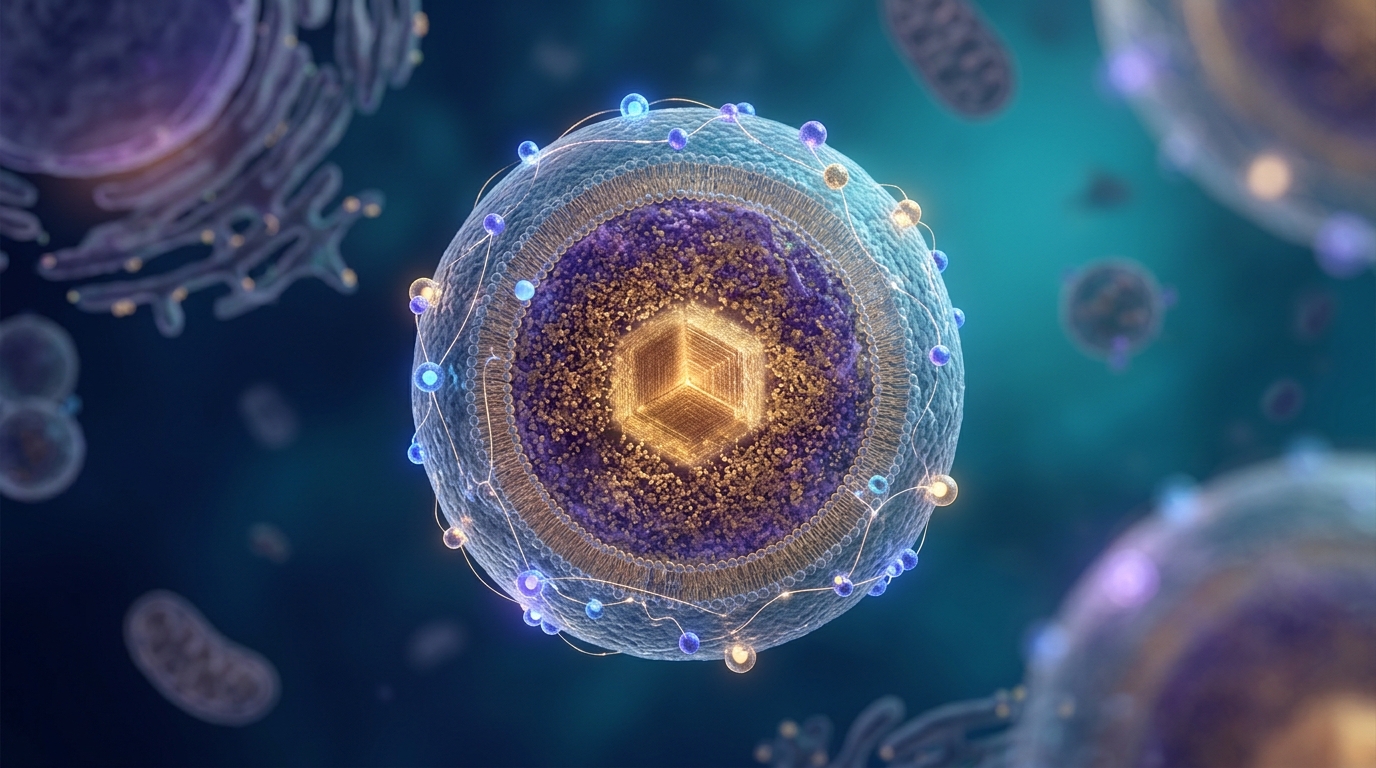
Peroxisomes are highly heterogeneous organelles with remarkable functional diversity across species and tissues, and isolating them is essential for proteomic investigation of their biological roles and regulatory mechanisms. Their functional diversity makes proteomic analysis of these organelles important, but such analysis depends on the ability to isolate peroxisomes. A team reporting in Nature Chemical Biology now describes a method called PerCap that rapidly isolates native, intact peroxisomes from human cells and mouse tissues, opening the door to a far more detailed proteomic and functional picture of these versatile compartments.
The strategy grew out of an unexpected molecular interaction. The researchers discovered that the N-terminal region of the transcription factor ATF6α binds directly, in vitro, to two peroxisomal membrane proteins, ABCD1 and ABCD3. The researchers developed PerCap, an affinity-based strategy leveraging these interactions to rapidly purify native peroxisomes. Using this approach, the team isolated peroxisomes from human cells.
Applying the method to human cells, the researchers purified peroxisomes and validated that the isolated organelles remained intact and functional. Proteomic analysis of these preparations identified potential peroxisomal proteins. The team confirmed that AKAP1, CPT1A and CYB5R1 also localize to peroxisomes, expanding the known roster of residents. The team showed that loss of AKAP1 affects peroxisome morphology.
To test how broadly the approach could reach, the group extended PerCap to mouse tissues and compared the peroxisomal proteomes across different organs. Peroxisomes were also isolated from mouse tissues to compare tissue-specific peroxisomal proteins.
The researchers also turned PerCap toward a dynamic question: what happens to peroxisomes when cells decide to destroy them? Using Torin1, a compound that induces pexophagy, the selective autophagic degradation of peroxisomes, they tracked the peroxisomal proteome over time. By monitoring peroxisomal proteome dynamics during Torin1-induced pexophagy, the researchers identified UBE2V1 as a contributor to this process. The finding illustrates how the isolation method can capture not just a static inventory of proteins but the changing composition of the organelle as it moves through a regulated life cycle.
PerCap leverages the interaction between the N-terminal region of ATF6α and the peroxisomal membrane proteins ABCD1 and ABCD3 to rapidly purify native peroxisomes. Affinity capture based on the ATF6α N-terminal fragment binding ABCD1 and ABCD3 allows rapid purification, and the authors report that the resulting preparations pass checks for intactness.
The in vitro interaction described here was harnessed for isolation purposes, and the full physiological significance of the binding remains a subject for further study. Still, the observation provided the key that made the capture strategy possible, and it adds a curious new thread to the biology of both the transcription factor and the organelle.
The demonstration that PerCap works in both cultured human cells and mouse tissues suggests the method can bridge cell-based discovery and animal physiology.
In summary, PerCap enables isolation of native peroxisomes from human cells and mouse tissues for proteomic and functional analyses. The published work establishes the core capability: isolation of native peroxisomes from human cells and mouse tissues, proteomic identification of peroxisomal proteins including AKAP1, CPT1A and CYB5R1, a functional link between AKAP1 loss and peroxisome morphology, and the identification of UBE2V1 as a contributor to Torin1-induced pexophagy. Together, these results position PerCap as a practical platform for probing both the composition and the regulation of one of the cell’s most adaptable organelles.
Subject of Research: A method for isolating native peroxisomes to study their proteins and regulators
Article Title: PerCap isolates native peroxisomes to reveal peroxisomal proteins and regulators
Article References: Chen, X., Dang, T., Cao, Z., Chen, J., Wu, J., Peng, H., Ning, Y., Mu, A., Wang, Q., Ge, J., Shui, W., & Zhuang, M. (2026). PerCap isolates native peroxisomes to reveal peroxisomal proteins and regulators. Nature Chemical Biology. https://doi.org/10.1038/s41589-026-02341-8
Image Credits: AI Generated
DOI: 10.1038/s41589-026-02341-8
Keywords: peroxisomes, PerCap, ATF6α, ABCD1, ABCD3, proteomics, pexophagy, UBE2V1, AKAP1, organelle isolation, mouse tissues, cell biology
News Source: Drew Townsend. (November 4, 2026). New Method Captures Intact Peroxisomes to Map Their Proteins and Regulators. Scienmag.