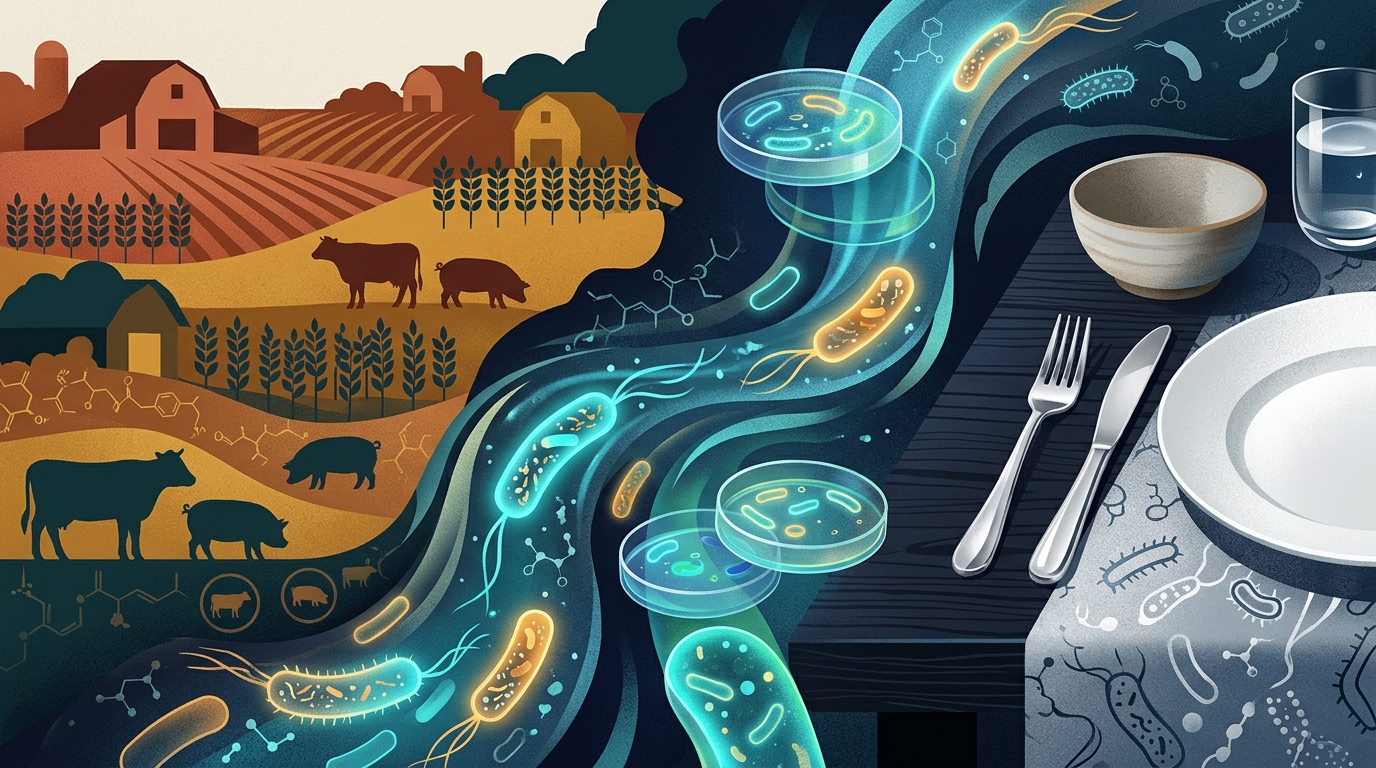
Antimicrobial resistance has moved far beyond hospital wards and into the food on everyday plates. A new review published in MicrobiologyOpen synthesizes recent international research on how antibiotic-resistant bacteria and the genes they carry circulate through meat, dairy, eggs, produce, and seafood, arguing that food is a significant but often overlooked vehicle for resistance transmission. The authors frame the problem within the One Health approach, which links human, animal, and environmental health, and they warn that without coordinated action across sectors, resistance will continue to entrench itself as a global food safety crisis.
The stakes are enormous. In 2019, antimicrobial resistance was linked to 1.27 million deaths, and in 2021 it was estimated to be associated with 4.71 million deaths globally, of which 1.14 million were directly attributable to resistant bacterial infections. By 2050, resistance is projected to cause up to 10 million deaths annually, with an economic impact expected to reach 100 trillion US dollars. The burden is also shifting: deaths in children under five fell by more than half between 1990 and 2021, while mortality among adults aged 70 and older rose by over 80 percent. Although resistance arises naturally, its development has been significantly accelerated by the inappropriate use of antimicrobials, including overuse, underuse, and misuse, in both human and veterinary contexts.
Antibiotics are widely employed in agriculture to boost crop yields, in animal husbandry to treat infections, in prophylactic and metaphylactic applications to prevent disease, and as growth promoters in animal feed. Among the roughly 30 antibiotics commonly used in these sectors, macrolides, penicillins, and tetracyclines are the most prevalent classes. According to one analysis cited in the review, approximately 9 million kilograms of antibiotics are administered annually worldwide to treat infections, while around 3 million kilograms are applied for prophylactic purposes or to promote growth. Regulatory frameworks vary significantly. In the European Union, regulations effective since January 2022 prohibit growth promotion and routine group prophylaxis, limit metaphylaxis to justified high-risk cases, and extend these bans to imported animal products, contributing to about a 50 percent decrease in veterinary antimicrobial sales over the past decade. In the United States, similar objectives were achieved more gradually through Food and Drug Administration guidance that banned growth-promoting uses while still allowing disease prevention in healthy animals, a practice the World Health Organization recommends discontinuing.
Resistant bacteria in animals can reach humans directly through the food chain via the consumption of undercooked or raw food, handling of contaminated products, or cross-contamination with other foods, and indirectly through environmental pathways. The European Food Safety Authority documented the transmission of zoonotic bacteria such as Campylobacter, Salmonella, and Escherichia coli through water or environmental contamination and direct contact with animals. In 2023, campylobacteriosis and salmonellosis were the most reported zoonoses in humans across 27 EU member states, the United Kingdom, and 10 non-member states. Salmonella in eggs and egg products represented the most concerning agent-food combination that year, accounting for the highest number of outbreaks and reported cases across the EU, ranking second in hospitalizations, and leading the multi-country outbreak count.
Poultry is a recurring hotspot. A review of Salmonella-related outbreaks in the United States linked to live poultry, backyard poultry, and raw or undercooked poultry products found diverse serotypes, many exhibiting resistance to multiple antibiotic classes, with frequently reported resistance to ampicillin, tetracycline, streptomycin, gentamicin, chloramphenicol, ciprofloxacin, and trimethoprim-sulfamethoxazole. One 2021 backyard poultry outbreak alone involved 1,135 cases. Studies cited in the review detected Salmonella enterica in 40 percent of layer chickens, with isolated strains showing resistance to penicillin and nalidixic acid at 100 percent, sulfamethoxazole-trimethoprim at 55 percent, ampicillin at 40 percent, and amoxicillin at 25 percent. In broiler chickens, Salmonella enterica serovar Typhimurium was found in 30 percent of birds tested, with the highest resistance against tetracycline at 97 percent and chloramphenicol at 94 percent. Multidrug-resistant non-typhoidal Salmonella, which causes approximately 94 million infections and over 150,000 deaths each year globally, is particularly concerning because resistance to frontline drugs like fluoroquinolones and third-generation cephalosporins hampers treatment of serious infections. The WHO identified fluoroquinolone-resistant non-typhoidal Salmonella as a high-priority pathogen in its 2024 Bacterial Priority Pathogens List.
International trade accelerates the spread of resistance across borders. The multidrug-resistant Salmonella enterica serotype Kentucky ST198, highly resistant to ciprofloxacin, was first identified in Egypt in the early 2000s and later traveled across Africa, the Middle East, Europe, and North America through the poultry trade and travel. More recently, the mcr-3 and mcr-9 genes, responsible for transmissible colistin resistance, were found in bacteria from seafood imported into the United States, which sources 65 to 85 percent of its seafood from abroad, but not in domestically produced seafood. This highlights how aquaculture from regions with limited antimicrobial oversight can introduce resistance genes of last resort into importing countries. Aquaculture itself is an under-recognized pathway: antimicrobials are often added to feed for whole production units and remain at sub-therapeutic levels in water and sediments, selecting for resistant bacteria that ultimately reach humans through fish and seafood consumption. In Japan, analysis of 85 retail raw seafood samples found mainly Vibrio and Aeromonas species, with isolates resistant to tetracycline, sulfamethoxazole, and trimethoprim/sulfamethoxazole carrying tet, sul, and dfr genes in 21.9 percent of the fish samples. Resistance to sulfamethoxazole was found only in farm-raised fish, directly linking this resistance pattern to antimicrobial use in aquaculture.
Plant-based foods are also reservoirs of resistance. Soil, a natural reservoir of bacteria harboring resistance genes, poses a risk when edible plant tissues come into direct contact with it or are exposed to soil splashes. The application of animal or human waste as soil amendments, contamination from animal intrusion, and irrigation with treated municipal wastewater, surface water receiving effluents, or untreated wastewater all increase the likelihood of transfer, a practice now implemented on over 20 million hectares across more than 50 water-scarce countries. Since conventional treatments do not entirely eliminate antibiotic residues, resistant bacteria, and resistance genes, these contaminants can settle on crop surfaces, transfer to native soil bacteria via horizontal gene transfer, and eventually be absorbed by edible plants. Manure application is a recognized driver of resistance gene dissemination, and thermophilic anaerobic digestion of dairy manure at 52 degrees Celsius has achieved reductions of up to 95 percent in the sul2 and int1 genes, although treatment does not completely eliminate resistance, as genes such as sul1 and sul2 can persist or be re-enriched during maturation. Studies evaluating vegetable and salad samples found contamination with different E. coli pathotypes in 34 percent of vegetables and 26.7 percent of salad samples, with 92 percent of diarrheagenic E. coli pathotypes exhibiting resistance to tetracycline and 87 percent resistant to ampicillin.
Underlying these patterns are well-characterized molecular mechanisms. Efflux pumps, membrane-associated transport proteins that actively export antimicrobial compounds out of the bacterial cell, lower intracellular drug concentrations and compromise antibiotic efficacy; the AcrAB-TolC pump in E. coli, a member of the resistance-nodulation-cell division family, extrudes a broad range of antibiotics including beta-lactams and macrolides. Modification of the bacterial cell wall, such as the substitution of the terminal D-Ala-D-Ala with D-Ala-D-Lactate or D-Ala-D-Serine, reduces glycopeptide binding affinity by roughly 1,000-fold and 6-fold respectively, impairing drugs like vancomycin. Enzymatic inactivation, including beta-lactamase hydrolysis of the beta-lactam ring and aminoglycoside-modifying enzymes that acetylate, phosphorylate, or adenylylate their targets, further undermines treatment. Target site modification through methylation of 23S rRNA at nucleotide A2058 mediates macrolide-lincosamide-streptogramin resistance, while 16S rRNA methyltransferases confer aminoglycoside resistance. Beyond these heritable mechanisms, antibiotic persistence, the ability of a phenotypically distinct subpopulation to survive high concentrations of bactericidal antibiotics without any change in minimum inhibitory concentration, allows persister cells to survive in diverse ecological niches including the gut microbiota, soil, and biofilms on agricultural surfaces, posing a risk for therapy failure and pathogen resurgence.
The review’s authors argue that tackling resistance in food systems requires integrative, cross-disciplinary strategies bridging human medicine, veterinary science, plant pathology, environmental health, and food safety. These include harmonized international standards for antibiotic use in agriculture, investment in robust surveillance systems capable of tracking resistance trends across the entire farm-to-fork continuum, promotion of good agricultural practices including alternatives such as probiotics, vaccines, and improved biosecurity, and public education campaigns. Vaccines against pathogens like Salmonella and avian pathogenic E. coli have demonstrated notable success in cutting antibiotic usage in livestock. Consumers also play a crucial role as a last line of defense, since resistant bacteria are most often spread in kitchens via unwashed hands, knives, and cutting boards. The WHO’s Five Keys to Safer Food, which include keeping clean, separating raw and cooked foods, cooking thoroughly, maintaining safe temperatures, and using safe water and raw ingredients, provide an effective barrier against the spread of resistant bacteria to humans when consistently followed.
Subject of Research: Antibiotic-resistant bacteria and resistance genes in food systems and their public health implications
Article Title: Silent Contaminants: Antibiotic‐Resistant Bacteria in Food Systems
Article References: Odocheanu, R., Medeleanu, M. L., Pamfil, D., & Vodnar, D. C. (2026). Silent Contaminants: Antibiotic‐Resistant Bacteria in Food Systems. MicrobiologyOpen, 15(6), Article e70418. https://doi.org/10.1002/mbo3.70418
Image Credits: AI Generated
DOI: 10.1002/mbo3.70418
Keywords: antimicrobial resistance, food safety, One Health, Salmonella, Escherichia coli, aquaculture, livestock, resistance genes, foodborne pathogens, surveillance, manure, public health
News Source: Juliet Wilcox. (November 4, 2026). Antibiotic-Resistant Bacteria Are Traveling From Farms to Forks Worldwide. Scienmag.