


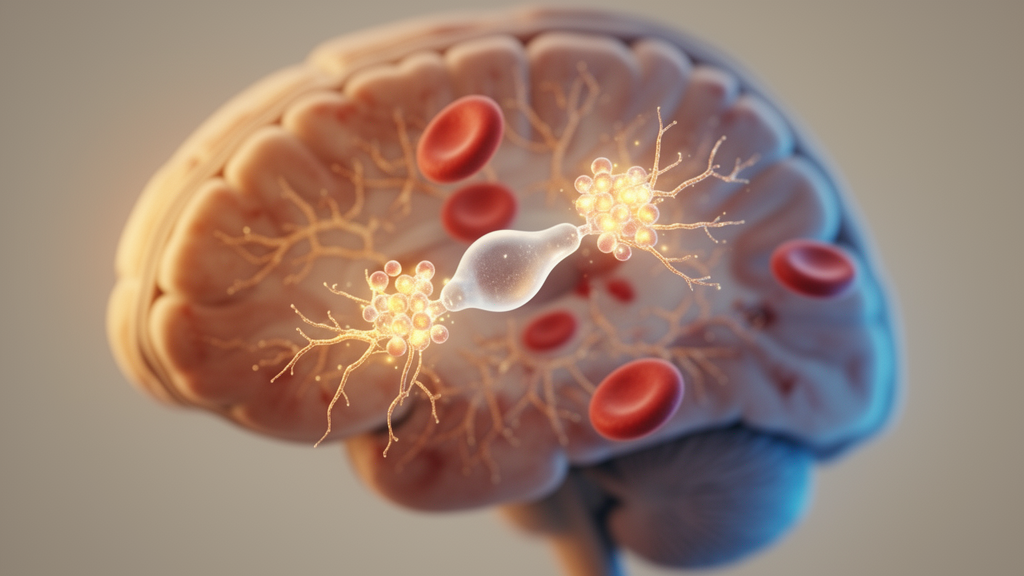
Mice that survive hemorrhagic shock followed by resuscitation often pay a lasting neurological price, and a new study in the journal Behavioral and Brain Functions points to a specific cellular culprit in the brain. Researchers report that blocking the NLRP3 inflammasome specifically in microglia, the resident immune cells of the central nervous system, substantially reduced hippocampal neuroinflammation and reversed measurable cognitive deficits in a rodent model of hemorrhagic shock with resuscitation, known as HSR. The findings, published on 9 July 2026, identify microglial NLRP3 as a promising therapeutic target, though the work remains at the preclinical stage and was conducted exclusively in male mice.
Hemorrhagic shock is a common emergency in operating rooms and emergency departments and is a leading cause of death and disability among adults. While hemostasis, fluid resuscitation and coagulation support can effectively manage the acute crisis, the resuscitation itself produces incomplete cerebral ischemia and subsequent brain reperfusion injury. Survivors frequently experience chronic functional disorders including anxiety, depression and cognitive dysfunction, characterized by impaired memory, attention, executive function and reasoning. According to the authors, a complete understanding of the best therapies for memory and cognitive deficits following HSR is still lacking, which motivated their search for fundamental causes and novel approaches.
The research team, led by scientists affiliated with Hebei Province Cangzhou Hospital of Integrated Traditional and Western Medicine and collaborating institutions in China, focused on the hippocampus, and in particular the CA1 region, which mediates neuroplasticity in memory acquisition, storage and retrieval. Previous evidence has linked neuronal loss and synaptic degradation in hippocampal CA1 directly to HSR-induced cognitive deficits. The team also built on earlier work from their own laboratory indicating that glial cell-mediated chronic neuroinflammation linked to NLRP3 is probably a key factor in late-stage inflammation after traumatic stress, and that targeting reactive microglia and NLRP3 inflammasome-mediated pyroptosis can correct neurofunctional abnormalities in a chronic mild stress mouse model.
NLRP3, or nucleotide-binding oligomerization domain-like receptor protein 3, is an inflammasome sensor whose activation triggers the formation of cleaved caspase-1, which in turn produces inflammatory molecules such as interleukin-18. This pyroptosis-related pathway has been implicated in the inflammatory response to HSR. However, it remained unknown whether microglial NLRP3, as opposed to NLRP3 in other central nervous system cell types or peripheral immune compartments, is the critical pathogenic driver of long-term cognitive dysfunction after global ischemic insults such as HSR. No prior study had examined whether microglia-specific NLRP3 deletion could restore hippocampal synaptic integrity, neural network oscillations and cognitive function at chronic time points after systemic hypovolemic injury.
To address these questions, the researchers developed an HSR model in male C57BL/6 mice by inducing controlled bleeding under sevoflurane anesthesia, maintaining a hypotensive blood pressure of 30 to 35 mmHg, and then gradually resuscitating the animals with retransfusion. Behavioral evaluation used the novel object recognition test on day 31 after HSR and the Morris water maze from day 32 onward. In a key experimental arm, an AAV-CX3CR1-Cre virus was stereotaxically injected into the hippocampal CA1 region of NLRP3-floxed mice 21 days before HSR modeling, establishing a microglia-specific knockout. Immunofluorescence confirmed that NLRP3 was almost completely absent from CA1 microglia in the Cre-treated animals, and control labeling showed the viral reporter appeared exclusively in Iba1-positive microglia, not in neurons or astrocytes.
The results showed that HSR alone produced a broad constellation of deficits at the chronic time points examined, 30 to 36 days after injury. HSR-treated mice displayed significantly lower recognition indices, longer escape latencies in the water maze, fewer platform crossings and less time in the target quadrant, while average swimming speeds did not differ between groups, arguing against gross motor impairment. Local field potential recordings in CA1 during novel object exploration revealed significantly reduced theta and gamma power and markedly diminished theta-gamma phase-amplitude coupling, oscillatory dynamics considered important for memory and cognition. Fluorescence intensity of the synaptic proteins PSD95 and synaptophysin was significantly reduced, and the number of Iba1-positive microglia, along with colocalization of cleaved caspase-1 and interleukin-18 with the microglial marker Iba-1, was significantly increased in CA1.
Notably, the researchers found no significant difference in the number of NeuN-positive neurons between groups at 36 days post-HSR, indicating that the cognitive and synaptic impairments at this time point are driven primarily by synaptic dysfunction and neuroinflammation rather than overt neuronal cell death. The authors describe this as consistent with the concept of synaptopathy, in which cognitive decline results from synaptic dysfunction that can occur before, or even in the absence of, overt neuronal death. They suggest that even when hippocampal neuronal numbers are largely preserved, microglia-mediated neuroinflammation and ensuing synaptic pathology may already serve as key drivers of cognitive dysfunction, and that early intervention targeting these processes could delay or prevent cognitive decline.
Two independent interventions produced strikingly parallel rescue effects. First, the NLRP3 inhibitor MCC950, administered via intracerebroventricular injection immediately after model establishment, significantly reversed the HSR-induced reductions in recognition index, platform crossings, theta and gamma power, theta-gamma coupling, and synaptic protein intensity, while normalizing microglial activation markers. Second, microglia-specific genetic knockout of NLRP3 in hippocampal CA1 similarly improved recognition index, escape latency, platform crossings and target-quadrant dwell time, and reversed the electrophysiological, synaptic and microglial inflammatory changes. The authors argue that this cell-type resolution, which pharmacological approaches alone cannot achieve, establishes microglial NLRP3 as the critical cellular source driving post-HSR cognitive dysfunction, synaptic damage and impaired neural oscillations.
The choice of intracerebroventricular delivery was deliberate: systemic MCC950 administration would suppress NLRP3 activity across multiple organs, precluding mechanistic attribution of the cognitive improvements specifically to microglial NLRP3 inhibition within the hippocampus. The authors acknowledge that this route is not clinically translatable, but contend that their findings establish a mechanistic rationale for developing brain-penetrant, systemically bioavailable NLRP3 inhibitors. They also note that several next-generation NLRP3 inhibitors with improved safety profiles are in advanced preclinical or early clinical stages, and that repurposing such agents for HSR-associated cognitive impairment, potentially guided by biomarkers such as cerebrospinal fluid or serum interleukin-18 or caspase-1 activity, could enable early intervention in at-risk patients.
The study’s focus on chronic outcomes at 30 to 36 days post-HSR is presented as an important feature, since cognitive impairment in patients emerges and persists over weeks to months as part of post-intensive care syndrome, and demonstrating that a single intervention at the time of injury produces sustained benefits one month later suggests that microglial NLRP3 inhibition disrupts the transition from acute injury to chronic neuroinflammatory pathology. The authors nonetheless list several limitations: the cohort was male-only and requires validation in female subjects; minor off-target effects of the viral approach cannot be entirely excluded; the intracerebroventricular, single-dose paradigm differs from the repeated or sustained dosing a clinical setting might require; and possible contributions from astrocytic NLRP3, peripheral myeloid cells and other central nervous system cell types remain to be delineated. As the authors conclude, the work provides a preclinical rationale and identifies a specific cellular target for future therapies aimed at the neurological consequences of hemorrhagic shock and resuscitation, but the path from viral knockout in mice to a treatment for human survivors remains long.
Subject of Research: Microglial NLRP3 inhibition as a potential therapeutic target for cognitive dysfunction after hemorrhagic shock with resuscitation, studied in mice.
Article Title: Microglia-specific NLRP3 inhibition mitigates hippocampal neuroinflammation and cognitive deficits after hemorrhagic shock with resuscitation
Article References: Zhang, Y.-M., Wang, M.-Y., Zhang, Z.-Y., Yang, X.-Y., Duan, H.-L., Sun, J.-K., Ma, X.-Y., Song, R.-X., Hui, J.-Y., Zhang, D.-X., Zhang, L.-M., & Miao, H.-T. (2026). Microglia-specific NLRP3 inhibition mitigates hippocampal neuroinflammation and cognitive deficits after hemorrhagic shock with resuscitation. Behavioral and Brain Functions, 22(1), Article 39. https://doi.org/10.1186/s12993-026-00354-w
Image Credits: AI Generated
DOI: 10.1186/s12993-026-00354-w
Keywords: NLRP3 inflammasome, microglia, hemorrhagic shock, resuscitation, hippocampus, neuroinflammation, cognitive dysfunction, MCC950, pyroptosis, Morris water maze, synaptic plasticity, theta-gamma coupling
News Source: Cassandra Pierce. (October 30, 2026). Microglial NLRP3 Inhibition Restores Memory After Hemorrhagic Shock in Mice. Scienmag.



