• HOME
  • NEWS
  • EXPLORE
    • CAREER
      • Companies
      • Jobs
    • EVENTS
    • iGEM
      • News
      • Team
    • PHOTOS
    • VIDEO
    • WIKI
  • BLOG
  • COMMUNITY
    • FACEBOOK
    • INSTAGRAM
    • TWITTER
Friday, October 30, 2026
BIOENGINEER.ORG
No Result
View All Result
  • Login
  • HOME
  • NEWS
  • EXPLORE
    • CAREER
      • Companies
      • Jobs
        • Lecturer
        • PhD Studentship
        • Postdoc
        • Research Assistant
    • EVENTS
    • iGEM
      • News
      • Team
    • PHOTOS
    • VIDEO
    • WIKI
  • BLOG
  • COMMUNITY
    • FACEBOOK
    • INSTAGRAM
    • TWITTER
No Result
View All Result
Bioengineer.org
No Result
View All Result
Home NEWS Science News Health

Proprioceptive Training Linked to About a Third Fewer Ankle Injuries in Athletes

by
October 29, 2026
in Health
Reading Time: 2 mins read
0
Proprioceptive Training Linked to About a Third Fewer Ankle Injuries in Athletes

Proprioceptive Training Linked to About a Third Fewer Ankle Injuries in Athletes

Share on FacebookShare on TwitterShare on LinkedinShare on RedditShare on Telegram

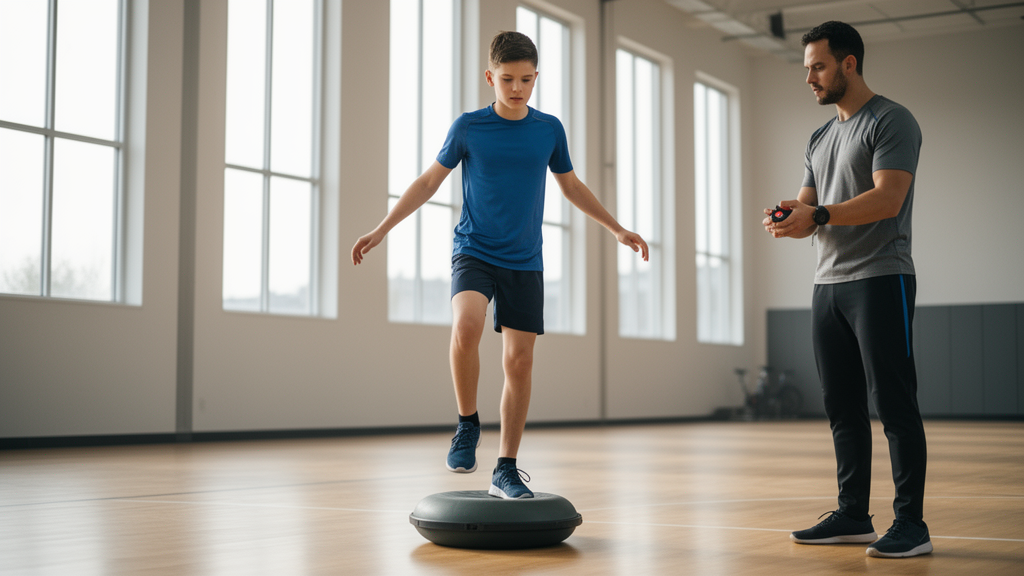
Athletes who add proprioceptive training to their routines experience roughly 34% fewer ankle injuries than those in control conditions, according to an updated systematic review and meta-analysis published in BMC Musculoskeletal Disorders. The review, led by Juan Shen, Shiwei Chen and Xue Han, pooled data from fifteen randomized and cluster-randomized controlled trials and found a pooled relative effect of 0.659 (95% CI: 0.558–0.778, p < 0.001, I² = 22.7%), a statistically significant reduction with low to moderate heterogeneity across studies.

The review was deliberately broad in what it counted as the intervention: proprioceptive training qualified whether it was delivered as a standalone programme or as an identifiable component of a multicomponent injury-prevention programme.

A key question for teams and coaches is whether the benefit depends on the sport being played. The answer, based on this analysis, appears to be no. Subgroup analyses by sport type found no statistically detectable effect modification (p for interaction = 0.299), and an additional exploratory analysis according to intervention composition — whether the proprioceptive work stood alone or was embedded in a larger prevention programme — also showed no statistically detectable modification (p for interaction = 0.081). Sensitivity analyses supported the robustness of the primary findings, and the overall certainty of the evidence was rated as moderate.

The authors conclude that proprioceptive training was associated with an approximately 34% lower relative occurrence of ankle injury in the athletic populations represented in the included trials, and that the findings support its use as a component of ankle-injury prevention strategies. They also flag important limits: the optimal training characteristics remain unclear, and the generalizability of the preventive effect across different sports, competition levels and athlete populations requires further investigation. Because the analysis pools randomized trials but the certainty rating is moderate rather than high, and because the intervention-comparison analysis was exploratory, the precise dose, duration and delivery format that maximize protection are still open questions for future trials.

Subject of Research: The effectiveness of proprioceptive training for preventing ankle injuries in athletes

Article Title: The effectiveness of proprioceptive training for the prevention of ankle sprains in athletes: a systematic review and meta-analysis

Article References: Shen, J., Chen, S., & Han, X. (2026). The effectiveness of proprioceptive training for the prevention of ankle sprains in athletes: a systematic review and meta-analysis. BMC Musculoskeletal Disorders. https://doi.org/10.1186/s12891-026-10677-4

Image Credits: AI Generated

DOI: 10.1186/s12891-026-10677-4

Keywords: proprioceptive training, ankle sprains, ankle injury prevention, athletes, systematic review, meta-analysis, randomized controlled trials, sports medicine, neuromuscular training, injury prevention, effectiveness, proprioceptive

News Source: Ophelia Keating. (October 29, 2026). Proprioceptive Training Linked to About a Third Fewer Ankle Injuries in Athletes. Scienmag.


Tags: Ankle injury preventionankle sprainsathleteseffectivenessInjury preventionMeta-analysisneuromuscular trainingproprioceptiveproprioceptive trainingrandomized controlled trialsSports Medicinesystematic review
Share12Tweet7Share2ShareShareShare1

Related Posts

Kidney stone cultures predict sepsis after surgery better than urine tests

Kidney stone cultures predict sepsis after surgery better than urine tests

October 30, 2026
Hybrid AI Spots Seizures in Brain Recordings With Near-Perfect Accuracy

Hybrid AI Spots Seizures in Brain Recordings With Near-Perfect Accuracy

October 30, 2026

Platelet-Rich Plasma Knee Injections Show Short-Term Pain and Function Gains

October 30, 2026

Nomogram predicts catheter-related thrombosis risk in people living with HIV

October 30, 2026

POPULAR NEWS

  • Inflammation-Weighted Nutrition Score Predicts Survival After Liver Cancer Surgery

    Inflammation-Weighted Nutrition Score Predicts Survival After Liver Cancer Surgery

    29 shares
    Share 12 Tweet 7
  • RAS Inhibitor Daraxonrasib Redefines Pancreatic Cancer Treatment After FDA Approval

    29 shares
    Share 12 Tweet 7
  • Few Ethiopian Mothers Receive Quality Care Across Maternity Continuum

    29 shares
    Share 12 Tweet 7
  • Particle Swarm Optimization Steers Client Selection in Decentralized Federated Learning

    29 shares
    Share 12 Tweet 7

About

We bring you the latest biotechnology news from best research centers and universities around the world. Check our website.

Follow us

Recent News

Ethosomal nanocarriers aim to reprogram skin cancer microenvironment through transdermal drug delivery

Common Immunosuppressant Disrupts Blood Vessel Growth in Zebrafish Embryos

Community co-design reshapes a Malawi mini-grid toward clean cooking

Subscribe to Blog via Email

Enter your email address to subscribe to this blog and receive notifications of new posts by email.

Join 86 other subscribers
  • Contact Us

Bioengineer.org © Copyright 2023 All Rights Reserved.

Welcome Back!

Login to your account below

Forgotten Password?

Retrieve your password

Please enter your username or email address to reset your password.

Log In
No Result
View All Result
  • Homepages
    • Home Page 1
    • Home Page 2
  • News
  • National
  • Business
  • Health
  • Lifestyle
  • Science

Bioengineer.org © Copyright 2023 All Rights Reserved.