


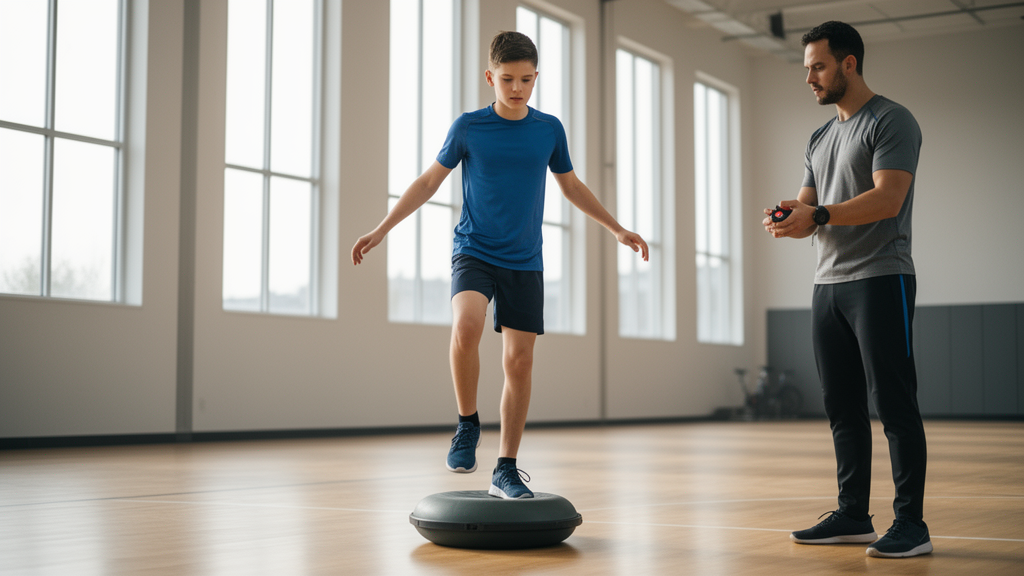
Athletes who add proprioceptive training to their routines experience roughly 34% fewer ankle injuries than those in control conditions, according to an updated systematic review and meta-analysis published in BMC Musculoskeletal Disorders. The review, led by Juan Shen, Shiwei Chen and Xue Han, pooled data from fifteen randomized and cluster-randomized controlled trials and found a pooled relative effect of 0.659 (95% CI: 0.558–0.778, p < 0.001, I² = 22.7%), a statistically significant reduction with low to moderate heterogeneity across studies.
The review was deliberately broad in what it counted as the intervention: proprioceptive training qualified whether it was delivered as a standalone programme or as an identifiable component of a multicomponent injury-prevention programme.
A key question for teams and coaches is whether the benefit depends on the sport being played. The answer, based on this analysis, appears to be no. Subgroup analyses by sport type found no statistically detectable effect modification (p for interaction = 0.299), and an additional exploratory analysis according to intervention composition — whether the proprioceptive work stood alone or was embedded in a larger prevention programme — also showed no statistically detectable modification (p for interaction = 0.081). Sensitivity analyses supported the robustness of the primary findings, and the overall certainty of the evidence was rated as moderate.
The authors conclude that proprioceptive training was associated with an approximately 34% lower relative occurrence of ankle injury in the athletic populations represented in the included trials, and that the findings support its use as a component of ankle-injury prevention strategies. They also flag important limits: the optimal training characteristics remain unclear, and the generalizability of the preventive effect across different sports, competition levels and athlete populations requires further investigation. Because the analysis pools randomized trials but the certainty rating is moderate rather than high, and because the intervention-comparison analysis was exploratory, the precise dose, duration and delivery format that maximize protection are still open questions for future trials.
Subject of Research: The effectiveness of proprioceptive training for preventing ankle injuries in athletes
Article Title: The effectiveness of proprioceptive training for the prevention of ankle sprains in athletes: a systematic review and meta-analysis
Article References: Shen, J., Chen, S., & Han, X. (2026). The effectiveness of proprioceptive training for the prevention of ankle sprains in athletes: a systematic review and meta-analysis. BMC Musculoskeletal Disorders. https://doi.org/10.1186/s12891-026-10677-4
Image Credits: AI Generated
DOI: 10.1186/s12891-026-10677-4
Keywords: proprioceptive training, ankle sprains, ankle injury prevention, athletes, systematic review, meta-analysis, randomized controlled trials, sports medicine, neuromuscular training, injury prevention, effectiveness, proprioceptive
News Source: Ophelia Keating. (October 29, 2026). Proprioceptive Training Linked to About a Third Fewer Ankle Injuries in Athletes. Scienmag.



