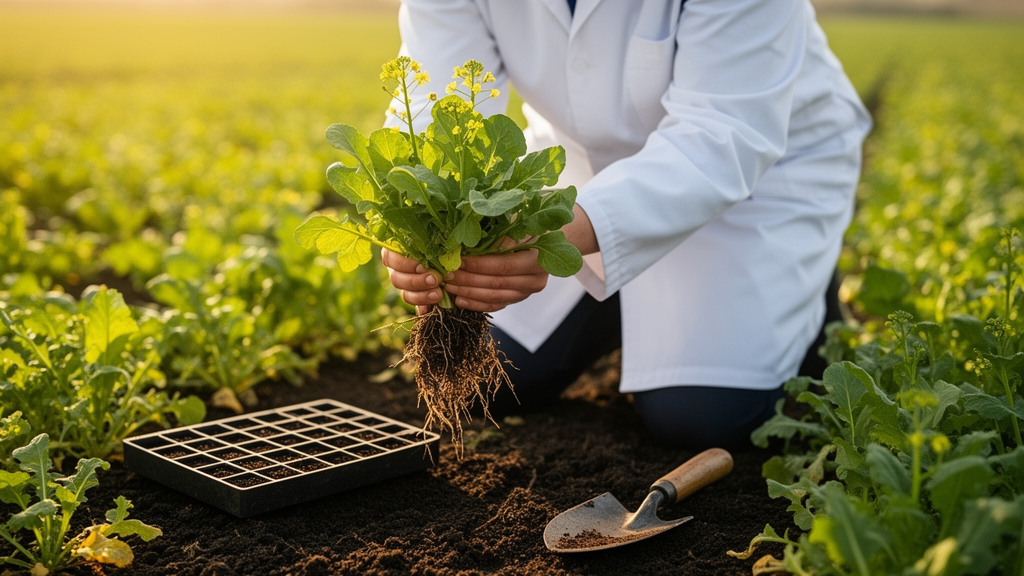
Researchers have created a new artificial autooctaploid line of the zinc- and cadmium-tolerant plant Arabidopsis arenosa and tested whether its extra genomes could make it a better tool for cleaning up metal-contaminated land. The study, published in BMC Plant Biology, compared the octaploids with their natural tetraploid parent cytotype under controlled laboratory conditions, measuring vegetative growth, metal tolerance and metal accumulation.
Autopolyploids, plants with duplicated genomes derived from the same species, generally display larger phenotypes than their progenitors, which has suggested they might produce more biomass and perform better in phytoremediation. The team set out to test this hypothesis with a previously uncharacterized octaploid derived from a natural tetraploid ecotype of A. arenosa that is already tolerant to zinc and cadmium.
The growth results were more nuanced than the larger-plant expectation. During an intermediate growth period, from day 56 to day 72, the octaploid plants had significantly lower biomass than the tetraploids. By day 84, however, that difference was no longer statistically significant. The transient gap coincided with the octaploids entering the generative phase earlier than the tetraploids.
Despite their artificial, genome-doubled origin, the octaploid specimens were fully fertile and reproduced sexually through seeds. They could also be propagated using encapsulated vegetative tissues (artificial seeds).
Under those conditions, the octaploids accumulated a significantly higher concentration of zinc in their roots than the tetraploids did. At the same time, both cytotypes showed similar overall resilience to metal toxicity, with no visible signs of toxicity reported at these extreme concentrations.
Quantitatively, the octaploids showed more than 50 percent higher zinc concentration in roots than the tetraploids under the controlled conditions used. Shoot zinc concentrations, by contrast, did not differ between the two cytotypes. That root-versus-shoot pattern is what points the authors toward phytostabilisation rather than phytoextraction: the plant holds the metals in its roots rather than moving them upward into harvestable above-ground tissue.
The authors conclude that the autooctaploids demonstrate significant potential for land reclamation because they can tolerate and sequester extreme concentrations of zinc and cadmium without visible toxicity symptoms. The faster life cycle of the octaploids may also be relevant to future applications, since quicker generation times can be useful in restoration settings.
The researchers are careful about limits. All of these results come from controlled laboratory conditions, and any advantage the octaploids might have under real field conditions remains to be tested. The biomass disadvantage during the intermediate growth phase, even if temporary, is also a reminder that genome doubling does not automatically translate into the larger phenotypes often associated with autopolyploidy.
As a biological resource, the new line offers a combination of traits: tolerance of extreme zinc and cadmium exposure, root-biased zinc sequestration, full fertility through seed, and an alternative propagation route via artificial seeds. Whether those laboratory traits hold up on contaminated sites will be the question for future field work.
Subject of Research: An artificial autooctaploid of Arabidopsis arenosa and its potential for phytostabilisation of zinc- and cadmium-contaminated sites
Article Title: Artificial autooctaploid of Arabidopsis arenosa as biological resource for phytostabilisation of heavy metal contaminated sites
Article References: Kurdziel, A., Sychta, K., Zduńczyk, P., Brankiewicz, A., Guevara–Lora, I., Skucha, K., Kwiatkowska, M., & Słomka, A. (2026). Artificial autooctaploid of Arabidopsis arenosa as biological resource for phytostabilisation of heavy metal contaminated sites. BMC Plant Biology. https://doi.org/10.1186/s12870-026-10158-9
Image Credits: AI Generated
DOI: 10.1186/s12870-026-10158-9
Keywords: Arabidopsis arenosa, autooctaploid, polyploidy, phytostabilisation, heavy metals, zinc, cadmium, metal tolerance, biomass, land reclamation, artificial seeds, BMC Plant Biology
News Source: Drew Townsend. (October 29, 2026). Lab-made octaploid rock cress shows promise for locking heavy metals in soil. Scienmag.