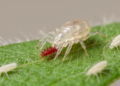
Fungi that attack and feed on other fungi — the mycoparasites — may operate with a molecular toolkit strikingly similar to that of fungal plant pathogens. A new comparative genomic study, published in Fungal Biology and Biotechnology, reports that candidate effector proteins predicted in three phylogenetically diverse specialist mycoparasites show structural homology to well-characterized candidate effectors of the model plant pathogen Blumeria graminis, the powdery mildew fungus of cereals. One of the protein clusters involved belongs to the AA9 family of carbohydrate-active enzymes, a family the authors also found to be associated with the mycoparasitic lifestyle across the fungal kingdom.
The study, led by Alexandros G. Sotiropoulos, Matthias Heuberger, Thomas Wicker and Levente Kiss, set out to test a specific hypothesis: that aggressive interactions between fungi and their fungal hosts resemble, at the molecular level, the interactions between plant-pathogenic fungi and their plant hosts. Mycoparasitism is ecologically significant and has practical applications — some mycoparasites damage mushroom crops, while others, including several Trichoderma species, have been commercialized as biological control agents against plant diseases — yet the molecular signatures of this nutrition mode remain largely unknown.
The researchers first assembled a broad dataset from NCBI GenBank, compiling an initial list of 97 fungal and three oomycete taxa, of which 31 had been described as mycoparasites in the literature. After quality filtering using BUSCO completeness checks, the final phylogenomic analysis included 89 strains, compared across 627 orthologous predicted genes and proteins grouped with OrthoFinder. The resulting tree showed that species described as mycoparasites are scattered across the fungal kingdom, spanning the Basidiomycota, Zoopagomycota, Mucoromycota and all the ascomycete orders included in the analysis — Orbiliales, Hypocreales, Glomerellales, Cladosporiales and Pleosporales.
To look for molecular signatures of the mycoparasitic nutrition mode, the team analyzed predicted profiles of carbohydrate-active enzymes, or CAZymes, using the CATAStrophy pipeline. These enzymes build and break down complex carbohydrates, and because fungal cell walls consist primarily of chitin and glucans, mycoparasites would be expected to possess specialized arrays of them to penetrate this barrier. When fungi were analyzed separately from other organisms, a principal component analysis produced a subcluster containing most species known as mycoparasites, including Ampelomyces quisqualis, Paraphaeosphaeria minitans, Escovopsis weberi and Trichoderma species.
The analysis flagged four CAZyme families with mycoparasite-related trends: AA3-2, AA9 (formerly GH61) and AA11 from the Auxiliary Activities class, and GT2 chitin synthase 2 from the GlycosylTransferase class. For AA3-2 and AA9, the specialist mycoparasites within the Pleosporales — A. quisqualis, Sphaerellopsis filum and P. minitans — had statistically more of these enzymes than most other fungal and oomycete groups, with the exception of their own Pleosporales relatives and a few Sordariomycetes, a pattern the authors attribute most likely to identity by descent. Notably, AA9 had also been reported in two mycoparasitic oomycetes, Pythium oligandrum and P. periplocum, suggesting the association extends beyond the fungi proper.
The second, more detailed part of the study focused on three specialist mycoparasites, each tied to a different ecological niche. Ampelomyces quisqualis parasitizes powdery mildews, obligate biotrophic plant pathogens of more than 10,000 plant species. Paraphaeosphaeria minitans attacks Sclerotinia sclerotiorum, a globally distributed soilborne necrotroph of many crops. Escovopsis weberi parasitizes Leucoagaricus gongylophorus, the fungus cultivated by leafcutter ants. The researchers searched the predicted protein sets of these three species, together with close non-mycoparasitic relatives — the plant pathogen Plenodomus lingam, the endophyte P. sporulosa and the versatile Trichoderma harzianum — and the mycohost Blumeria graminis, whose effector repertoire has been thoroughly characterized.
Candidate effectors were identified in silico using SignalP to detect signal peptides and EffectorP to classify effector-like proteins. Roughly 6 to 12 percent of predicted proteins carried a signal peptide, and of these, approximately 27 to 73 percent were flagged as candidate effectors. Blumeria graminis, the well-studied plant pathogen, had the highest ratio, with about 750 candidate effectors — roughly double the roughly 340 found in its mycoparasite A. quisqualis. Interestingly, P. minitans possessed more proteins (13,677) and candidate effectors (526) than its mycohost S. sclerotiorum, with 11,130 proteins and 347 candidate effectors. Both apoplastic and cytoplasmic effectors were identified in all species examined.
The key innovation was structural rather than sequence-based. Using AlphaFold to predict tertiary structures of candidate effector proteins and TMalign to compare them, the team identified clusters of proteins sharing the same fold — a score above 0.5 indicating structural similarity — even where amino acid sequences had diverged beyond recognition. Within A. quisqualis, four clusters emerged, labeled A, B, C and X. Proteins in Cluster A were structurally homologous to the B. graminis effector family E139, and the reference protein of this cluster showed homologous structures in 19 P. minitans proteins and three E. weberi proteins, against only 11 in the plant-pathogenic relative Pl. lingam. All of these proteins were confirmed by dbCAN3 to belong to the AA9 CAZyme family, and most carried conserved cysteine residues forming a disulfide bridge. Cluster B proteins matched the effector family E064, with six candidates in A. quisqualis, ten in P. minitans and seven in E. weberi but only three in Pl. lingam; Cluster C matched family E156 and showed strong sequence conservation and fully conserved cysteine bridges across all seven species analyzed, with a possible link to electron transfer activity suggested by similarity to cupredoxin. Cluster X contained 15 A. quisqualis proteins homologous to each other but to no known Blumeria effectors, most belonging to polysaccharide lyase and glycoside hydrolase families.
Because mycoparasite status in the literature rests largely on microscopic observations, sometimes based on limited samples and loosely applied terminology, the authors added an independent check using environmental DNA data. They searched NCBI with the internal transcribed spacer sequences of the three specialist mycoparasites, reasoning that truly specialized parasites should not appear randomly in samples lacking their hosts. The results were consistent with specialization: A. quisqualis appeared only in beech leaf litter samples that could contain its powdery mildew hosts; P. minitans turned up in just two environmental samples, one from sclerotia and one from tomato that could have been infected by Sclerotinia; and E. weberi appeared in a single ant colony sample. As a control, a ubiquitous soil saprobe, Penicillium brevicompactum, was detected across soil, plant, air and water samples, and versatile Trichoderma appeared in multiple environment types — exactly the pattern expected.
The authors are careful about the limits of their work. All references to CAZymes, proteins and genes in the study refer to molecules predicted in silico, not functionally verified enzymes, and the study was constrained by the small number of high-quality genome annotations available for fungi classified as mycoparasites. Functional redundancy among CAZymes may also bias count-based comparisons, and further work is needed to determine what proportion of the predicted enzymes are redundant and how this affects the conclusions. Nor do structural similarities prove functional equivalence; the candidate effectors in mycoparasites have not yet been shown to act during fungal-fungal attack. Still, the convergence is suggestive. If specialist mycoparasites deploy effector-like proteins — including AA9 enzymes structurally homologous to effectors of an obligate biotrophic plant pathogen — against their fungal hosts, then mycoparasitism and plant pathogenesis may share a deeper molecular logic than their different substrates imply. The authors frame these findings as first steps toward a unified molecular concept of mycoparasitism as a distinct nutrition mode guided by candidate effectors, a framework that could eventually inform both biological control strategies and the management of mycoparasite damage in mushroom production.
Subject of Research: Candidate effector proteins and CAZyme profiles associated with mycoparasitic fungi
Article Title: What makes a mycoparasite? Candidate effectors from fungi that parasitize other fungi exhibit structural homology to those of fungal plant pathogens
Article References: Sotiropoulos, A. G., Heuberger, M., Wicker, T., & Kiss, L. (2026). What makes a mycoparasite? Candidate effectors from fungi that parasitize other fungi exhibit structural homology to those of fungal plant pathogens. Fungal Biology and Biotechnology, 13(1), Article 7. https://doi.org/10.1186/s40694-026-00211-5
Image Credits: AI Generated
DOI: 10.1186/s40694-026-00211-5
Keywords: mycoparasites, effectors, CAZymes, AA9, Blumeria graminis, AlphaFold, structural homology, fungal-fungal interactions, biocontrol, genomics, makes, mycoparasite
News Source: Roger Howard. (October 29, 2026). Fungi That Parasitize Other Fungi Carry Effector Proteins Like Plant Pathogens. Scienmag.