


Torque teno virus (TTV), a single-stranded DNA virus in the family Anelloviridae, infects most of the human population, typically early in life, and persists indefinitely with ongoing replication. TTV-DNA is detectable in roughly 70 to 100 percent of people globally, and the infection has not been causally linked to any specific disease. Because blood levels of the virus rise when immune function is impaired—in people with untreated HIV, patients on chemotherapy, and solid organ transplant recipients receiving immunosuppressive drugs—TTV-DNA has attracted growing interest as a surrogate marker of an individual patient’s immune status.
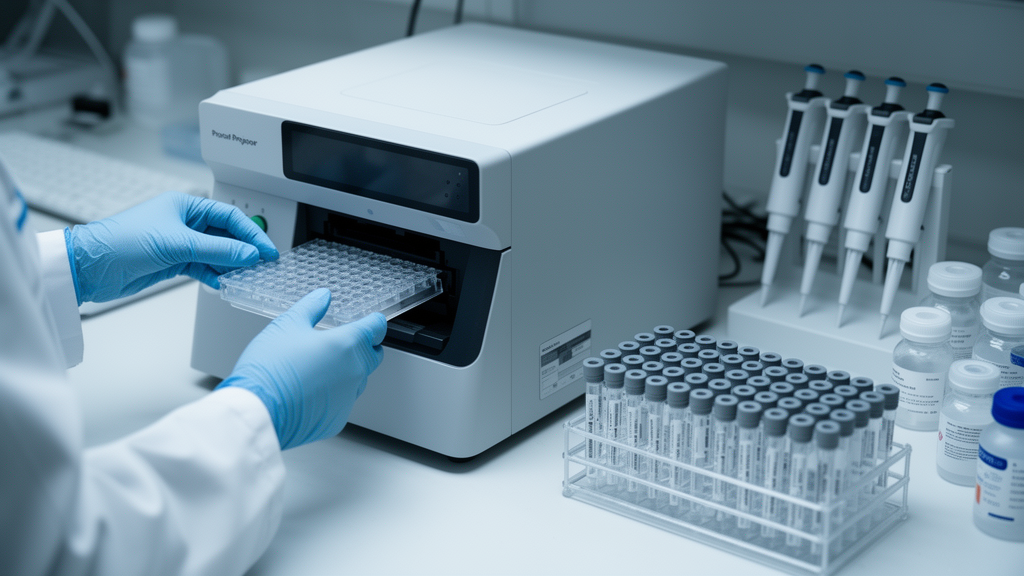
The research team, led by Lara Valder and Jochen M. Wettengel, began by adapting the most widely used TTV qPCR assay, originally described by Maggi and colleagues in 2001, for the cobas x800 platform, a fully automated system suited to high-volume routine diagnostics. The adaptation worked at the platform’s standard annealing temperature, and high-resolution melting analysis confirmed specific amplification without primer-dimer formation. However, when the adapted assay was validated on the cobas 5800 in accordance with the EU In Vitro Diagnostic Regulation and German Rili-BÄK guidelines, a practical problem emerged: the assay produced relatively low relative fluorescence intensity (RFI) signals. Low-positive samples fell below the standard minimum fluorescence threshold and were misclassified as negative. Lowering the threshold rescued some of these results but raised the risk of false positives, meaning amplification curves would need manual review—a serious drawback for automated high-throughput testing.
To overcome this limitation, the researchers designed an entirely new assay. They retrieved 631 unique, high-quality human TTV genome sequences from the NCBI Virus database, aligned them, and searched for conserved regions. Consistent with the virus’s notorious genetic diversity, only a single highly conserved stretch emerged, a 172-base-pair segment within the untranslated region that is essential for viral replication. From candidate primer and probe sets designed against a 75 percent consensus sequence, one set, designated TUM 1, clearly outperformed the others. Adding 2′-O-methyl modifications to the primers boosted fluorescence signals further, and after optimizing primer and probe concentrations, the final configuration—the TUM-TTV-DNA-qPCR assay—was ready for full analytical validation.
The validation results were strong. Inter-assay precision showed coefficients of variation of 1.28, 4.98, and 1.16 percent for high, medium, and low TTV-DNA load samples measured over three consecutive days, and intra-assay precision showed a maximum coefficient of variation of 4.25 percent across technical triplicates. Linearity over the tested dilution range yielded coefficients of determination of 0.9888 and 0.9999 for low- and high-positive samples, respectively. Spiking experiments in plasma, serum, and swab matrix revealed no significant matrix-dependent effects. Using digital PCR-quantified standards and probit regression, the team determined a 95 percent limit of detection of 32.3 copies per milliliter (95 percent confidence interval, 20.1–67.3)—comparable to or better than the automated Maggi-based assay at 40 copies per milliliter, the manual Maggi assay at 100 to 1000 copies per milliliter, and the manual R-GENE commercial assay at 159 copies per milliliter. In silico analysis against the NCBI Virus/Gene database showed no relevant cross-reactivity with the human genome, human-pathogenic viruses, or bacteria, and an inter-laboratory comparison across three independent laboratories demonstrated consistent detection, high sensitivity, and high specificity across the tested concentration range.
Head-to-head testing of 96 clinical plasma samples confirmed the advantage of the new assay. Bland–Altman analysis showed that the TUM assay produced, on average, 3.370 RFI units more fluorescence than the Maggi assay, while Ct values differed only modestly, with a mean bias of 1.319 cycles in favor of the new assay. At the standard fluorescence threshold of 2.5, the weaker Maggi signals caused a substantial number of false negatives, particularly among low-positive samples. The higher signals of the TUM assay even allowed the threshold to be raised to 2.7, reducing the likelihood of false-positive calls. The team also showed that TTV-DNA in plasma remains stable for up to nine days at room temperature, 4 °C, and −20 °C relative to a control stored at −80 °C, with two-way ANOVA finding no significant effect of temperature or storage time—reassuring for longitudinal monitoring, where pre-analytical conditions may vary.
With a validated platform in hand, the researchers turned to a question that has hampered clinical interpretation of TTV loads: how much does the viral load vary naturally, over time, in people without immunosuppressive therapy? Longitudinal data in healthy adults have been scarce, typically limited to very small cohorts or samples collected years apart. In their first cohort, the team measured TTV-DNA approximately every three months for 18 to 51 months in ten male subjects aged 50 to 73, all free of relevant comorbidities, iatrogenic immunosuppression, and infection with HIV, hepatitis B, or hepatitis C. Mean interindividual TTV levels ranged widely, from 4.57 × 10³ copies per milliliter to 1.8 × 10⁵ copies per milliliter, and the dynamic range between each subject’s minimum and maximum loads spanned from 1.09 × 10⁴ to 1.25 × 10⁶ copies per milliliter.
The intra-individual picture was heterogeneous. Six of the ten subjects showed low variability, with fold changes below 20-fold—within the assay’s established precision range—and coefficients of variation under 2.5 percent. But in four subjects, viral loads swung dramatically: fold changes of 36.4-fold (1.6 log10) in Subject 3, 1523.8-fold (3.2 log10) in Subject 6, 865.4-fold (2.9 log10) in Subject 8, and 673.2-fold (2.8 log10) in Subject 9. Short-term changes within single quarterly intervals were equally striking, with maximum three-month fluctuations of 15.6-fold, 373.7-fold, 36.5-fold, and 97.4-fold in these four subjects, while the remaining subjects never exceeded tenfold quarterly changes. Several subjects also displayed gradual long-term trends, with Subjects 6, 8, and 10 showing increasing mean loads and Subject 9 a decreasing trend. Notably, no relationship emerged between a subject’s mean viral load and the magnitude of fluctuations. An independent second cohort of 11 subjects—three male and eight female, aged 21 to 64, followed for 1.5 to 3.1 years—confirmed the pattern, with three subjects showing fluctuations exceeding 1 log10 over roughly three-month windows.
To rule out the possibility that these fluctuations were artifacts of the new assay’s single primer-probe set, the researchers re-analyzed samples from three subjects with two additional assays: the Maggi assay, targeting a slightly different genomic region, and a newly available commercial TTV assay. All three assays, run in parallel on the cobas 5800, produced highly comparable kinetic trajectories, including the pronounced fluctuations in two subjects and the stable course in a third. This cross-assay concordance indicates that the observed dynamics are not assay-specific artifacts and are unlikely to be explained solely by sequence variation within the viral target region.
The clinical implications are considerable. In transplant medicine, TTV-DNA thresholds have been proposed to guide immunosuppression: an average rise of more than 2 log10 within three months after kidney transplantation has been reported, viral loads above 1 × 10⁶ copies per milliliter have been suggested as an optimal window balancing rejection and infection risk in kidney recipients, and fluctuations greater than 2.65 log10 in the first month have been associated with subsequent infectious events. Yet the new data show that some non-immunosuppressed individuals naturally reach maximum loads of 1.25 × 10⁶ copies per milliliter—within that proposed optimal range—and that intra-individual variation can reach 3.2 log10, with even low-variability subjects changing by up to 1.2 log10 over 30 months and quarterly swings exceeding 1 log10 in five subjects. In settings where a 1 log10 difference may be clinically meaningful, such intrinsic variability must be accounted for before attributing viral load changes to therapeutic immune modulation alone.
The authors caution that their study cannot determine whether the fluctuations reflect modulation of immune function by factors other than immunosuppressive drugs or simply intrinsic variability in viral replication independent of immune alterations—a distinction that will be critical for validating TTV as a biomarker, since therapy-guided decision-making assumes that load changes predominantly mirror immune status.
Subject of Research: Development of an automated Torque teno virus qPCR assay and longitudinal measurement of natural TTV-DNA variability in non-immunosuppressed individuals
Article Title: A novel Torque teno virus qPCR assay reveals longitudinal viral load variability among non-immunosuppressed subjects
Article References: Valder, L., Grigore, T. G., Schaaf, C., Bachmann, Q., Renders, L., Jeske, S. D., Lütgehetmann, M., Bierbaum, S., Hengel, H., Dächert, C., Protzer, U., & Wettengel, J. M. (2026). A novel Torque teno virus qPCR assay reveals longitudinal viral load variability among non-immunosuppressed subjects. EMBO Molecular Medicine. https://doi.org/10.1038/s44321-026-00540-3
Image Credits: AI Generated
DOI: 10.1038/s44321-026-00540-3
Keywords: Torque teno virus, qPCR, viral load, immune monitoring, immunosuppression, biomarker, longitudinal study, analytical validation, cobas 5800, Anelloviridae, limit of detection, transplant medicine
News Source: Kristina Jarvis. (October 29, 2026). New Automated qPCR Assay Shows TTV Viral Loads Fluctuate Naturally Over Time. Scienmag.



