• HOME
  • NEWS
  • EXPLORE
    • CAREER
      • Companies
      • Jobs
    • EVENTS
    • iGEM
      • News
      • Team
    • PHOTOS
    • VIDEO
    • WIKI
  • BLOG
  • COMMUNITY
    • FACEBOOK
    • INSTAGRAM
    • TWITTER
Friday, October 30, 2026
BIOENGINEER.ORG
No Result
View All Result
  • Login
  • HOME
  • NEWS
  • EXPLORE
    • CAREER
      • Companies
      • Jobs
        • Lecturer
        • PhD Studentship
        • Postdoc
        • Research Assistant
    • EVENTS
    • iGEM
      • News
      • Team
    • PHOTOS
    • VIDEO
    • WIKI
  • BLOG
  • COMMUNITY
    • FACEBOOK
    • INSTAGRAM
    • TWITTER
No Result
View All Result
Bioengineer.org
No Result
View All Result
Home NEWS Science News Health

Colorectal cancer peritoneal metastases often arise early and polyclonally, sequencing study finds

by
October 28, 2026
in Health
Reading Time: 2 mins read
0
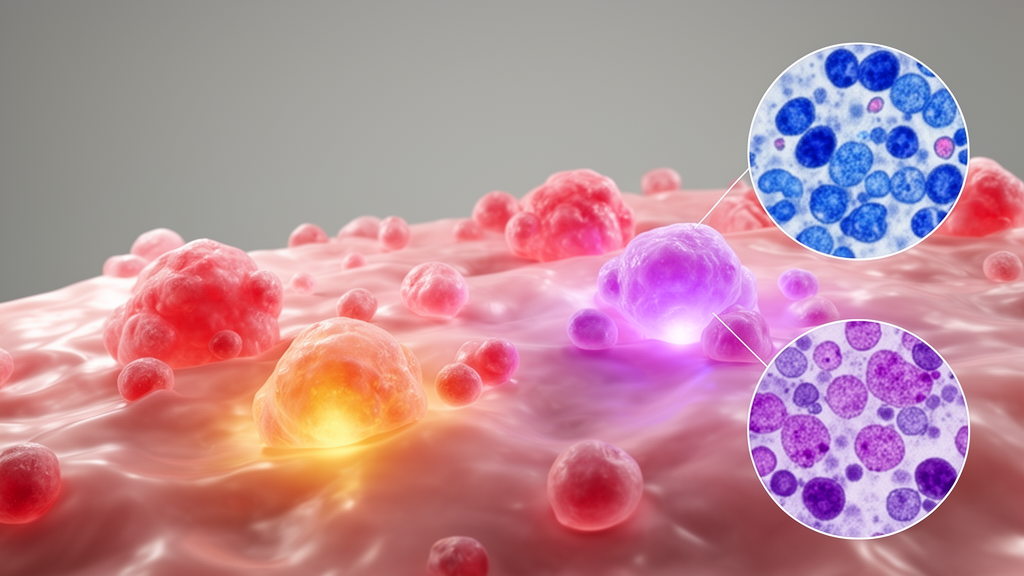
Colorectal cancer peritoneal metastases often arise early and polyclonally, sequencing study finds

Colorectal cancer peritoneal metastases often arise early and polyclonally, sequencing study finds

Share on FacebookShare on TwitterShare on LinkedinShare on RedditShare on Telegram

Peritoneal metastasis, the spread of colorectal cancer to the lining of the abdominal cavity, is linked to substantial illness and poor clinical outcomes, yet its evolutionary origins and molecular drivers have remained poorly understood. A new study published in the Journal of Translational Medicine maps how these deposits emerge, using whole-exome sequencing on 49 matched samples of primary tumors, peritoneal metastases, and lymph node metastases from 11 colorectal cancer patients, alongside single-cell RNA sequencing of 14 paired samples from three patients.

The phylogenetic analyses revealed that dissemination is frequently polyclonal: in 8 of the 11 patients, multiple tumor cell populations had seeded the peritoneum rather than a single clone. Computational reconstruction with the tool MACHINA identified metastasis-to-metastasis seeding in five patients, meaning that established peritoneal deposits themselves gave rise to further metastatic lesions. Notably, lymphatic spread did not appear to be the predominant route by which cancer cells reached the peritoneum in this cohort.

Perhaps the most striking finding concerns timing. In 9 of the 11 patients, metastatic dissemination had occurred early, before the primary tumor became clinically detectable. This suggests that in many cases the peritoneal deposits seen in the clinic are not late complications of advanced disease but the products of seeding events that took place silently, potentially long before diagnosis.

The study also identified driver genes associated with peritoneal metastasis, including KRAS, SMAD4, and RNF43, and detected potentially actionable alterations across patients, including events confined to specific sites or regions within the abdomen.

At the single-cell level, the transcriptomic analyses uncovered substantial heterogeneity among metastatic deposits within individual patients, meaning that different peritoneal lesions in the same person can harbor distinct cellular compositions. The researchers also found an enrichment of COL11A1-positive fibroblasts in peritoneal metastasis lesions, suggesting these cells help create a microenvironment that is permissive to metastatic growth. The authors conclude that the findings delineate the evolutionary patterns, genomic features, and microenvironmental heterogeneity of colorectal cancer peritoneal metastases, and offer insights into potential therapeutic vulnerabilities. As a small study of 11 patients, its observations will need validation in larger cohorts before they can inform clinical practice.

Subject of Research: Evolutionary patterns and genomic landscape of colorectal cancer peritoneal metastasis

Article Title: Mutational landscape and evolutionary patterns of peritoneal metastases in colorectal cancer

Article References: Wang, Y., Shen, Y., Zheng, J., Xu, X., Xu, G., Xu, L., Ni, Z., Wang, C., Zhu, Y., Qin, N., & Sun, J. (2026). Mutational landscape and evolutionary patterns of peritoneal metastases in colorectal cancer. Journal of Translational Medicine. https://doi.org/10.1186/s12967-026-09122-w

Image Credits: AI Generated

DOI: 10.1186/s12967-026-09122-w

Keywords: colorectal cancer, peritoneal metastasis, whole-exome sequencing, single-cell RNA sequencing, phylogenetics, KRAS, SMAD4, RNF43, tumor evolution, tumor microenvironment, COL11A1 fibroblasts, metastasis-to-metastasis seeding

News Source: Nathaniel Bowman. (October 28, 2026). Colorectal cancer peritoneal metastases often arise early and polyclonally, sequencing study finds. Scienmag.


Tags: COL11A1 fibroblastsColorectal cancerKRASmetastasis-to-metastasis seedingperitoneal metastasisphylogeneticsRNF43single-cell RNA sequencingSmad4tumor evolutiontumor microenvironmentwhole-exome sequencing
Share12Tweet7Share2ShareShareShare1

Related Posts

Newly isolated feline coronavirus strain AH2023 proves lethal in cats

Newly isolated feline coronavirus strain AH2023 proves lethal in cats

October 30, 2026
Study reveals how VAV2 fuels glycolysis in esophageal squamous cell carcinoma

Study reveals how VAV2 fuels glycolysis in esophageal squamous cell carcinoma

October 30, 2026

Simple notch check guides ACL graft tunnel within a millimetre on 3D imaging

October 30, 2026

Ozone bubble water curbs guava anthracnose and slows fruit ripening

October 30, 2026

POPULAR NEWS

  • Scientists Map Regulatory DNA Behind Pig Body Size and Sharpen Genomic Prediction

    Scientists Map Regulatory DNA Behind Pig Body Size and Sharpen Genomic Prediction

    29 shares
    Share 12 Tweet 7
  • Rice Husk Waste Turned Into Chitosan Films That Shield Cherry Tomatoes

    29 shares
    Share 12 Tweet 7
  • Trust in government boosts perceived renewable energy benefits but fuels frustration

    29 shares
    Share 12 Tweet 7
  • Ferulic Acid Niosomes Shield Rat Testes from Chemotherapy Damage in Preclinical Study

    29 shares
    Share 12 Tweet 7

About

We bring you the latest biotechnology news from best research centers and universities around the world. Check our website.

Follow us

Recent News

Newly isolated feline coronavirus strain AH2023 proves lethal in cats

Fashion AI tool swaps prompt writing for structured attribute selection

Long non-coding RNA TMPO-AS1 flags poor outcomes in lung adenocarcinoma

Subscribe to Blog via Email

Enter your email address to subscribe to this blog and receive notifications of new posts by email.

Join 86 other subscribers
  • Contact Us

Bioengineer.org © Copyright 2023 All Rights Reserved.

Welcome Back!

Login to your account below

Forgotten Password?

Retrieve your password

Please enter your username or email address to reset your password.

Log In
No Result
View All Result
  • Homepages
    • Home Page 1
    • Home Page 2
  • News
  • National
  • Business
  • Health
  • Lifestyle
  • Science

Bioengineer.org © Copyright 2023 All Rights Reserved.