A hydroalcoholic extract of the leaves of Ziziphus nummularia, a shrub long used in traditional medicine across arid India, lowered fasting blood glucose by 45.9 percent in diabetic rats over four weeks, and when paired with the common diabetes drug vildagliptin the reduction reached 68.65 percent, according to a preclinical study published in Clinical Phytoscience. The fruit extract of the same plant also reduced blood glucose, though consistently less powerfully than the leaf preparation at every dose tested.
The research, conducted at Bhupal Nobles’ College of Pharmacy in Udaipur, Rajasthan, set out to address a specific gap. Although Z. nummularia has a documented history of ethnomedicinal use for diabetes, inflammatory disorders, gastrointestinal complaints, skin infections, fever, wounds and liver ailments, most prior investigations had concentrated on phytochemical characterization, antioxidant activity or in vitro experiments. Comparative in vivo evaluation of the leaf and fruit extracts, and especially any assessment of combining them with an established antidiabetic drug, had been largely missing from the literature.
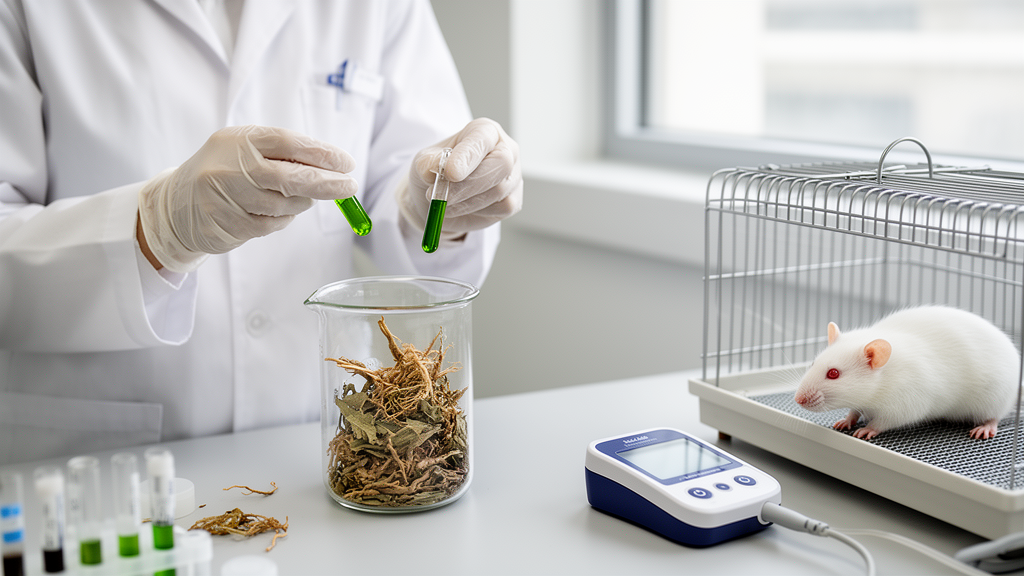
To build the experimental model, the researchers induced diabetes in healthy adult male Wistar albino rats weighing 180 to 220 grams with a single intraperitoneal injection of alloxan monohydrate at 150 milligrams per kilogram of body weight. Alloxan selectively destroys pancreatic beta cells through excessive generation of reactive oxygen species, producing insulin deficiency, persistent hyperglycaemia, oxidative stress and disturbed lipid metabolism that together mimic several biochemical features of uncontrolled diabetes. Seventy-two hours after injection, animals with fasting blood glucose above 200 milligrams per decilitre were classified as diabetic and enrolled. The animals were then randomly allocated to twelve groups of eight rats each, and treatments were given once daily by oral gavage for 28 consecutive days.
The treatment arms covered a wide range of possibilities. Beyond normal, vehicle and diabetic control groups, one group received vildagliptin alone at 0.3 milligrams per kilogram, a dose chosen because a previous study had identified it as the minimum effective dose in insulin-resistant rats. Three groups received the leaf extract, designated ZNLE, at 125, 250 or 500 milligrams per kilogram, and three more received the fruit extract, ZNFE, at the same doses. The final two groups received the 500 milligrams per kilogram dose of either extract combined with vildagliptin. The extract doses were anchored to earlier work by Rajasekaran and colleagues and by Menaria and colleagues, who had reported significant antihyperglycaemic effects of Z. nummularia leaf extracts at 250 and 500 milligrams per kilogram in alloxan-induced diabetic rats, with the 125 milligram dose added to broaden the dose-response range.
The glucose results showed a clear dose-dependent pattern. The leaf extract at 500 milligrams per kilogram cut fasting blood glucose by 45.90 percent, reaching 152.51 plus or minus 7.60 milligrams per decilitre by day 28, while the 250 and 125 milligram doses achieved reductions of 28.52 percent and 14.57 percent respectively. The fruit extract followed the same gradient, with a 42.46 percent reduction at the highest dose, 29.21 percent at the middle dose and 11.61 percent at the lowest. Vildagliptin alone produced a 53.72 percent reduction, bringing glucose down to 129.03 plus or minus 7.30 milligrams per decilitre. The strongest single result belonged to the leaf extract plus vildagliptin combination, which lowered fasting glucose by 68.65 percent, exceeding both monotherapies, while the fruit extract plus vildagliptin combination achieved 61.25 percent, ending at 108.56 plus or minus 4.85 milligrams per decilitre. All treated groups differed significantly from the diabetic control at p less than 0.001. The authors are careful to note that this enhanced response indicates an improved overall treatment effect, but that formal pharmacological synergy was not evaluated.
Lipid outcomes moved in parallel. Untreated diabetic rats displayed the classic pattern of diabetic dyslipidaemia: total cholesterol of 175.94 plus or minus 7.58 milligrams per decilitre, triglycerides of 168.63 plus or minus 10.22, LDL cholesterol of 190.56 plus or minus 2.73 and HDL cholesterol depressed to 17.27 plus or minus 3.61. These abnormalities arise because insulin deficiency drives adipose tissue lipolysis, increases hepatic very-low-density lipoprotein synthesis and impairs lipoprotein lipase activity, accelerating atherosclerosis and cardiovascular risk. The leaf extract at 500 milligrams per kilogram reduced total cholesterol by 35.71 percent, triglycerides by 37.46 percent and LDL by 54.60 percent while raising HDL by 104.11 percent relative to diabetic controls. The fruit extract at the same dose produced reductions of 27.91, 34.14 and 52.42 percent with a 97.91 percent HDL increase. Again the combinations led the field: leaf extract plus vildagliptin cut total cholesterol by 44.17 percent to 98.21 plus or minus 6.25 milligrams per decilitre, triglycerides by 46.87 percent to 89.59 plus or minus 4.95, and LDL by 56.44 percent to 83.00 plus or minus 3.34, while lifting HDL by 140.67 percent to 41.56 plus or minus 2.46.
Antioxidant measurements added a second dimension to the findings. In the animals themselves, diabetic control rats showed hepatic superoxide dismutase activity depressed to 21.40 plus or minus 2.57 units per gram of tissue compared with 70.55 plus or minus 5.95 in normal controls, alongside malondialdehyde, a marker of lipid peroxidation, elevated to 42.09 plus or minus 4.31 micromoles per gram of tissue versus 19.08 plus or minus 2.19 normally. Treatment restored SOD and lowered MDA in a dose-dependent fashion, with the leaf extract plus vildagliptin combination performing best, reaching SOD activity of 62.53 plus or minus 3.14 units per gram and MDA of 23.35 plus or minus 3.70 micromoles per gram.
Body weight offered a preliminary tolerability signal. Diabetic control animals lost 7.77 percent of body weight over the 28 days, whereas every extract-treated group gained weight, with increases ranging from 0.34 percent at the lowest fruit extract dose to 3.44 percent at the highest leaf extract dose, and the two combination groups gaining 2.99 and 1.74 percent. Vildagliptin alone was associated with a 1.48 percent reduction. The authors stress, however, that body weight alone cannot establish systemic safety: the study included no systematic assessment of food and water intake, behavioural parameters, hepatic and renal biochemical markers, organ weights or histopathology of major organs, and no histopathological examination of pancreatic tissue was performed to correlate the biochemical changes with structural ones.
The phytochemical basis of the activity remains partly inferential. Qualitative screening confirmed phenolics, flavonoids, alkaloids, tannins, saponins, glycosides and terpenoids in both extracts, and previously published TLC, HPLC, GC-MS, FTIR and proton NMR analyses of the same extract batches identified quercetin as a major constituent. Flavonoids such as quercetin and rutin are known from earlier experimental work to inhibit carbohydrate-digesting enzymes, activate AMP-activated protein kinase, modulate PPAR gamma, enhance GLUT4-mediated glucose uptake and protect pancreatic beta cells from oxidative injury, while polyphenols can regulate lipid metabolism through PPAR-gamma activation, enhanced fatty acid oxidation and inhibition of cholesterol biosynthesis. Because these mechanisms differ from vildagliptin’s, which prolongs endogenous incretin activity by inhibiting DPP-4 and thereby increases glucose-dependent insulin secretion, the authors suggest the combination may act on complementary pathways, though the precise molecular mechanisms were not investigated.
The study’s own framing of its limits is unusually explicit. Because individual animal-level longitudinal glucose data from the original 2017 experiment were no longer available, repeated-measures analysis could not be performed retrospectively, and paired t-tests on archived group-level data were used instead. The work was confined to male rats, a short 28-day treatment window and selected biochemical endpoints, and the authors state plainly that the findings should not be interpreted as establishing clinical efficacy, systemic safety or suitability as an adjunct therapy in humans. They position the results as preliminary preclinical evidence supporting further investigation, including LC-MS/MS metabolomic profiling, insulin and cytokine measurements, pancreatic histopathology, pharmacokinetic studies, long-term toxicity testing and, ultimately, appropriately designed clinical trials to determine whether Z. nummularia extracts, alone or alongside DPP-4 inhibitors, have genuine translational potential for diabetes management.
Subject of Research: Preclinical evaluation of Ziziphus nummularia leaf and fruit extracts, alone and combined with vildagliptin, on glucose and lipid parameters in alloxan-induced diabetic rats
Article Title: Antidiabetic and antidyslipidemic effects of Ziziphus nummularia leaf and fruit extracts alone and in combination with vildagliptin in alloxan-induced diabetic rats
Article References: Bagdi, P. (2026). Antidiabetic and antidyslipidemic effects of Ziziphus nummularia leaf and fruit extracts alone and in combination with vildagliptin in alloxan-induced diabetic rats. Clinical Phytoscience, 12(1), Article 24. https://doi.org/10.1186/s40816-026-00438-0
Image Credits: AI Generated
DOI: 10.1186/s40816-026-00438-0
Keywords: Ziziphus nummularia, vildagliptin, alloxan-induced diabetes, antihyperglycaemic, dyslipidaemia, antioxidant, DPP-4 inhibitor, preclinical study, Wistar rats, phytochemistry, SOD, malondialdehyde
News Source: Ophelia Keating. (October 28, 2026). Desert Plant Extracts Boost Diabetes Drug Effects in Diabetic Rats. Scienmag.