


Astragaloside IV, a saponin extracted from the medicinal herb Astragalus membranaceus, improved learning and memory in mice recovering from traumatic brain injury, according to a study published in Frontiers in Pharmacology. Researchers at Lanzhou University report that daily-alternate injections of the compound over a 28-day recovery period preserved dendritic and synaptic structure in the injured cortex and were accompanied by changes in N-methyl-D-aspartate receptor (NMDAR)-related signaling. When the animals were co-treated with NMDAR antagonists, many of these benefits faded, pointing to the receptor pathway as a plausible contributor to the observed recovery.
The team used a controlled cortical impact model, the standard experimental approach for moderate traumatic brain injury (TBI) in rodents. Adult male C57BL/6 mice underwent a craniotomy between the bregma and lambda sutures, and a 3-millimeter impactor tip struck the exposed dura at 2.5 meters per second, to a depth of 1.5 millimeters, with a dwell time of 100 milliseconds. Sham-operated animals received the same surgery without the impact. Mice were then randomly assigned to receive vehicle, AS-IV at 40 or 80 milligrams per kilogram, or the ganglioside GM1 at 2 milligrams per kilogram as a positive control, all delivered intraperitoneally every other day for four weeks.
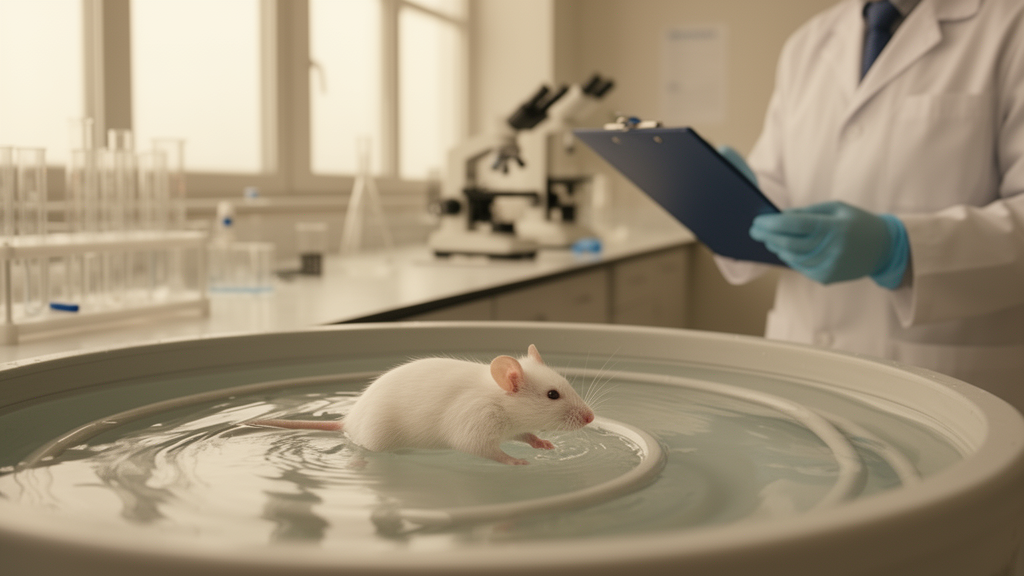
Behavioral testing began in the third week after injury. In the Morris water maze, sham mice found the hidden platform faster than injured controls, while AS-IV-treated mice, particularly at the 40 milligram per kilogram dose, showed shorter escape latencies than vehicle-treated TBI animals. In the probe trial on day 27, injured mice crossed the former platform location less often and spent less time in the target quadrant; AS-IV treatment improved both measures. A novel object recognition test on day 28 showed the same pattern: TBI reduced discrimination and recognition indices, and AS-IV raised them again. Across several behavioral outcomes, the lower dose outperformed the higher one.
Neurological function also recovered more quickly. On a modified neurological severity score assessed one day before injury and on days 1, 7, and 14 afterward, all injured groups showed sharply elevated deficit scores on day 1 with no differences among them. By days 7 and 14, the vehicle-treated TBI group improved only slightly, whereas the AS-IV and GM1 groups showed greater reductions and were no longer significantly different from sham animals by day 14.
Tissue analyses revealed structural correlates of the behavioral gains. Microtubule-associated protein 2 (MAP-2), a marker of dendritic integrity, dropped markedly in the peri-impact cortex after injury, alongside fragmented dendritic morphology; both AS-IV doses attenuated this loss. The synaptic scaffolding protein PSD-95 also declined after injury and rose again with treatment, with the 40 milligram per kilogram dose producing significantly higher fluorescence intensity than the 80 milligram dose. Golgi-Cox staining showed that total dendritic spine density, expressed as spines per 10 micrometers of dendrite, was lower in injured mice and higher after AS-IV. Transmission electron microscopy revealed mitochondrial swelling, vacuolization, and disrupted cristae in injured neurons, features that were less pronounced in treated animals, along with more organized, parallel-bundled microtubules within dendritic shafts.
Molecular profiling tied these changes to the NMDAR pathway. Western blotting of ipsilateral peri-lesional cortex showed that levels of the NMDAR subunits NMDAR2A and NMDAR2B fell after injury and rose with AS-IV treatment. The ratios of phosphorylated to total ERK1/2, CaMKII, and CREB, which were reduced in injured mice, increased after treatment, as did expression of the synapse-associated proteins PSD-95, BDNF, synaptophysin, and ARC. Double immunofluorescence for NMDAR2A and PSD-95 showed a higher percentage of double-positive cells in the injured cortex after AS-IV, and MAP-2 immunoreactivity in the hippocampal dentate gyrus was also elevated.
To probe whether the receptor itself was involved, the researchers ran a second experiment in which AS-IV-treated mice also received either MK-801, a non-subtype-selective NMDAR channel blocker, or TCN-201, a GluN2A-selective negative allosteric modulator, during post-injury days 14 through 28. The rationale came from the known biphasic role of NMDAR signaling after trauma: excessive early glutamatergic activity contributes to excitotoxic injury, whereas later receptor-dependent signaling supports activity-dependent remodeling and learning. The antagonists reversed the treatment’s behavioral benefits, raising water maze escape latencies, reducing platform crossings and target-quadrant time, and lowering recognition-memory indices. They also attenuated the AS-IV-associated increases in MAP-2 fluorescence, spine density, NMDAR subunit expression, phosphorylation ratios, and synapse-associated proteins.
Complementary computational and cellular work explored possible target engagement. Docking of AS-IV into the human GluN1/GluN2A ligand-binding domain complex suggested a computationally plausible interaction, and a 100-nanosecond molecular dynamics simulation showed the system stabilizing after roughly 30 to 35 nanoseconds, with backbone root-mean-square deviation plateauing at 0.32 to 0.39 nanometers and generally zero to two intermolecular hydrogen bonds. In a cellular thermal shift assay using HT-22 cells treated with 40 micrograms per milliliter of AS-IV, the thermal denaturation profile of NMDAR2A shifted rightward, indicating thermal stabilization of the protein in that cellular context. The authors are careful, however, to note that these approaches do not establish direct binding, binding affinity, receptor activation, or target engagement in the living brain; the CETSA shift in particular cannot distinguish direct binding from indirect stabilization.
The study has important limitations that the authors address directly. There were no antagonist-only groups, so an AS-IV-specific interaction cannot be separated from independent effects of MK-801 or TCN-201 on recognition memory, which have been demonstrated in other experimental settings. Only two doses were tested, so no dose-response curve or optimal dose can be defined, and brain and plasma concentrations of AS-IV were never measured, making the dose pattern impossible to attribute to receptor occupancy or brain penetration. The exclusive use of adult male mice limits generalizability to females, most neuronal analyses were performed at a single 28-day time point, and electrophysiological function, including long-term potentiation, was not assessed. BrdU and NeuN colabeling in the injured cortex was descriptive only; BrdU incorporation can reflect DNA repair rather than new neurons, so no conclusion about neuronal production can be drawn.
Within those boundaries, the findings add AS-IV to the short list of natural multi-target compounds showing promise for post-traumatic cognitive impairment in animal models. TBI affects more than 50 million people annually worldwide, and severe cases carry roughly 33 percent mortality, with many survivors left with lasting cognitive and emotional deficits. Current therapies focus mainly on managing primary injury and early secondary damage, leaving the subacute and chronic recovery phases largely unsupported. The authors conclude that modulating NMDAR-related ERK1/2/CaMKII/CREB signaling may contribute to the cognitive and synaptic effects associated with AS-IV after TBI, while emphasizing that direct receptor binding, in vivo target occupancy, and NMDAR’s status as the compound’s primary target all remain unproven. They call for follow-up work on dose-response relationships, synaptic function, target engagement, and long-term efficacy and safety before any translation toward human therapy.
Subject of Research: Astragaloside IV treatment and NMDAR-related signaling in cognitive recovery after traumatic brain injury in mice
Article Title: Astragaloside IV ameliorates cognitive impairment after traumatic brain injury with involvement of NMDAR-related signaling
Article References: Jiang, C., Shen, W., Liu, X., Hui, Y., & Hou, B. (2026). Astragaloside IV ameliorates cognitive impairment after traumatic brain injury with involvement of NMDAR-related signaling. Frontiers in Pharmacology, 17, Article 1925675. https://doi.org/10.3389/fphar.2026.1925675
Image Credits: AI Generated
DOI: 10.3389/fphar.2026.1925675
Keywords: astragaloside IV, traumatic brain injury, NMDAR, cognitive impairment, CREB, CaMKII, synaptic plasticity, dendritic spines, controlled cortical impact, MK-801, TCN-201, neuroprotection
News Source: Cassandra Pierce. (October 29, 2026). Astragaloside IV Improves Cognition After Brain Injury in Mice, Study Finds. Scienmag.



