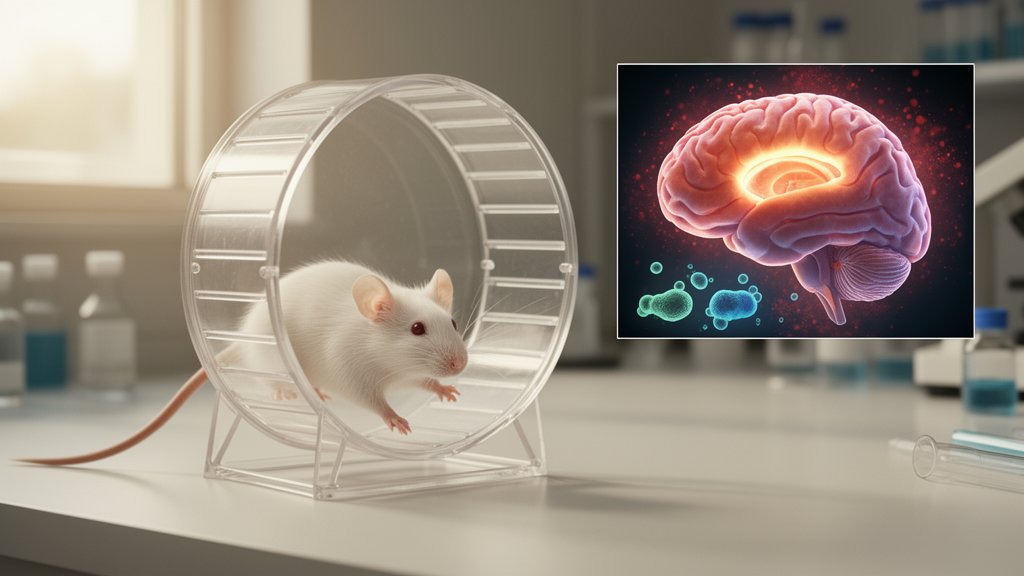
Aerobic exercise alleviated depressive-like behaviors in mice exposed to chronic mild stress, and a new study points to a specific molecular mechanism behind the effect: suppression of the HMGB1/NF-κB pathway, which drives reactive microglial states in the hippocampus. The work, published in Translational Psychiatry, links the well-known behavioral benefits of exercise to changes in the brain’s resident immune cells.
The researchers assessed depressive-like behaviors using standard behavioral tests and found that aerobic exercise significantly reduced the symptoms induced by chronic mild stress. Alongside the behavioral improvement, exercise reduced the total number of microglia in the hippocampus and altered both their morphology and their reactive states, accompanied by down-regulation of pro-inflammatory markers.
A central player in the study is HMGB1, high mobility group box 1, a late mediator of inflammation that can promote the release of pro-inflammatory cytokines in various inflammation-related diseases. After chronic mild stress, the team observed a significant nuclear-to-cytoplasmic translocation of HMGB1 in the hippocampus. Notably, this shift occurred in the absence of apoptotic alterations such as pyknotic nuclei, karyorrhexis, or karyolysis, indicating that the HMGB1 release was an active process in the brain rather than a byproduct of cell death.
Aerobic exercise reversed these stress-induced alterations by inhibiting the HMGB1/NF-κB pathway, according to the authors. Because neuroinflammation is well documented to play a role in the pathogenesis of depression, the findings suggest a mechanistic route by which physical activity may counteract stress-related depressive states, at least in this animal model.
The authors write that the results enhance understanding of the processes driving neuroinflammation in the hippocampi of mice exposed to chronic mild stress and highlight the potential of aerobic exercise as an anti-depression therapeutic strategy. As with all mouse studies, the findings are preclinical; the authors note that the mechanisms associated with exercise’s effects on depressive-like symptoms have not yet been fully elucidated, and the article was released early as a peer-reviewed, accepted version subject to further edits before the final Version of Record.
Subject of Research: How aerobic exercise suppresses HMGB1/NF-κB-mediated microglial neuroinflammation to reduce depressive-like behavior in chronically stressed mice
Article Title: Aerobic exercise prevents neuroinflammation and ameliorates depressive-like behaviors via suppression of HMGB1/NF-κB pathway-mediated reactive microglial states in mice exposed to chronic mild stress
Article References: Jiang, L., Zhang, C., Yang, D., Liu, S., Liao, R., Xu, E., Yu, Y., & Liu, L. (2026). Aerobic exercise prevents neuroinflammation and ameliorates depressive-like behaviors via suppression of HMGB1/NF-κB pathway-mediated reactive microglial states in mice exposed to chronic mild stress. Translational Psychiatry. https://doi.org/10.1038/s41398-026-04536-y
Image Credits: AI Generated
DOI: 10.1038/s41398-026-04536-y
Keywords: aerobic exercise, depression, chronic mild stress, neuroinflammation, HMGB1, NF-κB, microglia, hippocampus, mice, Translational Psychiatry, pro-inflammatory cytokines, Aerobic
News Source: Glenn Wilkins. (October 28, 2026). Aerobic exercise eases depressive-like behavior in stressed mice by calming hippocampal inflammation. Scienmag.