


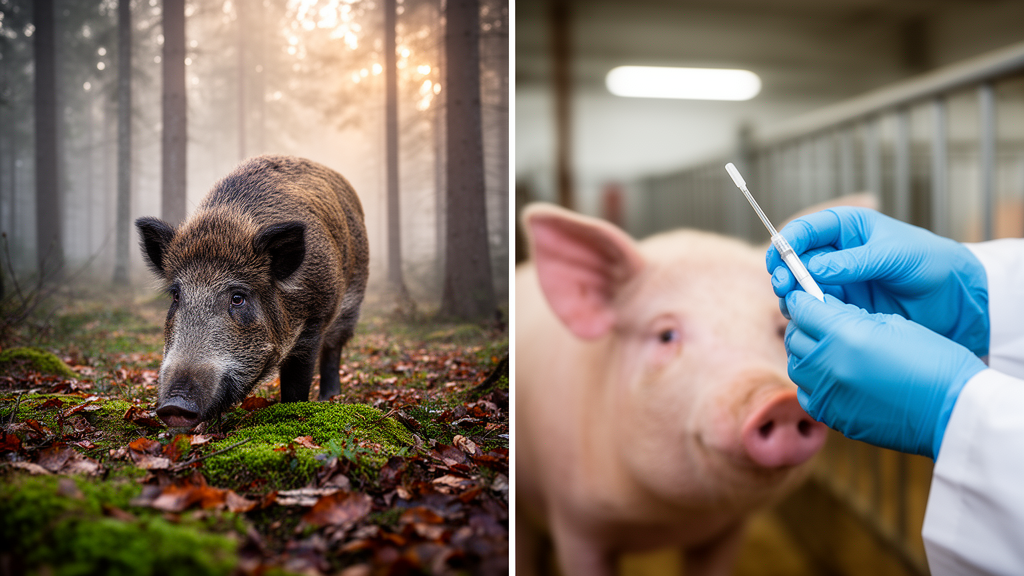
Erysipelothrix rhusiopathiae, the bacterium behind swine erysipelas, turns out to be strikingly rare in the tonsils of healthy Swedish fattening pigs, according to a brief report published in Acta Veterinaria Scandinavica. Researchers recovered the bacterium from just 6 of 200 pig tonsil samples, a prevalence of 3.0 percent, while wild boar sampled during hunting carried it at a far higher rate: 76 of 167 animals, or 45.5 percent.
The study set out to determine how commonly apparently healthy animals carry ER in their tonsils. The bacterium can persist in the environment or be carried asymptomatically, and it has been estimated that 30 to 50 percent of apparently healthy or convalescent pigs harbour ER in their tonsils and other lymphoid tissues. The Swedish findings for domestic pigs fall well below that range.
Tonsils were collected from 200 fattening pigs at slaughter from ten abattoirs across Sweden in 2017, with one pig per herd sampled. Wild boars, numbering 180, were sampled during hunting in 2018, primarily in Östergötland County. Cultures were performed using selective media, and isolates were confirmed as ER by MALDI-TOF mass spectrometry.
All six positive pig samples originated from three abattoirs in southern Sweden, suggesting a geographic pattern in where colonized animals were detected. The authors note that the low recovery rate aligns with the low occurrence of clinically diagnosed erysipelas in Swedish herds of this kind.
Whole-genome sequencing of the isolates revealed high genetic diversity, with no dominant clones among the bacteria recovered. This indicates that the ER strains circulating in the sampled animals do not stem from a single spreading clone.
The authors attribute the low prevalence in domestic pigs to characteristics of Swedish pig husbandry: indoor rearing of fattening pigs, age-segregated rearing, sow vaccination, enhanced biosecurity, and restricted straw access. Together, they conclude, these measures largely prevent tonsillar colonization by ER.
For wild boar, the high isolation rate of 45.5 percent led the researchers to suggest that wild boar could act as a reservoir and a potential source of infection for domestic pigs. The team also notes that the potential zoonotic risk of the bacterium, which can infect humans, should be considered.
The study is a brief report based on sampling carried out in 2017 and 2018, and its scope is limited to the animals tested: fattening pigs from ten abattoirs, one per herd, and wild boar hunted primarily in one county. Within those limits, the contrast between the two populations is clear: tonsillar carriage of Erysipelothrix rhusiopathiae was uncommon in Swedish fattening pigs but frequent in wild boar, a pattern the authors link to husbandry conditions and to the possible role of wild boar as a reservoir.
Subject of Research: Prevalence of Erysipelothrix rhusiopathiae tonsil carriage in Swedish fattening pigs and wild boar
Article Title: Prevalence of Erysipelothrix rhusiopathiae in tonsils of domestic pigs and wild boars in Sweden
Article References: Zoric, M., Söderlund, R., Bagge, E., & Eriksson, H. (2026). Prevalence of Erysipelothrix rhusiopathiae in tonsils of domestic pigs and wild boars in Sweden. Acta Veterinaria Scandinavica, 68(1), Article 32. https://doi.org/10.1186/s13028-026-00881-6
Image Credits: AI Generated
DOI: 10.1186/s13028-026-00881-6
Keywords: Erysipelothrix rhusiopathiae, erysipelas, tonsils, fattening pigs, wild boar, Sweden, prevalence, MALDI-TOF, whole-genome sequencing, biosecurity, zoonotic risk, Erysipelothrix
News Source: Morgan Morrow. (October 29, 2026). Erysipelas Bacterium Rare in Swedish Pig Tonsils but Common in Wild Boar. Scienmag.



