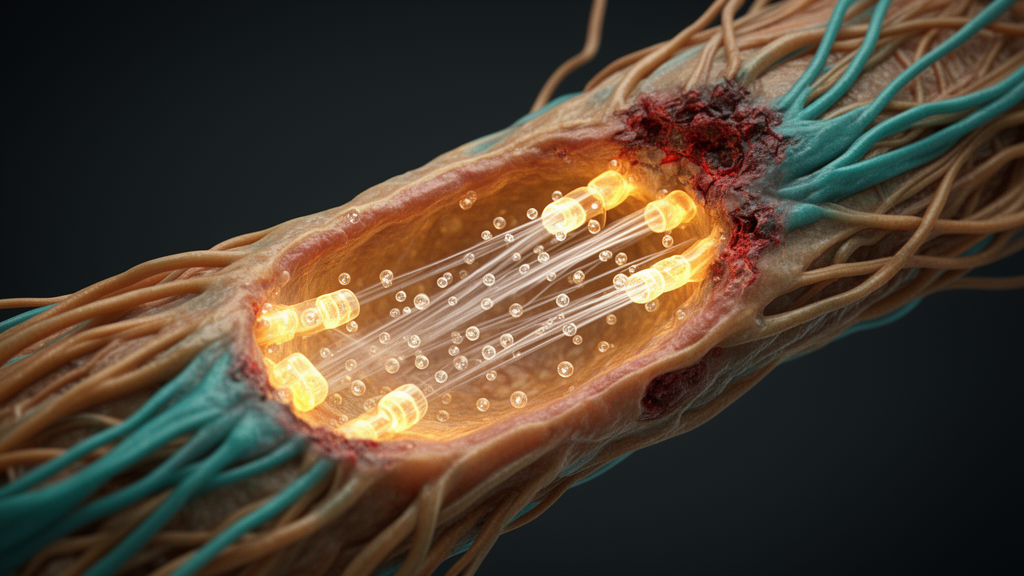
A new study published in Biological Research reports that the ion channel TRPM7 promotes myocardial ischemia-reperfusion injury (MIRI) by triggering a signaling cascade that drives cardiomyocyte pyroptosis, a highly inflammatory form of programmed cell death. The research, published as an open-access article on 14 October 2026, maps a pathway running from TRPM7-mediated calcium influx through CaMKII and the RNA-binding protein DDX3X to activation of the NLRP3 inflammasome.
The study was designed to determine whether TRPM7 regulates cardiomyocyte pyroptosis during MIRI and to identify the underlying mechanisms. The researchers established two complementary models: mice subjected to ischemia-reperfusion injury in vivo, and HL-1 cardiomyocytes exposed to hypoxia-reperfusion (H/R) in vitro.
Methodologically, the team combined gene knockdown and overexpression approaches with pharmacological inhibition, using the specific inhibitor KN-93 to block CaMKII. Protein-protein interactions were probed with co-immunoprecipitation and GST pull-down assays, while m5C RNA modification analysis relied on MeRIP and a dual-luciferase reporter assay with site-directed mutagenesis.
The central in vivo finding was that TRPM7 knockdown significantly improved cardiac function, reduced infarct area and myocardial fibrosis, and suppressed cell death in mice. These results position TRPM7 as an upstream promoter of the injury response rather than a passive marker of damage, and they align with the channel’s mechanistic role in the downstream pathway the authors traced.
That mechanism begins with calcium. According to the study, TRPM7-mediated calcium influx activates CaMKII, which then binds to and upregulates DDX3X. In parallel, ischemia-reperfusion or hypoxia-reperfusion induced m5C modification on DDX3X mRNA, which recruited the m5C reader protein ALYREF and thereby stabilized DDX3X expression. The authors describe this as an m5C/ALYREF-dependent stabilization of DDX3X, linking an epitranscriptomic RNA modification to the injury response.
Elevated DDX3X, in turn, activated the NLRP3 inflammasome, ultimately driving cardiomyocyte pyroptosis. The present study connects that inflammasome to a specific ion channel and an RNA-modification pathway in a single axis.
Importantly, the researchers report that in vivo knockdown of DDX3X recapitulated the cardioprotective effects observed with TRPM7 inhibition. This convergence suggests that DDX3X sits at a critical downstream node of the pathway, since reducing it independently of TRPM7 produced comparable protection in the mouse model.
The authors conclude that their findings reveal a critical role for a TRPM7-initiated CaMKII/DDX3X/NLRP3 signaling axis in regulating pyroptosis during MIRI, and they propose it as a novel potential therapeutic target for the condition. Readers should note that the article is being shared early as a peer-reviewed, accepted manuscript carrying a permanent DOI; this version is subject to further edits and will be replaced by the final Version of Record. The findings derive from mouse and HL-1 cardiomyocyte models, and the authors frame the pathway as a potential target rather than a validated clinical intervention.
Subject of Research: The role of the TRPM7 ion channel and a CaMKII/DDX3X/NLRP3 signaling axis in cardiomyocyte pyroptosis during myocardial ischemia-reperfusion injury.
Article Title: TRPM7 promotes myocardial ischemia-reperfusion injury via CaMKII/DDX3X/NLRP3-mediated pyroptosis and m5C/ALYREF-dependent DDX3X stabilization
Article References: Yang, J., Hu, S., Ji, P., Guo, Y., & Xiang, H. (2026). TRPM7 promotes myocardial ischemia-reperfusion injury via CaMKII/DDX3X/NLRP3-mediated pyroptosis and m5C/ALYREF-dependent DDX3X stabilization. Biological Research. https://doi.org/10.1186/s40659-026-00732-8
Image Credits: AI Generated
DOI: 10.1186/s40659-026-00732-8
Keywords: TRPM7, myocardial ischemia-reperfusion injury, pyroptosis, CaMKII, DDX3X, NLRP3 inflammasome, m5C RNA modification, ALYREF, cardiomyocytes, calcium signaling, HL-1 cells, Biological Research
News Source: Drew Townsend. (October 28, 2026). TRPM7 Channel Drives Heart Damage After Ischemia-Reperfusion Through a Newly Traced Molecular Pathway. Scienmag.