


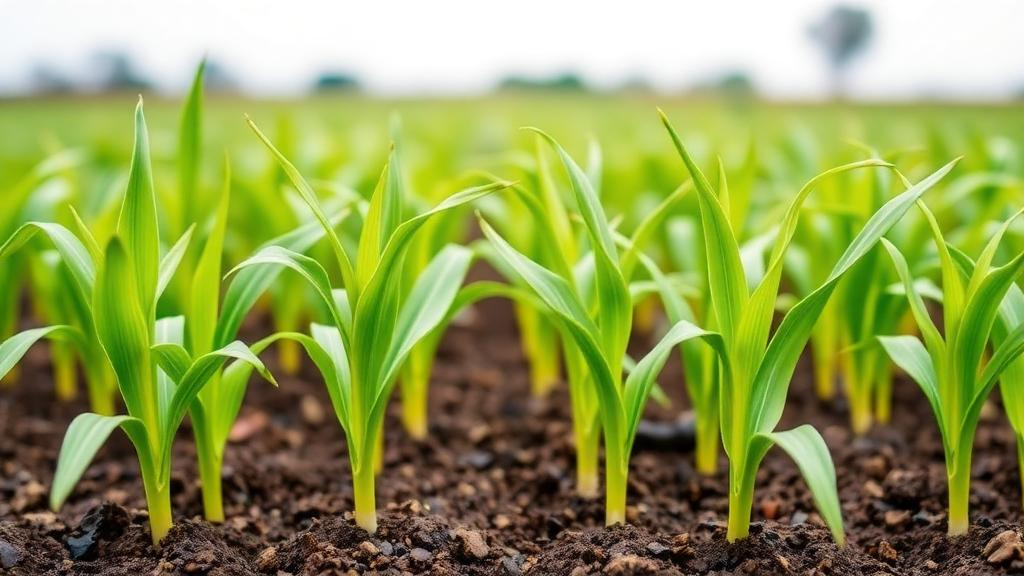
Exogenous melatonin partially alleviated drought injury in maize seedlings in a new study published in BMC Plant Biology, and the two concentrations tested produced noticeably different response profiles. The research, published on 22 October 2026 as an open-access article, combined physiological measurements with transcriptome-wide analysis to ask how melatonin acts when water is scarce.
The experimental setup was straightforward. Maize seedlings were assigned to four treatments for seven days: normal watering, drought stress alone, drought combined with 50 micromoles per litre of melatonin (M1), or drought combined with 100 micromoles per litre of melatonin (M2). Drought significantly reduced seedling height, stem diameter and SPAD values, a measure of leaf chlorophyll content, while leaf length showed a numerical decrease. Reactive oxygen species-associated staining and malondialdehyde (MDA) accumulation, a marker of oxidative damage to membranes, were also increased under drought.
Both melatonin treatments partially alleviated these drought-associated effects, but the two doses did not behave identically. The lower concentration, M1, showed the highest mean activities of the antioxidant enzymes superoxide dismutase, catalase and peroxidase, suggesting a stronger stimulation of enzymatic antioxidant capacity. The higher concentration, M2, was more effective at reducing MDA and maintaining SPAD values, indicating better protection of membranes and chlorophyll content at that dose.
Transcriptome sequencing revealed how extensively drought reshapes gene expression in these seedlings. Differential expression analysis identified 1232 differentially expressed genes in the drought versus control comparison, 320 in the M1 versus drought comparison and 899 in the M2 versus drought comparison. Functional analyses associated these genes with redox processes, phenylpropanoid and flavonoid metabolism, cell wall organization, polysaccharide metabolism and membrane-lipid-related processes, pointing to a coordinated reprogramming of defence, structural and membrane-related pathways.
From the transcriptomic data, the researchers prioritized one candidate gene, Zm00001eb006180, annotated as ZmEREB180. It was selected based on its membership in a pink module identified by weighted gene co-expression network analysis and on its expression pattern: it was repressed by drought and recovered in association with melatonin treatment.
To probe the function of this candidate, the team overexpressed ZmEREB180 in the maize inbred line B104. Under drought stress, the overexpression lines were associated with improved shoot and root performance. However, the authors are explicit about the limits of this experiment: it used a different genetic background and did not include melatonin treatment, so these results do not establish that ZmEREB180 participates in or mediates melatonin-induced drought tolerance.
The study’s conclusions therefore rest on association rather than demonstrated mechanism. The authors state that exogenous melatonin mitigated drought injury in association with coordinated physiological and transcriptomic responses, and that these responses differed between the two tested concentrations. The work was conducted on seedlings over a seven-day window, and the article notes that the accepted version was shared early and remains subject to further edits before the final Version of Record.
For readers following drought-resilience research in maize, the study adds a dose-resolved picture of how melatonin treatment coincides with antioxidant enzyme activity, membrane protection and broad transcriptional shifts. It also flags a candidate ethylene-responsive transcription factor for future testing, while leaving open the central question of whether that gene is part of the melatonin response itself.
Subject of Research: Melatonin-mediated alleviation of drought stress in maize seedlings
Article Title: Physiological and transcriptomic responses associated with melatonin-mediated alleviation of drought injury in maize seedlings
Article References: Yan, L., Xiao, B., Zhao, H., Shi, H., Lu, H., Zhao, H., Wei, D., Jiang, C., Wang, S., Liu, S., & Huang, Z. (2026). Physiological and transcriptomic responses associated with melatonin-mediated alleviation of drought injury in maize seedlings. BMC Plant Biology. https://doi.org/10.1186/s12870-026-10138-z
Image Credits: AI Generated
DOI: 10.1186/s12870-026-10138-z
Keywords: maize, melatonin, drought stress, seedlings, antioxidant enzymes, MDA, transcriptomics, differentially expressed genes, ZmEREB180, oxidative damage, BMC Plant Biology, Physiological
News Source: Alan Morgan. (October 28, 2026). Melatonin eases drought injury in maize seedlings, with effects differing by dose. Scienmag.



