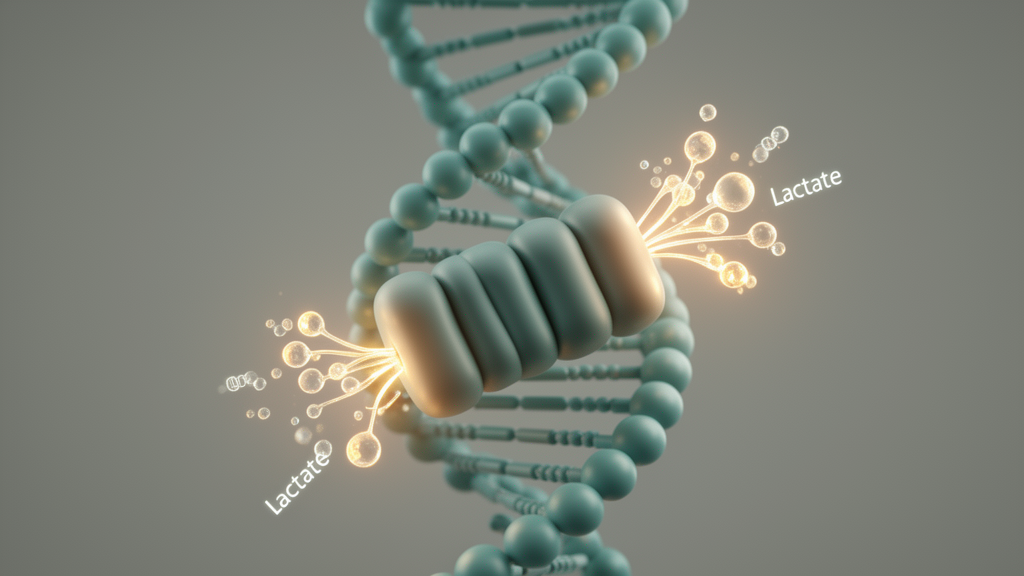
A comprehensive review published in Frontiers in Genetics now argues that one particular chemical signature built from this molecule, histone H3 lysine 18 lactylation, or H3K18la, sits at a decisive junction between cellular metabolism and gene control. Written by Ting Wu, Yali Zhang and Yifei Liu of the Affiliated Hospital of Nantong University, the review assembles evidence from tumor, inflammatory, metabolic, cardiovascular and degenerative-disease models to show how a single histone modification can be associated with cancer growth in one context and tissue repair in another. The authors' central message is double-edged: H3K18la is mechanistically fascinating and increasingly well documented, but it is not yet ready for the clinic, because the enzymes, readers and assays needed to prove causality remain incomplete.
The story begins in 2019, when Yingming Zhao's group at the University of Chicago reported histone lactylation as an entirely new post-translational modification. In this process, a lactyl group derived from the metabolite lactate is enzymatically attached to lysine residues on histone proteins, the spools around which DNA is wound. The discovery reframed lactate from a presumed metabolic by-product into a signaling molecule capable of directly influencing transcription.
H3K18la refers chemically to the addition of a lactyl group to the epsilon-amino group of lysine 18 on histone H3, a highly conserved and structurally accessible residue on the histone's flexible N-terminal tail. Across the genome, the mark is preferentially enriched at promoters and enhancers of actively transcribed genes and is generally associated with transcriptional activation. Its best-characterized comparator at the same residue is H3K18 acetylation, an open-chromatin mark whose prognostic associations in human cancers run in opposite directions depending on tumor type, underscoring the authors' warning that lactylation should never be interpreted without its acetylation context.
The regulatory machinery behind the mark is where the field's difficulties begin. Lactate flux and the availability of lactyl-CoA, the activated chemical donor for lactylation, set the metabolic stage: under hypoxia or high-glucose conditions, cells rely heavily on glycolysis, lactate accumulates, and H3K18la rises. Lactate dehydrogenase isoenzymes and monocarboxylate transporters shape intracellular levels, and exogenous lactate experiments show dose-dependent increases in global histone lactylation, with H3K18la particularly responsive.
Yet no site-specific writer or eraser has been validated. The broad-spectrum acyltransferases p300 and CBP deposit the mark, while class I histone deacetylases and SIRT2 can remove lactylation, but neither group acts selectively at H3K18. p300 accepts multiple acyl-CoA cofactors, catalyzing acetylation, crotonylation and 2-hydroxyisobutyrylation as well, so perturbing it reshapes an entire acylation landscape rather than one mark. Inhibitors tell the same story: C646 is not H3K18la-selective, and even A-485, which is enzyme-selective for p300/CBP, remains modification-nonspecific.
A change in H3K18la after shared-enzyme perturbation therefore cannot by itself establish causality. To organize this complexity, the authors propose a testable two-stage framework. Lactate and lactyl-CoA provide metabolic permission, determining whether lactylation is chemically possible at all.
Locus selection, by contrast, is supplied by cell-lineage transcription factors, pre-existing chromatin accessibility, histone chaperones, and protein or RNA scaffolds that concentrate promiscuous acyltransferases at chosen genomic sites. Several examples illustrate this contextual scaffolding. In the glioblastoma microenvironment, the heterochromatin component CBX3, which has no lactyltransferase activity of its own, recruits p300 and shifts its substrate preference toward lactyl-CoA, driving an immunosuppressive transcriptional program.
Separately, ACSS2 acts as a lactyl-CoA synthetase that assembles with KAT2A, which then functions as a lactyltransferase, upregulating Wnt/beta-catenin, NF-kappaB and PD-L1 signaling in brain tumors. Downstream, candidate readers and transcriptional effectors shape the biological output, though a universally validated H3K18la-specific reader remains unproven despite one report that BRD9 recognizes the mark in hepatocellular carcinoma. In cancer, the mark behaves less like an isolated switch and more like a node in self-reinforcing feed-forward circuits.
In pancreatic ductal adenocarcinoma models, H3K18la enrichment at the promoters of the mitotic checkpoint regulators TTK and BUB1B activates their transcription, forming a glycolysis-H3K18la-TTK/BUB1B loop that accelerates cell-cycle progression. In papillary thyroid carcinoma, tumor-derived lactate promotes H3K18la and activates STAT1, which in turn upregulates LDHA transcription, increasing lactate production and closing a positive feedback loop that sustains malignant progression. In non-small cell lung cancer, H3K18la is associated with POM121 upregulation, c-Myc nuclear translocation, cooperative occupancy of the CD274 promoter, increased PD-L1 expression and weakened CD8-positive T-cell cytotoxicity.
In clear cell renal cell carcinoma, inactivation of the tumor suppressor VHL induces the mark and upregulates PDGFR-beta, whose signaling further enhances lactylation in a loop that drives invasion. Human tissue data add correlative weight: elevated H3K18la in pancreatic tumors correlates with reduced survival, and a high-H3K18la, low-SIRT1 profile in gastric cancer is associated with worse outcomes, although these analyses did not independently confirm H3K18la as a standalone prognostic biomarker. The tumor microenvironment extends the mark's reach beyond cancer cells themselves.
In pancreatic cancer models, tumor-derived lactate upregulates CXCL1 through PCAF-mediated H3K18la, recruiting waves of immunosuppressive neutrophils, and combined PCAF and PD-1 blockade produces a notable synergistic antitumor effect in preclinical studies. In hepatocellular carcinoma, H3K18la activates M2 macrophage markers including CD206, ARG1 and IL10, promotes tumor-associated macrophage polarization and suppresses CD8-positive T-cell infiltration. Lactate shuttling also fuels metastasis: lactate secreted by pancreatic cancer-associated fibroblasts is taken up by tumor cells, induces H3K18la and activates neural guidance factors such as L1CAM and SLIT1, providing an epigenetic basis for the disease's notorious perineural invasion.
In colorectal cancer liver metastasis, TROP2 promotes lactate production through the YBX1-HIF-1alpha pathway and induces H3K18la, which then activates metastasis-related genes and sustains epigenetic priming at the TROP2 promoter, a self-reinforcing loop that HIF-1alpha inhibitors such as acriflavine can disrupt. Outside oncology, the mark threads inflammation to fibrosis and, in some settings, to resolution. In septic shock, H3K18la is increased in peripheral blood mononuclear cells and correlates with disease severity, cytokine-storm intensity and arginase 1 expression, while it is also elevated in bronchoalveolar lavage fluid from patients with sepsis-associated acute respiratory distress syndrome.
In chronic kidney disease, PKM2-driven lactate accumulation upregulates TGF-beta1 through H3K18la, promoting macrophage-to-myofibroblast transition and accelerating renal fibrosis, and similar profibrotic circuits operate in liver and lung, where the mark activates hepatic stellate cells and drives fibroblast-to-myofibroblast transition. In rheumatoid arthritis, lactate accumulation in synovial fluid raises H3K18la in synovial fibroblasts, which activates METTL1 transcription and allows the cells to resist ferroptosis, promoting synovial hyperplasia and joint destruction; the compound Parishin E reduces the mark by enhancing SIRT6 activity. Yet the same machinery can be protective: when exogenous lactate enters macrophages through MCT1, induced H3K18la reduces pro-inflammatory cytokine release and limits excessive NLRP3 inflammasome assembly, illustrating that the mark's direction depends on the responding cell population, stimulus and stage of injury.
Metabolic, cardiovascular and degenerative diseases reveal the same context dependence with striking clarity. In diabetes-related brain dysfunction models, lactate accumulation increases H3K18la in microglia, activating NF-kappaB signaling at the TLR4 promoter and driving a neurotoxic phenotype associated with accelerated cognitive impairment. In polycystic ovary syndrome, abnormal nuclear translocation of pyruvate kinase M2 enhances genome-wide H3K18la and aberrantly activates susceptibility genes such as CYP17A1, contributing to hyperandrogenism.
Yet after myocardial infarction, H3K18la remotely and early activates tissue-repair genes including Lrg1, VEGF-A and IL-10 in bone marrow and circulating monocytes, endowing macrophages with anti-inflammatory, pro-angiogenic activities that improve the post-infarction repair microenvironment and cardiac function in models. In ischemic stroke models, the mark promotes anti-inflammatory microglial polarization and supports repair. Degenerative disease splits along the same lines: in Alzheimer's models, H3K18la is a dominant lactylation mark in senescent microglia that promotes neuroinflammation, and in osteoarthritis it drives profibrotic cartilage genes, whereas in senile osteoporosis, lactate from glycolytic endothelial cells raises H3K18la in bone marrow mesenchymal stem cells, activating osteogenic genes and partially attenuating bone loss.
In atherosclerosis, both pathogenic endothelial circuits and reparative macrophage programs run through the same mark. This functional duality is precisely why the authors urge caution about translation. Human cohort data remain limited, mostly single-center, retrospective and based on heterogeneous assays with non-harmonized cutoffs, and no prospective external validation exists, so H3K18la currently supports exploratory, disease-specific associations rather than diagnostic, prognostic or predictive clinical use.
Therapeutic targeting faces a parallel problem: p300/CBP inhibitors and lactate-modulating agents provide pathway-level proof of concept, but their effects cannot be attributed to H3K18la alone without mark-specific target engagement, H3K18ac and pan-acylation controls, and locus-specific rescue experiments. Detection itself is a bottleneck, with antibody performance, enrichment methods and mass-spectrometry workflows varying substantially between laboratories. The authors' priorities follow directly: define the enzymes, readers and scaffolds that regulate specific loci; structurally validate candidate readers against competing acyl-lysine marks; run H3K18ac-aware, inhibitor-independent causal tests; harmonize assays with reference materials; and pursue circuit-selective rather than global interventions, stratified by disease stage, cell type and metabolic microenvironment.
Direct long non-coding RNA-guided deposition, though suggested by H19 and circXRN2 circuits in gastric and bladder cancer, remains unproven. Until those steps are completed, H3K18la stands as a compelling lens on how metabolism writes into chromatin, and as a testable model rather than an established clinical pathway.
Subject of Research: The divergent roles of histone H3 lysine 18 lactylation in human diseases
Article Title: Divergent roles of H3K18 lactylation in human diseases: metabolic-epigenetic circuits and translational challenges
Article References: Wu, T., Zhang, Y., & Liu, Y. (2026). Divergent roles of H3K18 lactylation in human diseases: metabolic-epigenetic circuits and translational challenges. Frontiers in Genetics, 17, Article 1950620. https://doi.org/10.3389/fgene.2026.1950620
Image Credits: AI Generated
DOI: 10.3389/fgene.2026.1950620
Keywords: H3K18 lactylation, histone lactylation, epigenetics, lactate metabolism, tumor microenvironment, immune escape, fibrosis, inflammation, p300/CBP, biomarkers, metabolic disease, translational research
News Source: Juliet Wilcox. (October 26, 2026). Lactate Signal H3K18 Lactylation Shows Dual Roles in Human Disease. Scienmag.