Associations between the gut microbiota and cancer have become increasingly reproducible at the cohort level, but an association alone cannot establish whether a microorganism, a microbial product, or a metabolite directly alters tumor-relevant host biology. A new review published in Frontiers in Bioengineering and Biotechnology argues that engineered organoid platforms are the tools best positioned to close this inferential gap, provided that researchers match the architecture of the model to the specific causal claim being tested. The review, authored by a team at the Second Hospital of Dalian Medical University in China, systematically evaluates intestinal and tumor organoid systems, organ-on-chip devices, and microbial co-culture strategies according to the mechanistic questions each configuration can legitimately answer.
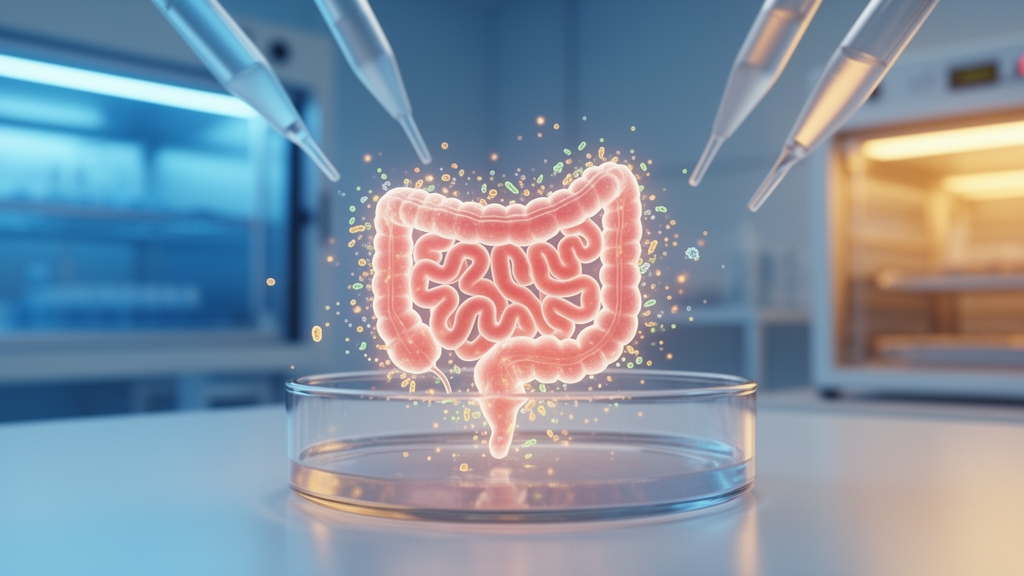
The central problem the authors identify is one of causal attribution. Clinical sequencing studies can show that a particular microbial community is enriched in patients with colorectal cancer or in patients who respond to immunotherapy, and animal models can test integrated physiology, but neither approach readily separates direct microbial effects on human epithelium from systemic host responses. Organoids, three-dimensional culture systems generated through the self-organization of tissue stem cells, pluripotent stem cells, or patient-derived tumor cells, partially preserve the spatial architecture, cellular lineage composition, and molecular heterogeneity of the tissue of origin. This makes them far more faithful to in vivo tissue states than conventional two-dimensional cultures, while remaining experimentally tractable in ways that living animals are not.
Platform architecture, the review emphasizes, determines which microbial exposure is biologically interpretable. Conventional three-dimensional organoids preserve epithelial organization but enclose the apical surface, so direct luminal exposure generally requires microinjection. Apical-out organoids reverse epithelial polarity and permit direct short-term contact with microorganisms while retaining a three-dimensional structure. Organoid-derived monolayers provide directional apical and basolateral access and support measurements of barrier resistance, permeability, and transport. Microfluidic intestine-on-chip systems add perfusion, mechanical deformation, oxygen gradients, and the capacity for longer-term host-microbe co-culture, with separate luminal and vascular compartments. Defined hydrogels and scaffold-guided tissues improve control of matrix mechanics and epithelial geometry. The authors stress that no configuration is uniformly superior; each supports a different class of conclusion.
The strongest organoid-based causal evidence currently concerns microbial genotoxicity. Repeated exposure of human intestinal organoids to colibactin-producing Escherichia coli carrying the pks pathogenicity island generated a characteristic mutational signature that was subsequently detected in human colorectal cancer genomes. This experiment directly connects a defined bacterium, a known genotoxin, human intestinal epithelium, and a tumor-associated genomic pattern, providing stronger causal support than any cross-sectional microbiome association. The authors caution, however, that it does not reproduce long-term community ecology, dietary influences, inflammation, or immune selection as they occur in patients.
Helicobacter pylori studies supply a second line of direct host-bacterium evidence. Human pluripotent stem cell-derived gastric organoids and adult gastric epithelial organoids have been infected with H. pylori, allowing bacterial localization and epithelial responses to be examined in human tissue. Gastric organoid co-culture has also shown early induction of epithelial PD-L1 and suppression of local T-cell responses, a mechanism with obvious implications for immune evasion in gastric carcinogenesis. Related work has shown that R-spondin signaling regulates gastric progenitor expansion and that NOD1 sensing and ATG16L1-dependent autophagy modify inflammatory or carcinogenic responses, although the review notes that these findings arise from different epithelial sources and cellular contexts that must be stated when conclusions are compared.
Microbial signals are not uniformly pro-tumorigenic, and the review is careful to distinguish the type of exposure used in each experiment. TLR5-dependent epithelial signaling can promote recruitment of barrier-supportive macrophages. Lactobacillus reuteri promoted epithelial regeneration in intestinal organoid models under inflammatory conditions, while bacteria-derived membrane vesicles induced DNA damage and dysplastic changes in colonic epithelial models, an example of a cell-free microbial product rather than a live organism. Lactobacillus gallinarum, a diet-enriched Coriobacteriaceae strain, and Lactococcus lactis HkyuLL 10 have each been linked to colorectal tumor phenotypes through combinations of microbial, organoid, animal, and metabolic experiments, though in several cases organoids were exposed to conditioned medium or an identified metabolite rather than viable bacteria. The authors argue that such exposures should be described explicitly as microbial-product or metabolite validation when intact microorganisms were not placed in direct contact with the organoid.
Metabolite-focused experiments provide a complementary layer of mechanistic resolution by isolating concentration, receptor dependence, and downstream signaling. Bile acids illustrate this approach: microbially modified seven-oxo-DCA and isoDCA produced opposing effects on intestinal tumorigenesis and host signaling, while the bile acid metabolite three-oxo-LCA activated FXR-related signaling, suppressed proliferation in colorectal cancer organoids and intestinal stem cells, and reduced tumor burden in ApcMin/+ mice. Short-chain fatty acids and tryptophan derivatives also regulate epithelial and immune states, with butyrate influencing differentiation, barrier maintenance, and immune signaling. The review notes that organoids can separate epithelial genotype from metabolite exposure and test receptor-dependent signaling, but that concentration, exposure route, and the modeled epithelial compartment must reflect the conditions under which the metabolite would actually reach its target. Metabolite experiments cannot model microbial production, cross-feeding, colonization, or community adaptation.
The review also draws a firm boundary around what organoid evidence cannot yet support. Despite substantial clinical and animal data linking gut microbial composition to response to PD-1 blockade in melanoma and other epithelial tumors, direct human organoid reconstruction of the complete gut microbiota-systemic immunity-distant tumor axis remains uncommon. A metabolite-treated distant-tumor organoid establishes a tumor-cell response, and an immune co-culture can establish a defined immune mechanism, but neither alone reconstructs intestinal transport, systemic immune priming, and tumor exposure. This evidence break explains why direct organoid evidence remains concentrated in gastrointestinal tissues, and why conclusions about distant tumors must currently rest on converging lines of indirect evidence rather than on a single reconstructed system.
Reproducibility, the authors contend, depends on controlling and reporting variables on both the host and microbial sides of the experiment. Host variables include donor, species, tissue region, disease state, genotype, passage number, differentiation protocol, extracellular matrix, medium, and epithelial lineage composition. Microbial variables include strain identity, growth phase, inoculum, viability, oxygen tolerance, exposure duration, and whether the organism remains luminal, adherent, invasive, or extracellular. Standard organoid media are optimized for mammalian cells rather than bacteria, and residual antibiotics can alter microbial growth; aerobic culture excludes obligate anaerobes or changes their metabolism, while prolonged bacterial expansion may acidify the medium and cause nonspecific epithelial injury. Lot-dependent matrix composition and selective culture conditions can also alter differentiation and drug response, and patient-derived tumor organoids may undergo clonal selection or transcriptional drift during long-term propagation. The authors propose a minimum reporting standard covering species and tissue source, organoid derivation, architecture and polarity, passage, matrix and medium, microbial preparation and viability, inoculum, exposure route, oxygen condition, duration, and host and microbial readouts.
The review’s concluding message is deliberately restrained: engineered organoid platforms provide convincing causal evidence for a limited set of microbiota-cancer mechanisms, and the most useful platform is the least complex system that exposes the relevant surface, preserves the required host compartment, and permits the proposed mediator to be measured and perturbed. Omics methods, the authors note, are readouts for benchmarking molecular fidelity or nominating candidate mechanisms, not structural components of a platform, and large molecular datasets cannot compensate for missing exposure controls. Added immune, stromal, or microfluidic compartments should each be justified by a measurable function and an appropriate control rather than by a general ambition to build more realistic models. Applied this way, the authors argue, organoid engineering will clarify which microbiota-cancer associations reflect direct epithelial mechanisms, which depend on multicellular host responses, and which remain observations still requiring functional validation.
Subject of Research: Engineered organoid platforms for mechanistic study of gut microbiota-cancer interactions
Article Title: Engineered organoid platforms for mechanistic studies of gut microbiota-cancer interactions
Article References: Sun, M., Jiao, J.-M., Zang, D., Lin, M.-X., Zhou, H., & Chen, J. (2026). Engineered organoid platforms for mechanistic studies of gut microbiota-cancer interactions. Frontiers in Bioengineering and Biotechnology, 14, Article 1905559. https://doi.org/10.3389/fbioe.2026.1905559
Image Credits: AI Generated
DOI: 10.3389/fbioe.2026.1905559
Keywords: organoids, gut microbiota, cancer, colorectal cancer, colibactin, Helicobacter pylori, microbial metabolites, organ-on-chip, tumor microenvironment, co-culture, microfluidics, reproducibility
News Source: Morgan Morrow. (October 26, 2026). Engineered Organoid Platforms Bring Causal Rigor to Gut Microbiota-Cancer Research. Scienmag.