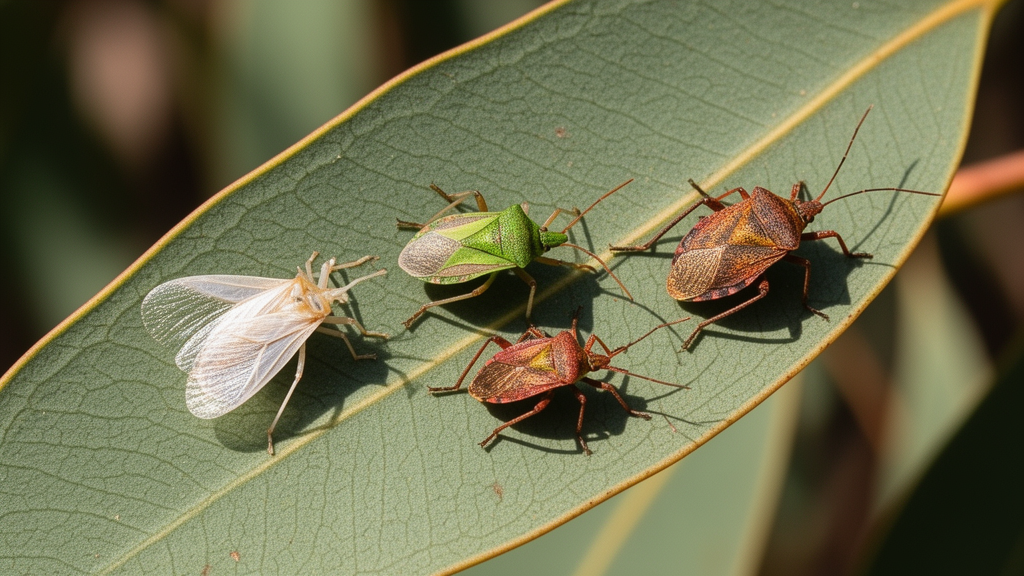
A new genus of Australian plant bugs has been named Swiftiephylus in honor of Taylor Swift, with four species distinguished by pale yellow bodies and conspicuous red markings. Sarah Schroeder of the University of California and Christiane Weirauch formally described the insects in the peer-reviewed journal Insect Systematics & Evolution. The genus belongs to the family Miridae, the largest family of true bugs, which has more than 11,000 described species worldwide.
The publication adds four named species from a collection gathered in Australia between 1995 and 2004. Schroeder named Swiftiephylus taylorae directly for the singer, while the other three species received names drawn from words associated with Swift’s albums: S. amator from Lover, S. intrepidus from Fearless and S. poetorum from The Tortured Poets Department. The names Latinize “Taylor,” “lover,” “fearless” and “poets” in two-part scientific names governed by guidelines such as the International Code of Zoological Nomenclature.
Schroeder’s choice of honoree was prompted by the insects’ appearance. She said their pale yellow coloration and striking red markings reminded her of Swift’s characteristic blonde hair and red lipstick. The coloring also mimics the flowers of the Australian she-oak with which the insects are associated, helping them evade predators.
The same features that inspired the celebrity-inspired naming therefore also correspond to the bugs’ coloration in their floral habitat. Swift joins other prominent figures whose names have been used for living organisms, including David Attenborough, Barack Obama and Beyoncé. The insects studied by Schroeder and Weirauch were collected as part of the National Science Foundation-funded “Planetary Biodiversity Inventory (PBI) for Plant Bugs,” a biodiversity project that gathered more than 50,000 specimens.
After collection, the material remained in museum collections and was not studied during the period covered by the release. The authors later revisited the collections, examined the specimens and described the previously unrecognized genus and its four species. The work demonstrates how natural history museums can retain scientific material for years before it is examined in enough detail to enter the formal taxonomic record.
The publication describes four taxa within a much broader group whose diversity remains incompletely documented. The research release notes that as many as 30 million insect species may still be undocumented, but describing Swiftiephylus does not establish the size, distribution or conservation status of these species beyond the information reported. The four species were also identified from a defined collection associated with Australian she-oak, rather than through a survey designed to measure the abundance of living populations.
Schroeder described the specimens as “vault species,” drawing an analogy with Swift’s “vault tracks”: organisms held in collections for decades that had not yet been brought into scientific view. Their formal description makes four previously hidden plant bugs available for recognition and further study while underscoring the potential scientific value of specimens that remain unstudied in museums.
Subject of Research: Taxonomic description of four Australian she-oak-associated plant bugs in the new genus Swiftiephylus
Article Title: From music genius to insect genus: newly classified Australian bugs named after Taylor Swift
Article References: From music genius to insect genus: newly classified Australian bugs named after Taylor Swift. Original publication (Bibliographic details unavailable.)
Image Credits: AI Generated
DOI: Not provided
Keywords: Taylor Swift, Swiftiephylus, new insect genus, plant bugs, Miridae, taxonomy, museum collections, Australian biodiversity, species description, insect diversity, music, genius
News Source: Gavin Prescott. (October 26, 2026). Taylor Swift’s Name Marks Four Newly Described Australian Plant Bugs. Scienmag.