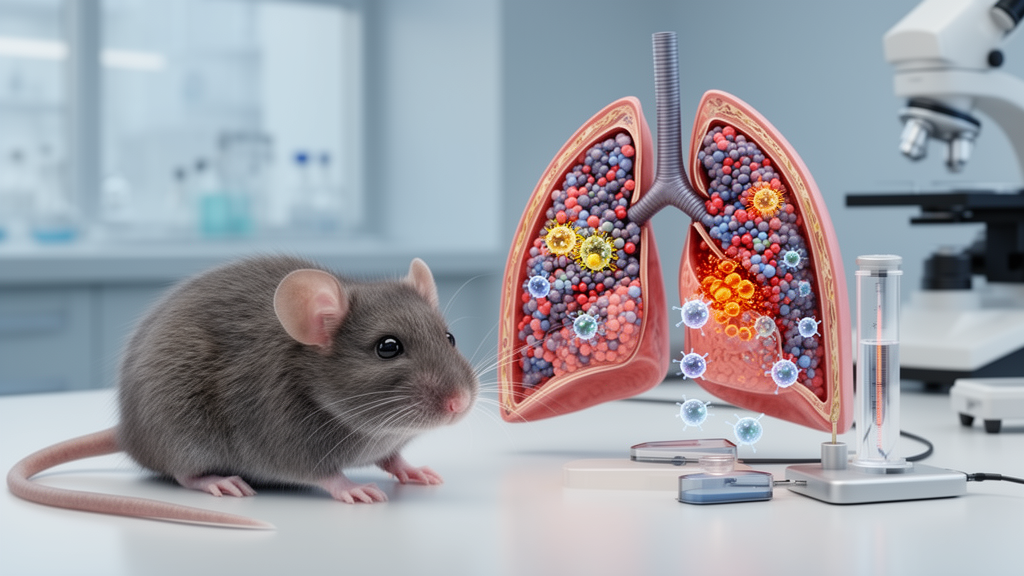
A preclinical study reports that tetrandrine reduced the viability of non-small cell lung cancer cells and patient-derived lung adenocarcinoma organoids, increased intracellular Fe²⁺ accumulation and lipid peroxidation, and promoted ferroptosis-associated cell death. In two syngeneic mouse tumor models, combining tetrandrine with the immune-checkpoint antibody anti-PD-1 suppressed tumors more effectively than either treatment alone. The research examined cells, organoids, immune-cell co-cultures and mice rather than patients, and its authors described tetrandrine as a compound warranting further investigation for non-small cell lung cancer therapy.
The study, reported in the Journal of Experimental & Clinical Cancer Research, investigated how tetrandrine affects ferritinophagy and ferroptosis in NSCLC. Researchers evaluated antitumor activity in NSCLC cell lines, patient-derived lung adenocarcinoma organoids and mouse tumor models. Proteomic and transcriptomic analyses, pharmacological interventions, and gene overexpression and knockdown experiments were used to examine the processes affected by tetrandrine. Across the experimental systems, the compound reduced cell or organoid viability, increased intracellular Fe²⁺ accumulation and lipid peroxidation, and promoted lysosomal ferritin degradation. Ferroptosis inhibitors partially attenuated these effects, indicating that ferroptosis contributed to the response.
Target-binding, protein-stability and ubiquitination assays identified nuclear receptor coactivator 4, or NCOA4, as a key molecular target. Tetrandrine directly bound NCOA4 and increased its stability. HERC2 downregulation and a reduction in K48-linked NCOA4 ubiquitination contributed to this stabilization. Tetrandrine also enhanced the interaction between NCOA4 and TAX1BP1. Co-immunoprecipitation, proximity ligation assays, structural prediction, and truncation and deletion analyses were used to characterize this interaction. Deletion of NCOA4 residues 540–560 weakened the NCOA4–TAX1BP1 interaction and attenuated tetrandrine-induced iron accumulation, lipid peroxidation and growth inhibition, supporting the importance of this region in the compound’s effects.
The researchers next examined whether tetrandrine altered antitumor immune responses. In tumor-cell and peripheral blood mononuclear cell co-cultures, tetrandrine increased markers associated with CD8⁺ T-cell activation or effector function. Some of these effects were attenuated by iron chelation, linking part of the immune response in the experimental system to intracellular iron. The same immune effects were assessed in LLC and CMT167 syngeneic tumor models, in which tetrandrine increased markers of CD8⁺ T-cell activation. Combined tetrandrine and anti-PD-1 treatment produced greater tumor suppression than either monotherapy in both models. These observations came from co-culture and mouse experiments, so they do not establish a clinical benefit or demonstrate that the complete immune response in people would depend on the proposed NCOA4 pathway.
Overall, the experiments support a multistep preclinical mechanism in which tetrandrine stabilizes NCOA4, enhances its interaction with TAX1BP1 and promotes ferritinophagy. This was followed by increased intracellular Fe²⁺ accumulation and lipid peroxidation, with ferroptosis contributing to reduced tumor-cell viability. The study further found that these tumor-cell effects coincided with enhanced CD8⁺ T-cell effector responses and improved anti-PD-1 activity in two syngeneic mouse models. The evidence was obtained from laboratory models and does not show that tetrandrine is safe or effective in patients with NSCLC, nor does it define a human dosing regimen. The article was available as an early-access, peer-reviewed version that remained subject to further edits before the final version of record, so the findings support additional preclinical evaluation rather than an established clinical approach.
Subject of Research: Tetrandrine-induced NCOA4 ferritinophagy, ferroptosis and antitumor immunity in preclinical NSCLC models
Article Title: Tetrandrine stabilizes NCOA4 to promote ferritinophagy-mediated ferroptosis and enhance antitumor immunity in NSCLC
Article References: Xu, C., Du, X., Xu, Z., Jiang, Z., Zhu, M., Gu, Y., Peng, C., Zhu, S., Wang, X., Feng, B., Hu, B., Si, R., Wu, Q., Zhou, G., Jiang, F., Wen, S., & Shen, B. (2026). Tetrandrine stabilizes NCOA4 to promote ferritinophagy-mediated ferroptosis and enhance antitumor immunity in NSCLC. Journal of Experimental & Clinical Cancer Research. https://doi.org/10.1186/s13046-026-03862-9
Image Credits: AI Generated
DOI: 10.1186/s13046-026-03862-9
Keywords: tetrandrine, non-small cell lung cancer, ferroptosis, ferritinophagy, NCOA4, TAX1BP1, anti-PD-1, CD8⁺ T cells, organoids, preclinical research, stabilizes, promote
News Source: Nathaniel Bowman. (October 22, 2026). Tetrandrine boosts ferroptosis and anti-PD-1 activity in mouse NSCLC models. Scienmag.