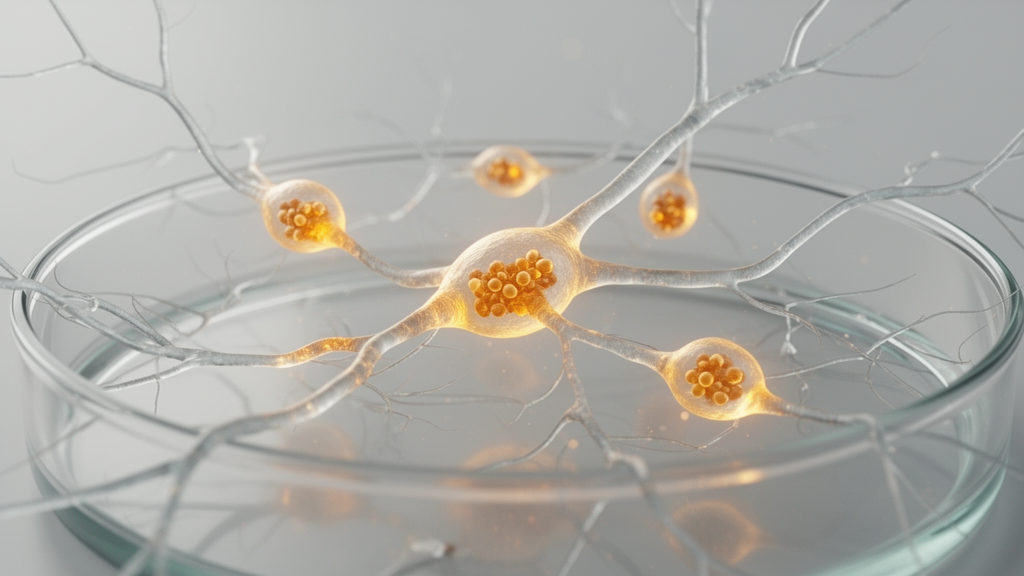
Engineered peroxisomes and patient-derived induced pluripotent stem cell models are being proposed as a combined platform for investigating oxidative-stress-related mechanisms in the central nervous system. The strategy is not a validated therapy: the underlying review argues that most evidence remains preclinical or exploratory, and no engineered construct described in the source has yet been tested in patient-derived neural cultures for Alzheimer’s disease, Parkinson’s disease, amyotrophic lateral sclerosis, Kleefstra syndrome or related disorders. Its central premise is that engineered materials could reproduce selected peroxisomal functions, while patient-derived neurons, glia and organoids could reveal whether a biochemical effect produces meaningful neural protection.
Peroxisomes are single-membrane organelles that shorten very-long-chain fatty acids, initiate ether-lipid synthesis and regulate hydrogen peroxide through oxidase reactions and catalase-dependent decomposition. They therefore both generate and remove reactive oxygen species, with their net effect depending on substrate supply, enzyme activity and exchange with mitochondria, lysosomes and the endoplasmic reticulum. In the nervous system, these functions contribute to membrane lipid composition, myelin maintenance and neuronal and glial homeostasis. Genetic and biochemical defects in peroxisomal biogenesis, transport or individual enzymes are established causes of neurological disease, but evidence of peroxisomal involvement in common neurodegenerative disorders is less certain. The review therefore separates causal primary peroxisomal disorders from potentially contributory or secondary abnormalities in Alzheimer’s, Parkinson’s and ALS.
In Alzheimer’s disease, post-mortem studies have reported altered very-long-chain fatty acid and plasmalogen profiles, increased somatic peroxisomal volume density and loss of peroxisomes from tau-affected neuronal processes. These observations support an association between peroxisomal changes and neuropathology, but they do not show that peroxisomes initiate amyloid or tau pathology, precede the other abnormalities or determine whether the changes are reversible. Evidence in Parkinson’s disease remains more limited and is based mainly on experimental systems and limited human observations concerning lipid metabolism and possible peroxisome–mitochondria interactions. In ALS, peroxisomal involvement is largely inferred from broader oxidative and lipid abnormalities rather than from a defined human disease-specific lesion. A fall in reactive oxygen species after treatment would not, by itself, determine whether peroxisomes are causal in any of these conditions.
Kleefstra syndrome provides a different kind of model. The disorder is caused by haploinsufficiency of EHMT1, which encodes a histone methyltransferase involved in transcriptional repression, rather than by a direct defect in a peroxisomal enzyme or import pathway. Patient-derived neuronal studies have linked network abnormalities to enhanced NMDAR signalling, while cortical neurospheres from affected individuals have shown altered cellular composition, reduced LDHA transcript abundance and compound- and maturation-dependent toxicant sensitivity. These findings make the syndrome useful for testing an epigenetic connection with lipid metabolism and redox regulation, but they do not establish elevated basal reactive oxygen species, abnormal peroxisomal lipid flux or defective peroxisome biogenesis. The proposed link between EHMT1 deficiency and peroxisomal function must therefore be tested directly, with genetic rescue and measurements of organelle structure, enzyme activity and relevant lipid pathways.
Patient-derived iPSC models offer different experimental capabilities depending on their format. Undifferentiated iPSCs preserve patient genotype and provide renewable starting material but lack differentiated neural function. Neurons enable measurements of excitability, synapses, neurites and survival, although most remain immature or rejuvenated and therefore do not automatically reproduce late-onset ageing. Astrocytes can be used to examine metabolic support, glutamate handling and glial redox states, while microglia provide information about uptake, phagocytosis and innate immune activation. Oligodendrocytes are particularly relevant to peroxisomal lipid metabolism and myelination, although their lengthy, variable differentiation limits screening throughput. Co-cultures add neuron–glia interactions, while three-dimensional neurospheres and organoids introduce spatial organization, network activity and diffusion constraints. Their maturation, composition, oxygen gradients and donor-to-donor variation remain important limitations, particularly when reactive oxygen species are used as an outcome.
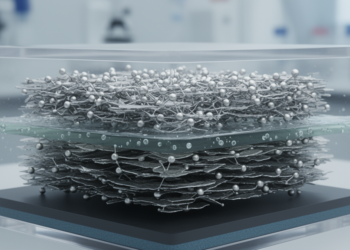
Engineered peroxisomes in the review are grouped into several categories. Natural biological peroxisomes retain an endogenous membrane and enzyme repertoire, engineered biological peroxisomes modify selected components or cargo, and artificial peroxisomes are synthetic or hybrid catalytic compartments designed to reproduce defined reactions. A non-vesicular catalytic assembly is also described. These systems differ substantially from conventional antioxidant carriers and from genetically encoded tools that merely perturb organelle integrity. Published examples demonstrate selected design principles rather than equivalent therapeutic maturity. For instance, membrane-bounded polymersomes containing catalase or other enzymes have shown substrate transport and intracellular reactive-oxygen-species attenuation in simplified cell systems, while a cell-penetrating-peptide formulation was tested in K562 leukaemia cells rather than neurons. A DNA-and-ceria assembly with enzyme-like redox activity and a platelet-membrane-cloaked extracellular vesicle in myocardial injury provide further precedents, but neither establishes CNS efficacy.
Material performance depends on more than the presence of an antioxidant enzyme. The membrane must admit relevant substrates while retaining active cargo, and measured reaction rates combine transport with catalysis. Superoxide dismutase, for example, converts superoxide into hydrogen peroxide, so adequate downstream peroxide removal is required; this chemical sequence cannot be generalized to all reactive oxygen species. Lipid-metabolic replacement is a separate and more demanding objective, requiring verified access to fatty-acyl substrates, cofactors, sequential reactions and export of products. Engineered systems must also address leakage, degradation, intracellular fate, immune recognition and persistence. Reactive oxygen species are normal signalling molecules involved in neuronal differentiation, synaptic plasticity and stress adaptation, so maximal scavenging may suppress protective pathways. The desired outcome is selective correction of a defined redox or lipid defect while preserving normal signalling, rather than indiscriminate oxidant removal.
Delivery is expected to be a major barrier. Brain entry requires survival in circulation, interaction with the blood–brain barrier, passage beyond the vascular endothelium, distribution through brain tissue and uptake by the intended cells. Size, shape, charge, deformability, surface ligands and the acquired protein corona can influence each stage, but no universal particle-size or charge threshold applies. Receptor-mediated transport must distinguish productive transcytosis from endothelial binding and retention, with measurements of barrier integrity, tracer permeability, mass balance and recovery of intact catalytic material on the brain side. In three-dimensional cultures, extracellular matrix binding, diffusion and cellular sequestration can create steep radial exposure gradients. Uptake by microglia or peripheral cells may further reduce delivery to diseased neurons. Surfaceome-guided targeting is therefore a discovery strategy rather than a solved problem: candidate markers must be accessible, enriched in the relevant cell state, internalized productively and absent or acceptable in peripheral populations. Ligand binding alone does not establish cell selectivity, transport or efficacy.
The proposed development pathway is explicitly conditional. Researchers would first need to demonstrate a reproducible disease-associated phenotype and then show that an engineered material reaches the relevant cells, remains active and corrects a defined biochemical defect. Neural models should measure function alongside survival, including synaptic integrity, network activity and organelle metabolism, rather than relying on reactive-oxygen-species probes alone. Comparisons require untreated and vehicle controls, stress alone, empty material, free enzyme or catalyst at matched activity, conventional antioxidant comparators, catalytically inactive constructs where feasible and independent donors or isogenic lines. Acute peroxide, paraquat, rotenone or mitochondrial-inhibitor challenges can test stress handling, but none is peroxisome-specific, and a material that merely suppresses a chemical insult has not yet demonstrated disease modification. For late-onset disorders, chronic and combinatorial insults involving metabolism, protein pathology and inflammation may better reflect multifactorial disease, but they also introduce greater variability and interpretation challenges.
Safety, manufacturing and translation remain independent requirements. Repeat-dose studies must assess complement activation, immune responses, enzyme leakage, lysosomal effects, off-target accumulation, degradation products and persistence, while also measuring redox signalling and lipid homeostasis. In vivo work must connect pharmacokinetics and biodistribution to exposure, efficacy and toxicology; an organoid result alone cannot establish brain distribution or a safe therapeutic window. Reproducible manufacturing would require specifications for composition, size and aggregate distribution, active cargo, residual free enzyme, ligand density, membrane integrity, sterility, stability and a mechanism-linked potency assay. Existing clinical work on docosahexaenoic acid derivatives, plasmalogen replacement and PPAR agonists provides useful comparators but does not validate artificial peroxisomes. The review’s most defensible conclusion is therefore that peroxisome engineering offers a testable experimental framework: its value will depend on linking a measured biochemical defect to verified intracellular material activity, meaningful neural benefit and an acceptable benefit–risk profile, rather than on organelle mimicry or a reduction in a generic oxidative-stress signal alone.
Subject of Research: Engineered peroxisomal biomaterials and patient-derived iPSC models for testing oxidative-stress mechanisms in central nervous system disorders
Article Title: Engineered peroxisomes and patient-derived iPSC models as potential biomaterial platforms for precision neuroprotection in oxidative stress-driven central nervous system disorders
Article References: Matta, C., Cheon, Y.-H., Vágó, J., Mészár, Z., Kim, E.-H., Jiang, S., Balogh, A., Zana, M., Dinnyés, A., & Jin, E.-J. (2026). Engineered peroxisomes and patient-derived iPSC models as potential biomaterial platforms for precision neuroprotection in oxidative stress-driven central nervous system disorders. Materials Today Bio, 41, Article 103752. https://doi.org/10.1016/j.mtbio.2026.103752
Image Credits: AI Generated
DOI: 10.1016/j.mtbio.2026.103752
Keywords: engineered peroxisomes, induced pluripotent stem cells, oxidative stress, neurodegeneration, biomaterials, peroxisomal metabolism, Kleefstra syndrome, blood-brain barrier, neural organoids, catalytic nanoreactors, Engineered, peroxisomes
News Source: Cassandra Pierce. (October 22, 2026). Engineered peroxisomes meet patient-derived iPSC models for CNS research. Scienmag.