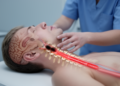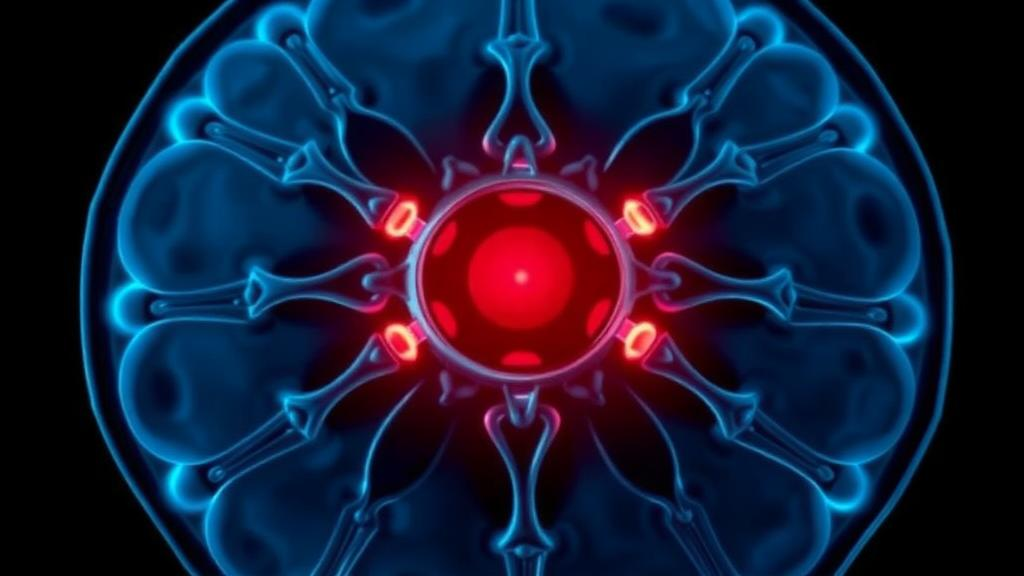
A 2026 GeroScience perspective argues that intervertebral disc degeneration in older adults is not simply the mechanical wearing of the spine, but a self-reinforcing biological process in which cellular senescence, oxidative stress and altered loading progressively weaken the motion segment. The authors combine human cohort studies, animal models, molecular experiments and clinical imaging to trace how loss of disc hydration and matrix integrity can lead to herniation, stenosis, instability, deformity and pain. Crucially, the review warns that degeneration severity on MRI does not reliably identify the tissue responsible for a patient’s symptoms, making the distinction between structural failure and pain generation a central challenge.
The intervertebral disc is a fibrocartilaginous joint composed of a proteoglycan-rich nucleus pulposus, a collagenous annulus fibrosus and cartilaginous endplates. The nucleus pulposus accounts for about half of disc volume and contains hydrated tissue composed largely of a proteoglycan gel with a sparse type II collagen network. At birth, it is populated largely by embryonic notochordal cells. During growth and skeletal maturity, these cells are progressively replaced by smaller chondrocyte-like cells, while cellular density falls sharply. Human cadaveric research indicates that cell numbers in the nucleus pulposus, annulus and endplate decline steeply from birth through adolescence and continue to decrease with age, reaching a minimum at approximately 16 years. Endplates also become calcified, reducing permeability and limiting the diffusion of oxygen and nutrients into the largely avascular disc.
Age-related changes therefore create a tissue environment in which damaged cells are less readily replaced and metabolic stress becomes harder to resolve. The review identifies the mechanosensitive ion channel PIEZO1 as a central link between abnormal loading and cellular decline. Increased matrix stiffness or compression activates PIEZO1, producing calcium influx that can impair mitochondrial function, increase reactive oxygen species and provoke endoplasmic reticulum stress. Reactive oxygen species then accelerate DNA, protein and mitochondrial damage, while chronic oxidative stress activates p53 and suppresses SIRT1, weakening control of mitochondrial quality and mitophagy. Together, the p53, reactive oxygen species and SIRT1 pathways form a feed-forward loop that supports senescence, cell death and loss of extracellular matrix. This offers a molecular explanation for why aging and mechanical damage can be mutually reinforcing rather than independent processes.
Senescent cells add another layer to this cycle. Although they stop dividing, they remain metabolically active and release a senescence-associated secretory phenotype containing inflammatory cytokines, matrix metalloproteinases, chemokines and growth factors. These signals promote matrix breakdown and can recruit additional inflammatory cells. Removing senescent cells improved disc histology in transgenic mice, while telomerase gene transfer increased cellular lifespan and prolonged collagen production in an in vitro ovine model. These findings provide mechanistic support for the hypothesis that senescence is a driver of degeneration, but they do not yet establish a human disease-modifying treatment. The review also describes how abnormal mechanical loading activates PIEZO1, lowers cell viability and elevates inflammatory cytokines, linking the same pathway to altered disc composition and the increased stiffness seen in degenerated tissue.
Several life-course exposures can accelerate the process in an already vulnerable disc. In a population-based MRI study of 617 participants followed for four years, women had 1.41-fold higher adjusted odds of lumbar disc degeneration progression than men, with progression reported in 11.2% of women and 7.9% of men. Menopausal status appeared to modify the association, and animal studies support a possible role for estrogen deficiency, although most human evidence remains associative. Smoking showed a dose-dependent relationship with incident back pain in a prospective cohort of 438,510 participants, and MRI studies of identical twins found 18% greater mean degeneration scores among smokers. In the same four-year cohort, obesity was associated with an odds ratio of 1.35 for disc-degeneration progression and diabetes with an odds ratio of 1.61. Experimental studies link metabolic and inflammatory effects to matrix catabolism, but these mechanisms cannot yet be treated as proven causes of human structural failure.
Occupational loading adds a direct mechanical challenge. A meta-analysis found odds ratios ranging from 1.6 to 3.3 for disc degeneration at spinal levels exposed to cumulative heavy lifting, and higher lifting loads have been associated with greater dehydration, reduced disc height, tissue swelling and bulging. The cellular response can amplify this physical burden: excessive stress raises PIEZO1 expression, reduces viability and increases inflammatory mediators including tumour necrosis factor alpha, interleukin 6 and interleukin 1 beta. Matrix damage changes loading, altered loading increases matrix damage, and both processes push the disc toward structural failure. Degeneration can subsequently affect the entire three-joint complex formed by the disc and its facet joints, contributing to central or foraminal stenosis, degenerative spondylolisthesis, adult degenerative scoliosis and nerve compression. The mechanics of the initiating event remain debated: altered disc properties may promote vertebral slippage, while facet degeneration may also be an important primary driver.
The microbiome may provide another route into this process. Research has recovered hundreds of bacterial species from healthy and degenerated intervertebral discs, with some taxa shared with the gut and skin. Patients with symptomatic lumbar degenerative spondylolisthesis showed a shift toward a Firmicutes-heavy microbial community and a reduction in several potentially protective organisms, while Modic changes were associated with a loss of short-chain-fatty-acid producers. The proposed “gut–disc axis” involves three possible routes: bacterial translocation across an impaired intestinal barrier, immune responses to gut dysbiosis that promote systemic inflammation, and microbiota-derived metabolites that alter nutrient supply, angiogenesis and pain signaling inside the disc. No single bacterium has been established as causative. Human microbiome findings are largely associative, and microbiome-guided synbiotic treatment remains unvalidated in spine surgery, although a small surgical pilot associated a Prevotella-dominant enterotype with poorer recovery after microdiscectomy.
Diagnosis is becoming more quantitative, but the gap between anatomy and symptoms remains. MRI is central for excluding serious conditions such as tumors, infection and fractures and for identifying disc herniation, neural compression, Modic changes and deformity. The Pfirrmann scale grades disc degeneration from T2-weighted images using disc height, signal intensity and distinctions between nucleus pulposus and annulus fibrosus, but it characterizes structure rather than proving that a disc generates pain. Provocative discography can identify a disc whose stimulation reproduces concordant pain, yet it is invasive and has been associated with iatrogenic disc injury. Emerging approaches include T1 and T2 mapping, T1ρ, T2*, chemical exchange saturation transfer, sodium MRI, magnetic resonance spectroscopy and a postprocessed T2* score called Decay Variance, or DeVa. These methods may measure hydration, collagen organization and metabolites, but prospective validation and evidence of added clinical value are still needed before they can guide routine care.
Most low back pain is managed without surgery, with education, exercise, physical therapy, medication and selected injections forming the usual nonoperative pathway. Neuromodulation, including spinal cord, dorsal root ganglion, peripheral nerve and multifidus stimulation, is expanding, but differences in patient selection, stimulation targets and outcome reporting limit firm conclusions about comparative and long-term effectiveness. Surgery is most relevant when symptoms match a remediable structural problem such as persistent nerve compression, spinal stenosis, instability or major deformity. Randomized evidence indicates that discectomy can provide better short-term relief for selected radiculopathy, although differences may narrow by one year. Decompression for stenosis may improve pain without consistently improving function, while fusion for chronic nonspecific low back pain has shown little advantage over intensive rehabilitation. Decompression plus fusion can add cost, blood loss and complications without clearly improving outcomes in every case.
For older patients, minimally invasive techniques and enhanced recovery protocols may reduce the physiological burden of surgery, but they cannot reverse senescence or stop disc degeneration. A meta-analysis of 14 studies using lumbar-specific enhanced recovery protocols found a mean reduction of 1.53 days in hospital stay and a lower 30-day readmission rate, with an odds ratio of 0.37, although it found no differences in overall complication or wound-infection rates. The perspective’s central message is therefore both hopeful and restrained: geroscience may eventually support earlier detection, more precise pain-source attribution and biological therapies, but current molecular, imaging and microbiome tools remain investigational. The immediate standard is careful correlation between symptoms and anatomical pathology, individualized assessment of operative risk, and surgery reserved for structural disease that plausibly explains the patient’s symptoms.
Subject of Research: Cellular, biomechanical and microbial mechanisms of age-related intervertebral disc degeneration
Article Title: The degenerating intervertebral disc leading to structural failure of the aging spine: from cellular pathways, risk factors, radiological diagnosis, to surgical management
Article References: Chen, V., Sima, S., Zhou, O., Yilamu, K., Kulkarni, V., Reddy, R., Rackham, M., Stevenson, A., Hsu, B., Singh, B., Seex, K., Chen, X., Tu, J., Li, W., Lu, S., Gu, Z., & Diwan, A. D. (2026). The degenerating intervertebral disc leading to structural failure of the aging spine: from cellular pathways, risk factors, radiological diagnosis, to surgical management. GeroScience. https://doi.org/10.1007/s11357-026-02513-3
Image Credits: AI Generated
DOI: 10.1007/s11357-026-02513-3
Keywords: intervertebral disc degeneration, aging spine, cellular senescence, oxidative stress, PIEZO1, low back pain, gut-disc axis, spinal MRI, spine surgery, microbiome, degenerating, intervertebral
News Source: Beatrice Stafford. (October 21, 2026). Aging Disc Failure Links Cellular Stress, Instability and Pain. Scienmag.