• HOME
  • NEWS
  • EXPLORE
    • CAREER
      • Companies
      • Jobs
    • EVENTS
    • iGEM
      • News
      • Team
    • PHOTOS
    • VIDEO
    • WIKI
  • BLOG
  • COMMUNITY
    • FACEBOOK
    • INSTAGRAM
    • TWITTER
Wednesday, October 21, 2026
BIOENGINEER.ORG
No Result
View All Result
  • Login
  • HOME
  • NEWS
  • EXPLORE
    • CAREER
      • Companies
      • Jobs
        • Lecturer
        • PhD Studentship
        • Postdoc
        • Research Assistant
    • EVENTS
    • iGEM
      • News
      • Team
    • PHOTOS
    • VIDEO
    • WIKI
  • BLOG
  • COMMUNITY
    • FACEBOOK
    • INSTAGRAM
    • TWITTER
No Result
View All Result
Bioengineer.org
No Result
View All Result
Home NEWS Science News Cancer

Machine learning and cell study link shikonin to Parkin-dependent activity in hypoxic triple-negative breast cancer

by
October 21, 2026
in Cancer
Reading Time: 2 mins read
0
Machine learning and cell study link shikonin to Parkin-dependent activity in hypoxic triple-negative breast cancer

Machine Learning Uncovers Shikonin as a Hypoxia-Selective Weapon Against Triple-Negative Breast Cancer

Share on FacebookShare on TwitterShare on LinkedinShare on RedditShare on Telegram

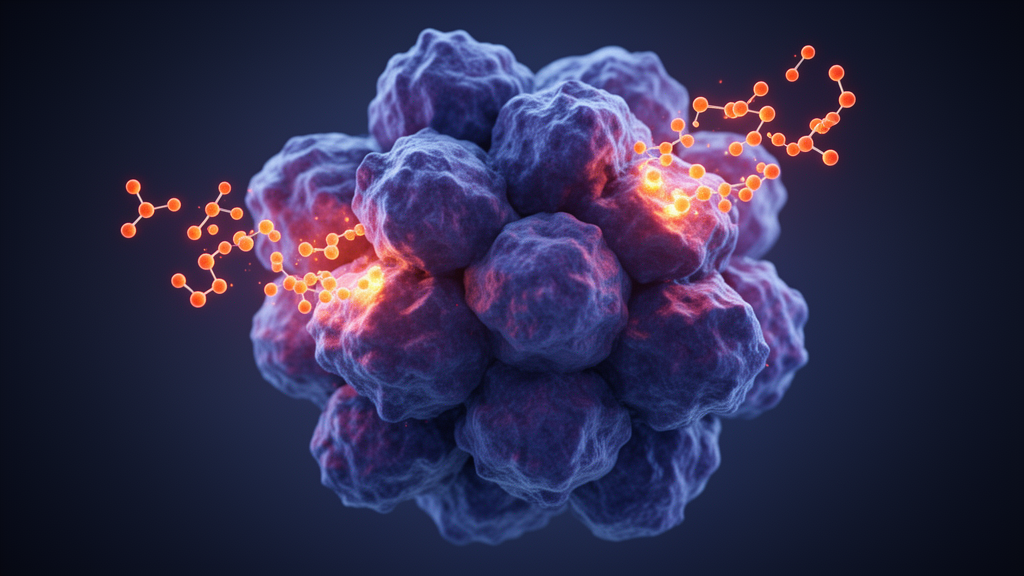
Shikonin induced necroptosis and apoptosis in hypoxic MDA-MB-231 triple-negative breast cancer cells in a preclinical study that combined machine learning with laboratory experiments. The reported mechanism involved Parkin-mediated ubiquitination and degradation of HIF-1α, a protein linked in the experiments to the hypoxic adaptation of these tumor cells. The study was published in BMC Cancer as an open-access version subject to further edits.

The analytical component used a combined dataset of necroptosis-related genes and genes associated with a hypoxia-related risk score from 1,092 breast cancer patients. A machine-learning model was interpreted using SHAP, or SHapley Additive exPlanations, to assess feature importance. PELI1, an E3 ubiquitin protein ligase, and TNFRSF10B, a member of the tumor necrosis factor receptor superfamily, emerged as leading predictive contributors. The investigators then selected shikonin for cell testing because of its previously established role as a necroptosis inducer; the model was not reported to have identified the compound itself.

Laboratory experiments centered on MDA-MB-231 cells, including assessments of cell viability, protein expression associated with necroptosis, apoptosis and transcriptomic changes. RNA-sequencing results indicated that hypoxic cells relied on adaptive pathways such as glycolysis, erythropoiesis and angiogenesis, while shikonin disrupted these adaptations as cell-death processes were activated. Co-immunoprecipitation and ubiquitination assays examined interactions involving Parkin and HIF-1α. In parallel, siRNA-mediated Parkin knockdown followed by CCK-8 assays was used to assess whether shikonin-induced cytotoxicity depended on Parkin. Together, these results support a cell-culture mechanism in which Parkin promotes HIF-1α degradation as shikonin triggers necroptosis and apoptosis.

The evidence is preclinical and limited to one breast cancer cell line; the reported work does not establish safety or effectiveness in patients. The authors described shikonin as a candidate hypoxia-selective agent and proposed that combining it with approaches targeting PELI1 and TNFRSF10B might enhance efficacy, but that combination strategy was not tested in the reported experiments.

Subject of Research: Preclinical assessment of shikonin and Parkin-mediated cell death in hypoxic triple-negative breast cancer cells

Article Title: Shikonin as a Parkin-dependent hypoxia-selective agent against triple-negative breast cancer identified by machine learning

Article References: Niu, Z., & Niu, X. (2026). Shikonin as a Parkin-dependent hypoxia-selective agent against triple-negative breast cancer identified by machine learning. BMC Cancer. https://doi.org/10.1186/s12885-026-16675-y

Image Credits: AI Generated

DOI: 10.1186/s12885-026-16675-y

Keywords: shikonin, triple-negative breast cancer, hypoxia, Parkin, HIF-1α, necroptosis, apoptosis, machine learning, PELI1, TNFRSF10B, Parkin-dependent, hypoxia-selective

News Source: Nathaniel Bowman. (October 20, 2026). Machine learning and cell study link shikonin to Parkin-dependent activity in hypoxic triple-negative breast cancer. Scienmag.

Tags: ApoptosisHIF-1αhypoxiahypoxia-selectiveMachine LearningnecroptosisParkinParkin-dependentPELI1ShikoninTNFRSF10Btriple-negative breast cancer
Share12Tweet7Share2ShareShareShare1

Related Posts

Clinical score separates idiopathic granulomatous mastitis from breast cancer mimics

Clinical score separates idiopathic granulomatous mastitis from breast cancer mimics

October 21, 2026
Review maps mechanisms, diagnosis and treatment of primary cardiac angiosarcoma

Review maps mechanisms, diagnosis and treatment of primary cardiac angiosarcoma

October 21, 2026

Probiotic trial tests gut support during ovarian cancer chemotherapy

October 20, 2026

Swedish DCIS cohort links breast conservation with favorable survival outcomes

October 20, 2026

POPULAR NEWS

  • Cross-sectional study finds greater caregiver burden among mothers of children with tracheostomy

    Cross-sectional study finds greater caregiver burden among mothers of children with tracheostomy

    29 shares
    Share 12 Tweet 7
  • Global survey finds white-nose disease knowledge alone weakly predicts cavers’ biosecurity practices

    29 shares
    Share 12 Tweet 7
  • Machine learning and cell study link shikonin to Parkin-dependent activity in hypoxic triple-negative breast cancer

    29 shares
    Share 12 Tweet 7
  • Review finds pollination data for 98 of 1,231 orchid taxa in Guatemala

    29 shares
    Share 12 Tweet 7

About

We bring you the latest biotechnology news from best research centers and universities around the world. Check our website.

Follow us

Recent News

Cross-sectional study finds greater caregiver burden among mothers of children with tracheostomy

Global survey finds white-nose disease knowledge alone weakly predicts cavers’ biosecurity practices

Machine learning and cell study link shikonin to Parkin-dependent activity in hypoxic triple-negative breast cancer

Subscribe to Blog via Email

Enter your email address to subscribe to this blog and receive notifications of new posts by email.

Join 85 other subscribers
  • Contact Us

Bioengineer.org © Copyright 2023 All Rights Reserved.

Welcome Back!

Login to your account below

Forgotten Password?

Retrieve your password

Please enter your username or email address to reset your password.

Log In
No Result
View All Result
  • Homepages
    • Home Page 1
    • Home Page 2
  • News
  • National
  • Business
  • Health
  • Lifestyle
  • Science

Bioengineer.org © Copyright 2023 All Rights Reserved.