• HOME
  • NEWS
  • EXPLORE
    • CAREER
      • Companies
      • Jobs
    • EVENTS
    • iGEM
      • News
      • Team
    • PHOTOS
    • VIDEO
    • WIKI
  • BLOG
  • COMMUNITY
    • FACEBOOK
    • INSTAGRAM
    • TWITTER
Wednesday, October 21, 2026
BIOENGINEER.ORG
No Result
View All Result
  • Login
  • HOME
  • NEWS
  • EXPLORE
    • CAREER
      • Companies
      • Jobs
        • Lecturer
        • PhD Studentship
        • Postdoc
        • Research Assistant
    • EVENTS
    • iGEM
      • News
      • Team
    • PHOTOS
    • VIDEO
    • WIKI
  • BLOG
  • COMMUNITY
    • FACEBOOK
    • INSTAGRAM
    • TWITTER
No Result
View All Result
Bioengineer.org
No Result
View All Result
Home NEWS Science News Health

Cross-sectional study finds greater caregiver burden among mothers of children with tracheostomy

by
October 21, 2026
in Health
Reading Time: 2 mins read
0
Cross-sectional study finds greater caregiver burden among mothers of children with tracheostomy

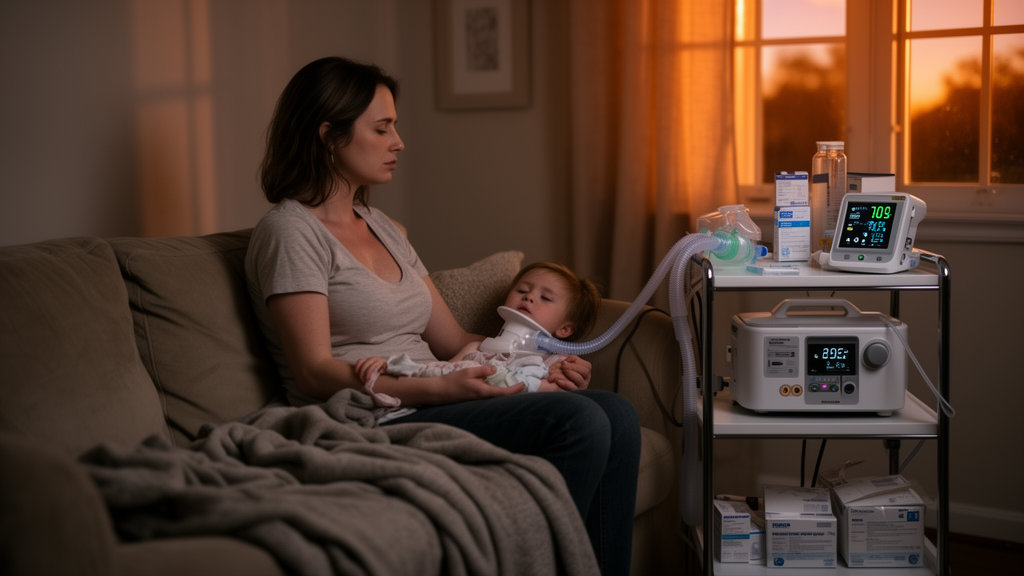
Mothers carry the heaviest load when children need tracheostomy care at home

Share on FacebookShare on TwitterShare on LinkedinShare on RedditShare on Telegram

The abstract of a cross-sectional study reports that mothers of children with tracheostomy had higher mean caregiver-burden scores than fathers. Among 40 participating families, the mean Zarit Burden Interview score was 43.58 ± 12.01 for mothers and 28.60 ± 8.01 for fathers, a statistically significant difference (p < 0.001). The finding was an association measured at one point in the study, not evidence that parenthood or a particular caregiving arrangement caused the difference.

The study included children with tracheostomy followed between October 1, 2024, and September 30, 2025, along with their mothers and fathers. Mothers were identified as the sole primary caregivers in 80.0% of families, while caregiving was shared by mothers and fathers in 20.0%. Researchers recorded demographic and clinical information for the children and parents. Both parents completed the validated Zarit Burden Interview, Methods of Coping with Family Stressors Scale and Problem Solving Inventory, enabling comparisons of burden, coping strategies and problem-solving skills between mothers and fathers.

Most coping-strategy measures did not differ significantly between parents. Fathers scored higher than mothers only on the “care between spouses” subscale (p = 0.030). The study found no statistically significant differences between mothers and fathers in total Problem Solving Inventory scores or its subscale scores. Thus, the reported burden difference was not accompanied by a detectable difference in the assessed problem-solving skills.

Among mothers, higher caregiver burden was associated with lower scores on several coping measures: cognitive restructuring (r = −0.394, p = 0.012), changing behavior (r = −0.495, p = 0.001), relaxation exercises (r = −0.318, p = 0.046) and spending time with family (r = −0.458, p = 0.003). No statistically significant correlations were found between the assessed clinical characteristics of the children and parental Zarit Burden Interview or Problem Solving Inventory scores. These correlations do not establish that burden reduced coping or that coping strategies affected burden.

The results are bounded by the cross-sectional design, which cannot determine temporal sequence or causality, and by the sample of 40 children and their two parents. The supplied abstract does not report participant recruitment details, response rates or effect-size confidence intervals. Within those limits, the abstract shows a higher measured burden among mothers, similar measured problem-solving skills between parents, and inverse associations between maternal burden and several coping-strategy scores.

Subject of Research: Parental caregiver burden, coping and problem-solving skills in children with tracheostomy

Article Title: Caregiver burden, coping strategies, and problem-solving skills among parents of children with tracheostomy: a cross-sectional study

Article References: Kula, N., Eyuboglu, T. S., Aslan, A. T., Soysal Acar, A. S., & Medeni, V. (2026). Caregiver burden, coping strategies, and problem-solving skills among parents of children with tracheostomy: a cross-sectional study. BMC Pediatrics. https://doi.org/10.1186/s12887-026-07621-9

Image Credits: AI Generated

DOI: 10.1186/s12887-026-07621-9

Keywords: tracheostomy, caregiver burden, parents, mothers, fathers, coping strategies, problem-solving skills, cross-sectional study, pediatric care, Caregiver, burden, coping

News Source: Ophelia Keating. (October 20, 2026). Cross-sectional study finds greater caregiver burden among mothers of children with tracheostomy. Scienmag.


Tags: burdencaregiverCaregiver Burdencopingcoping strategiesCross-sectional StudyfathersmothersParentspediatric careproblem-solving skillstracheostomy
Share12Tweet7Share2ShareShareShare1

Related Posts

Meta-analysis links Chinese herbal therapy to short-term cognitive gains in vascular dementia

Meta-analysis links Chinese herbal therapy to short-term cognitive gains in vascular dementia

October 21, 2026
Arabic Version of Blood-Thinner Knowledge Test Validated for Iraqi Patients

Arabic Version of Blood-Thinner Knowledge Test Validated for Iraqi Patients

October 21, 2026

Survey-weighted cross-sectional study links Nepal insurance enrollment with higher curative healthcare use

October 21, 2026

Happiness levels of nursing students in relation to leisure time management: a multicenter study

October 21, 2026

POPULAR NEWS

  • IUCN assessments place Campanula bergomensis Near Threatened and two Kyzylkum desert plants Endangered

    IUCN assessments place Campanula bergomensis Near Threatened and two Kyzylkum desert plants Endangered

    29 shares
    Share 12 Tweet 7
  • Meta-analysis links Chinese herbal therapy to short-term cognitive gains in vascular dementia

    29 shares
    Share 12 Tweet 7
  • Cross-sectional study finds greater caregiver burden among mothers of children with tracheostomy

    29 shares
    Share 12 Tweet 7
  • Global survey finds white-nose disease knowledge alone weakly predicts cavers’ biosecurity practices

    29 shares
    Share 12 Tweet 7

About

We bring you the latest biotechnology news from best research centers and universities around the world. Check our website.

Follow us

Recent News

IUCN assessments place Campanula bergomensis Near Threatened and two Kyzylkum desert plants Endangered

Meta-analysis links Chinese herbal therapy to short-term cognitive gains in vascular dementia

Cross-sectional study finds greater caregiver burden among mothers of children with tracheostomy

Subscribe to Blog via Email

Enter your email address to subscribe to this blog and receive notifications of new posts by email.

Join 85 other subscribers
  • Contact Us

Bioengineer.org © Copyright 2023 All Rights Reserved.

Welcome Back!

Login to your account below

Forgotten Password?

Retrieve your password

Please enter your username or email address to reset your password.

Log In
No Result
View All Result
  • Homepages
    • Home Page 1
    • Home Page 2
  • News
  • National
  • Business
  • Health
  • Lifestyle
  • Science

Bioengineer.org © Copyright 2023 All Rights Reserved.