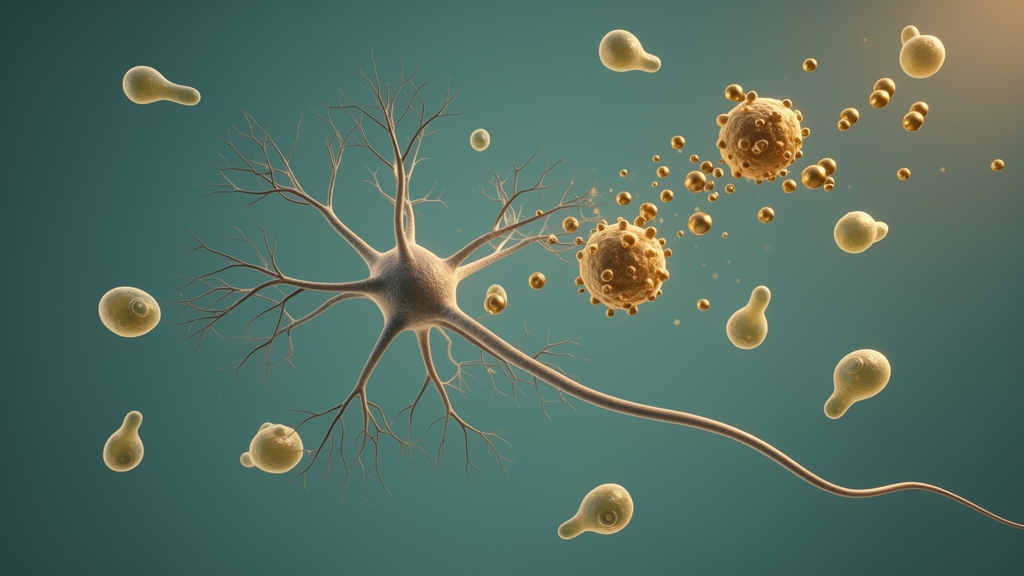
Deep inside the brain, tiny immune cells called microglia stand guard against infection and injury. But when they stay switched on for too long, they can flood the nervous system with inflammatory chemicals that slowly poison the very neurons they are meant to protect. Now, researchers in China have shown that cardamonin, a natural chalcone flavonoid found in several medicinal plants, can quiet these overactive microglia and, in doing so, rescue neurons from inflammatory death. The study, published in Frontiers in Pharmacology, maps out a detailed molecular route through which the compound appears to work.
Neuroinflammation, the chronic activation of the brain’s immune system, is now recognized as a central player in devastating conditions such as Alzheimer’s and Parkinson’s disease. When microglia encounter threats like lipopolysaccharide (LPS), a bacterial toxin commonly used in the laboratory to provoke inflammation, they transform from slender, branched sentinels into amoeboid, angry cells that pump out interleukin-6, interleukin-1 beta, tumor necrosis factor-alpha and nitric oxide. In moderation this response is protective; in excess it damages synapses and kills neurons. Finding drugs that dial this response down, without shutting off the immune system entirely, has become a major goal of neuropharmacology.
Cardamonin has attracted attention because it is abundant, inexpensive, and has a long history of safe use in traditional medicine. Earlier animal work showed that it could ease cognitive impairment in Alzheimer’s-model mice, protect the brain after stroke-like injury, and promote recovery after nerve damage. But the precise molecular switches it flips inside microglia remained murky. To pin them down, a team led by Jingjing Lu and Lijun Cui of Huzhou Third Municipal Hospital turned to network pharmacology, a computational strategy that maps all the possible protein targets of a compound and the biological pathways they share with a disease.
The computational screen was strikingly productive. By merging predicted cardamonin targets from three databases with genes linked to neurodegenerative disease, the researchers narrowed in on 137 overlapping targets and eventually 11 hub proteins sitting at the center of the interaction network. These included the epidermal growth factor receptor (EGFR), the survival kinase AKT1, the chaperone HSP90AB1, the inflammatory enzyme COX-2, and NF-kappaB p65, a master transcription factor for inflammatory genes. Pathway analysis pointed repeatedly to three connected signaling cascades: EGFR/PI3K/AKT1, the MAPK/ERK cascade, and NF-kappaB signaling.
Molecular docking added computational weight to the idea. When the researchers floated the cardamonin molecule into the three-dimensional structures of these target proteins, all binding energies came out below the minus 5 kilocalorie per mole threshold typically used to flag plausible interactions, with the strongest predicted binding to AKT1 at minus 8.6 kilocalories per mole and to EGFR at minus 8.2. Docking cannot prove that a drug binds a protein in a living cell, but it gave the team a concrete hypothesis to test at the bench.
The crucial experiments used BV2 microglial cells, a widely studied mouse microglial line, stimulated with LPS. Pretreating the cells with cardamonin at concentrations between 4 and 16 micromolar, levels that did not harm the cells themselves, dramatically blunted the inflammatory barrage. Levels of IL-6, IL-1 beta, TNF-alpha and nitric oxide in the culture fluid fell significantly, and the messenger RNA and protein output of the inflammatory enzymes iNOS and COX-2 dropped in parallel. Under the microscope, the compound also pushed the LPS-distorted microglia back toward their resting, branched shape.
Western blotting revealed the mechanism in molecular detail. LPS normally drives the phosphorylation, the chemical activation, of EGFR, PI3K, AKT1 and ERK1/2, and triggers the nuclear translocation of NF-kappaB p65, the step that lets the transcription factor switch on inflammatory genes. Cardamonin pretreatment reversed all of these events. Critically, when the researchers blocked EGFR or PI3K with the inhibitors AG-1478 or LY294002, the drugs reproduced cardamonin’s effects, and combining the compound with either inhibitor produced no additional benefit. That pattern strongly suggests cardamonin acts along this same signaling axis rather than through a separate route.
The compound also tamed the oxidative side of the inflammatory storm. Activated microglia generate reactive oxygen species that punch holes in mitochondrial membranes, and cardamonin dose-dependently reduced this ROS accumulation while preserving the mitochondrial membrane potential measured with the JC-1 fluorescent probe. Because mitochondrial damage is a trigger for cellular suicide, this result hinted that calming microglia might also spare neighboring neurons from apoptotic death.
To test that idea directly, the team collected the liquid medium, the conditioned medium, from each treated microglial culture and applied it to SH-SY5Y human neuronal cells. Medium from LPS-activated microglia slashed neuronal viability, distorted cell bodies, withered neurites, and cranked up both TUNEL-positive apoptosis and cleaved caspase-3, the executioner enzyme of programmed cell death. Medium from microglia that had received cardamonin before LPS was far less toxic, preserving neuronal survival and morphology. Importantly, cardamonin applied directly to the neurons had no protective effect, confirming that the benefit flows entirely through the immune cells rather than the neurons themselves.
The authors are careful about the limits of the work. The findings rest on immortalized cell lines rather than primary microglia and neurons, the cross-species co-culture model simplifies the real brain environment, and the anti-neuroinflammatory effects have not yet been confirmed in animals within this study. Oral bioavailability of cardamonin is also known to be limited, although prior mouse work suggests in vivo benefits may arise through indirect immune modulation rather than high brain exposure. Even so, by converging computational prediction, molecular docking and mechanistic cell biology on a single signaling axis, the study offers a coherent blueprint for how a humble plant chalcone might one day be developed into a multi-target therapy for inflammation-driven neurodegeneration.
Subject of Research: Neuroprotective and anti-neuroinflammatory mechanisms of cardamonin in microglia-neuron co-culture via the EGFR/PI3K/AKT1/ERK/NF-kappaB pathway
Article Title: Cardamonin attenuates SH-SY5Y neuronal apoptosis induced by LPS-activated microglia via modulation of the EGFR/PI3K/AKT1/ERK/NF-κB pathway
Article References: Lu, J., Zhou, R., Tang, K., Wang, H., Shen, Z., Huang, C., & Cui, L. (2026). Cardamonin attenuates SH-SY5Y neuronal apoptosis induced by LPS-activated microglia via modulation of the EGFR/PI3K/AKT1/ERK/NF-κB pathway. Frontiers in Pharmacology, 17, Article 1832453. https://doi.org/10.3389/fphar.2026.1832453
Image Credits: AI Generated
DOI: 10.3389/fphar.2026.1832453
Keywords: cardamonin, neuroinflammation, microglia, BV2 cells, SH-SY5Y neurons, EGFR/PI3K/AKT1 signaling, NF-kappaB, ERK1/2, network pharmacology, neurodegenerative diseases, oxidative stress, apoptosis
News Source: Cassandra Pierce. (October 19, 2026). Plant Compound Cardamonin Shields Neurons by Calming Overactive Brain Immune Cells. Scienmag.